
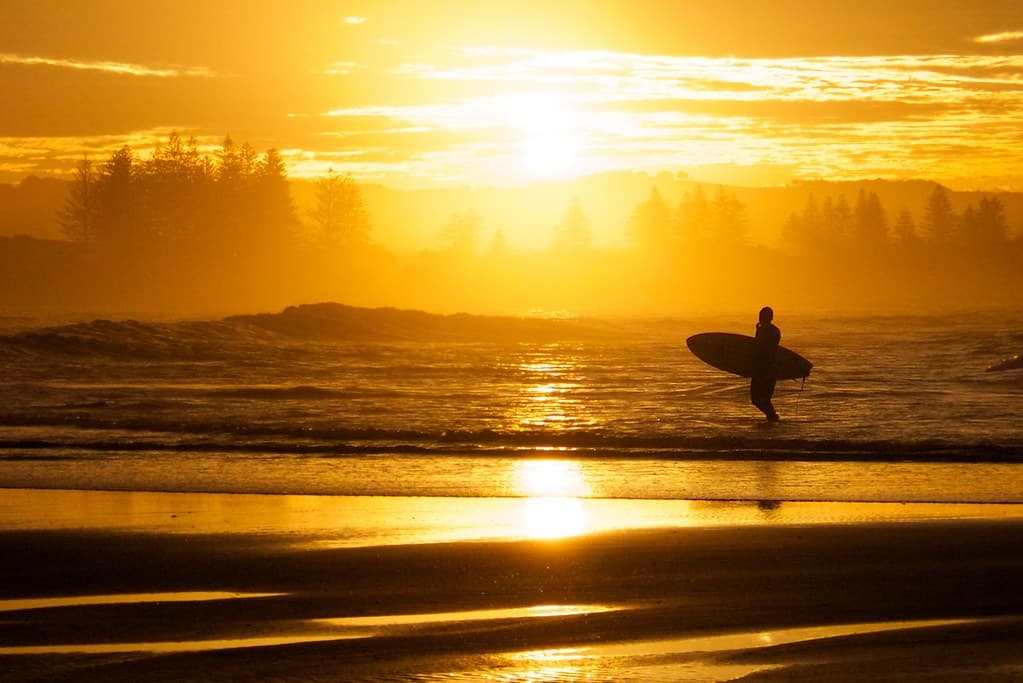
You arrive at Main Beach to find the town's dual personality on full display: yoga devotees saluting the sunrise beside competitive surfers waxing down thruster boards, while families stake umbrellas in the soft upper beach before the nor'easter picks up. The shore curves gently northeast toward the Cape Byron Lighthouse, Australia's most easterly point, its beam visible from your towel on moonless nights. Cabbage-tree palms lean in from Clarkes Beach to the south; northward, the sand stretches toward The Pass, where green rights peel with metronomic reliability.
“Australia's first sunrise touches this sand before anywhere else on the continent, making dawn here a geographic and spiritual threshold.”
 Credit: Flickr
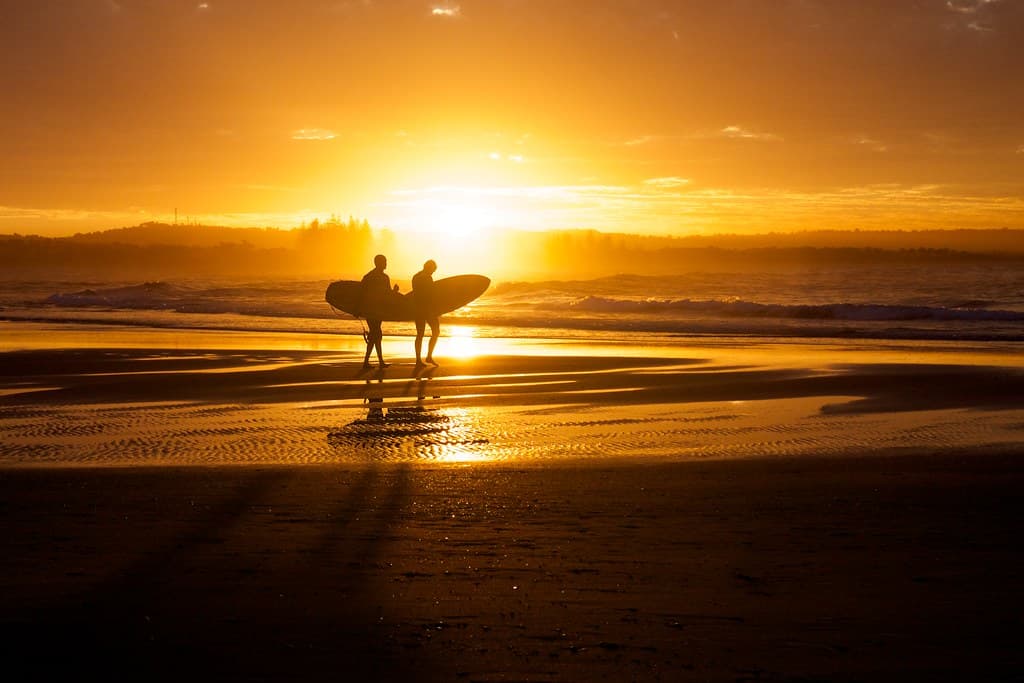
Surfers Byron Bay sunset
The water here runs warmer than Sydney's harbour pools, even in July, thanks to the East Australian Current that sweeps tropical nutrients—and occasional sea turtles—down the coast. You'll wade through shallows patrolled by dart-quick whiting, the bottom sandy and forgiving beneath bare feet, shelf-free until you're waist-deep. Lifeguards in their iconic red-and-yellow patrol the flagged section year-round, repositioning markers as sandbars shift with each king tide.
By mid-morning the beach fills with a cross-section you won't find elsewhere: backpackers fresh off the overnight bus from Sydney, Melbourne families on their annual pilgrimage, and sun-creased locals who've surfed this break since before Instagram made Byron a verb. The westerly that arrives most afternoons turns the bay glassy, perfect for standup paddlers tracing the shoreline as dolphins arch through the lineup, utterly indifferent to the admiration they collect.


