
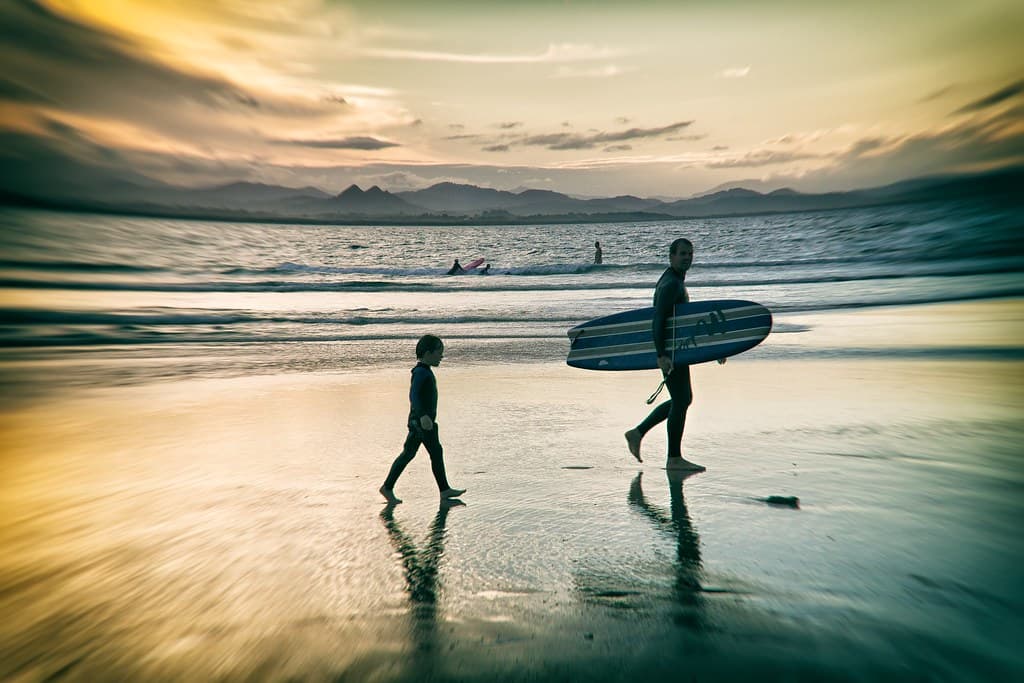
The walk from the car park follows a narrow path through coastal heath, your board under one arm, the Pacific stretching endless to your left. Below, The Pass reveals itself in sections: first the bowl near the rocks where the wave jacks up over shallow reef, then the long, generous wall that lets you trim and carve all the way to the beach. On a good swell, a single ride can run two hundred meters, your calves burning by the time you kick out in the shorebreak.
“It's the nursery where Australia's east coast surf culture comes of age, every ride a masterclass in reading moving water over living reef.”
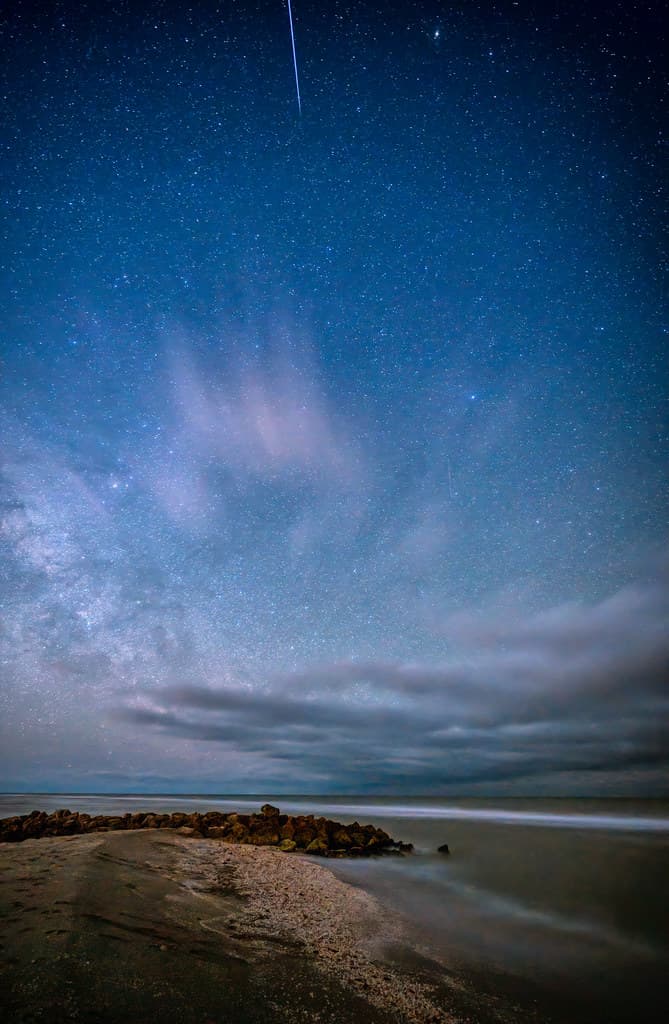 Credit: Flickr
Meteor above Turner Beach in the Gulf of Mexico on Captiva Island, Florida
The basalt shelf that creates this right-hander sits just offshore, dark and barnacled at low tide, submerged and deceptively shallow when the water rises. Locals call different sections by feel rather than name—the steep takeoff zone near the point, the workable middle where learners practice cutbacks, the inside reform where groms and bodyboarders jockey for scraps. Between sets, you'll float in bathwater when the nor'easters blow in summer, or shiver in your steamer come July.
Beyond the break itself, the headland walk continues east toward the lighthouse, winding through littoral rainforest where brush turkeys scratch in the leaf litter. At dawn, you might spot humpbacks breaching offshore during their winter migration, while oystercatchers work the rock platforms and the Cape Byron Light sweeps its beam through morning mist. The beach curves west from the point, a long crescent of golden sand where non-surfers spread towels and watch the show, the line-up a shifting constellation of bodies and boards catching wave after wave toward shore.


