
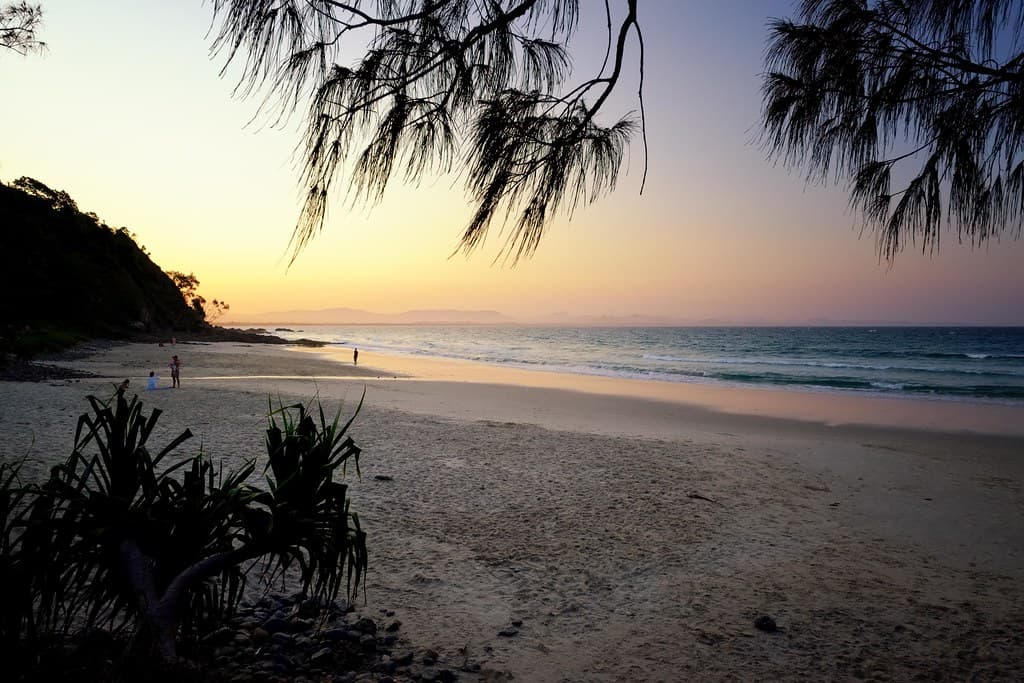
The curve of Wategos sits tucked into the base of Cape Byron like a secret kept in plain sight. You park above the grove of spotted gums and Norfolk pines, then descend to find sand the color of raw honey stretching between two rocky points. Locals arrive at dawn with longboards, reading the swell that wraps around Australia's easternmost point. By mid-morning, couples claim the southern end where pandanus roots anchor the dune edge and the sun warms tide pools into temporary baths.
“Cape Byron's protective embrace creates Byron Bay's calmest surf while remaining its most photographed strand.”
 Credit: Flickr
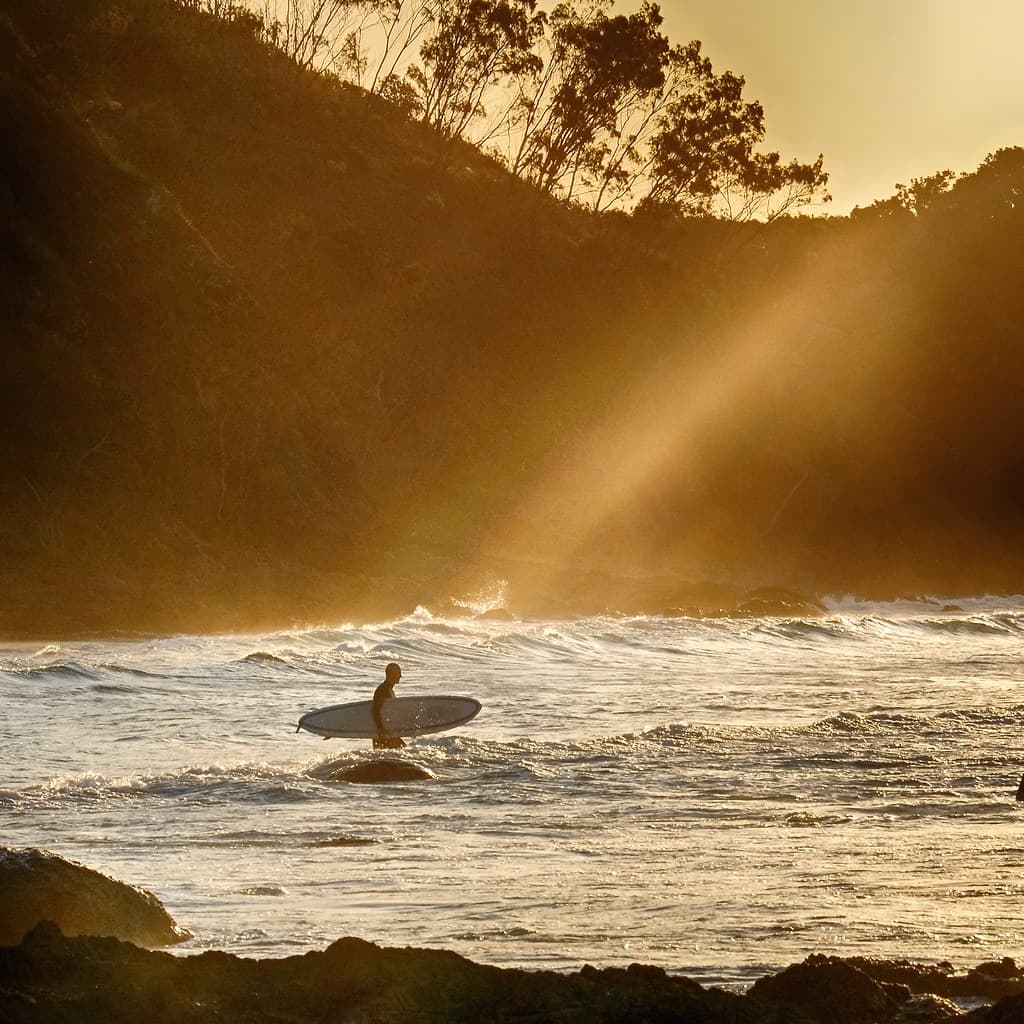
Last surf for the day
The water shifts from jade near shore to deeper indigo beyond the break. You can paddle out from the northern corner where basalt boulders create a natural channel, or simply wade in where the sand slopes gently and schools of dart fish scatter like thrown silver. Between sets, surfers bob and point toward humpbacks breaching offshore during winter months, their spouts visible against the lighthouse perched two hundred feet above.
By afternoon, the beach belongs to sun-drunk swimmers and the occasional celebrity hiding behind oversized sunglasses—Byron's fame draws them, but Wategos' relative seclusion keeps them coming back. You walk the firm sand at low tide all the way to the rocks where anglers cast for tailor, the Cape's white tower watching over everything like a patient sentinel that's seen this same dance of wave and shore for a century.


