
Walk north along the sand and the cliffs begin to reveal themselves: honeycomb caverns gouged into the headland, their ceilings dripping with barnacles and their floors slick with kelp. You'll smell the salt and rotting seaweed before you step inside, the air cooler by several degrees. Local kids dare each other to venture deeper when the tide retreats, their laughter echoing off stone that predates European settlement by millions of years. Time your visit two hours either side of low water; the caves flood completely when the Pacific surges in.
“Sea caves you can walk into at low tide make this the Hunter Coast's only beach where the geology upstages the surf.”
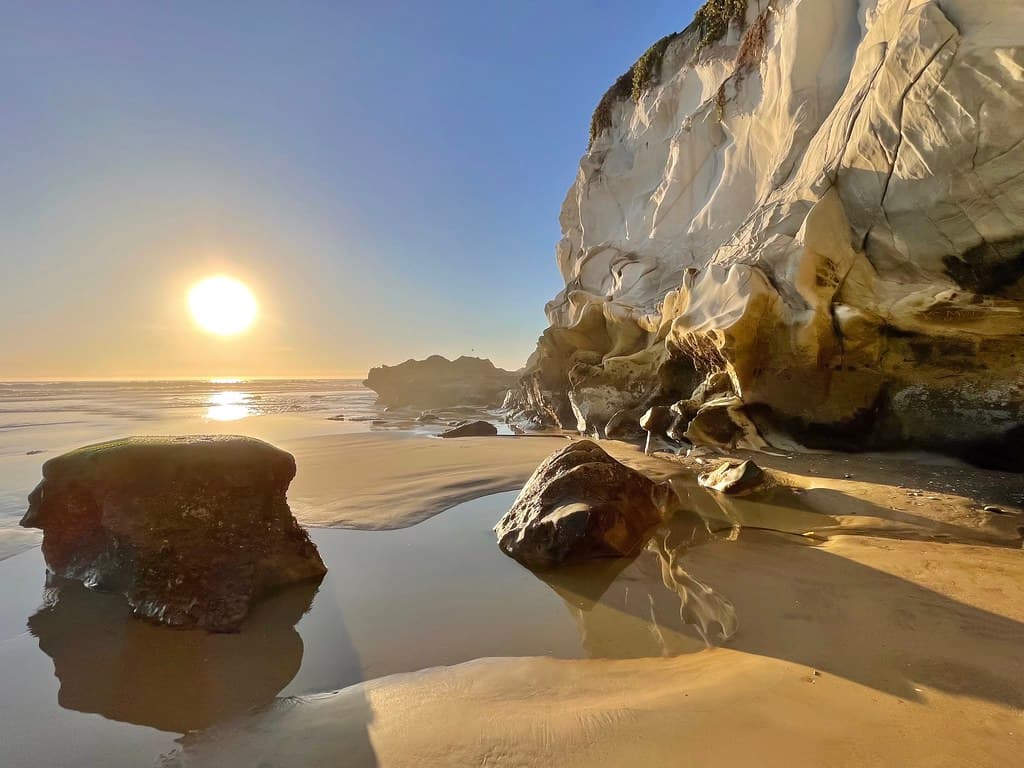 Credit: Flickr
Low tide
The patrolled swimming area lies south of the rock platform, a turquoise basin where toddlers wade and lap swimmers carve morning sets. A netted ocean pool clings to the southern rocks, filled and emptied by each tide cycle. On weekends the car park overflows—Lake Macquarie families arrive with eskies and pop-up tents, claiming patches of coarse sand early. The surf club serves bacon rolls until midday; you'll queue behind wetsuit-clad regulars debating swell forecasts.
Beyond the headland, the beach curves toward Spoon Rocks, a snorkeling corridor where leather jackets and luderick nose through the weed beds. The coastal track continues south, passing Norfolk pines and weatherboard holiday cottages painted in sun-faded pastels. You'll walk it in fifteen minutes, past dog walkers and retirees in visors, the path close enough to the shore that spray mists your arms when the wind swings easterly.


