
Crowdy Head thrusts into the Pacific like a defiant fist, its volcanic headland dividing two distinct stretches of coast. The beach unfurls south of the lighthouse in a broad crescent of tan sand, where the roar of breaking waves never quite stops. On windy afternoons, you'll taste salt on your lips before you step out of your car.
“One of New South Wales' few staffed lighthouses still standing watch over a surf beach shaped by ancient volcanic geology.”
 Credit: Flickr
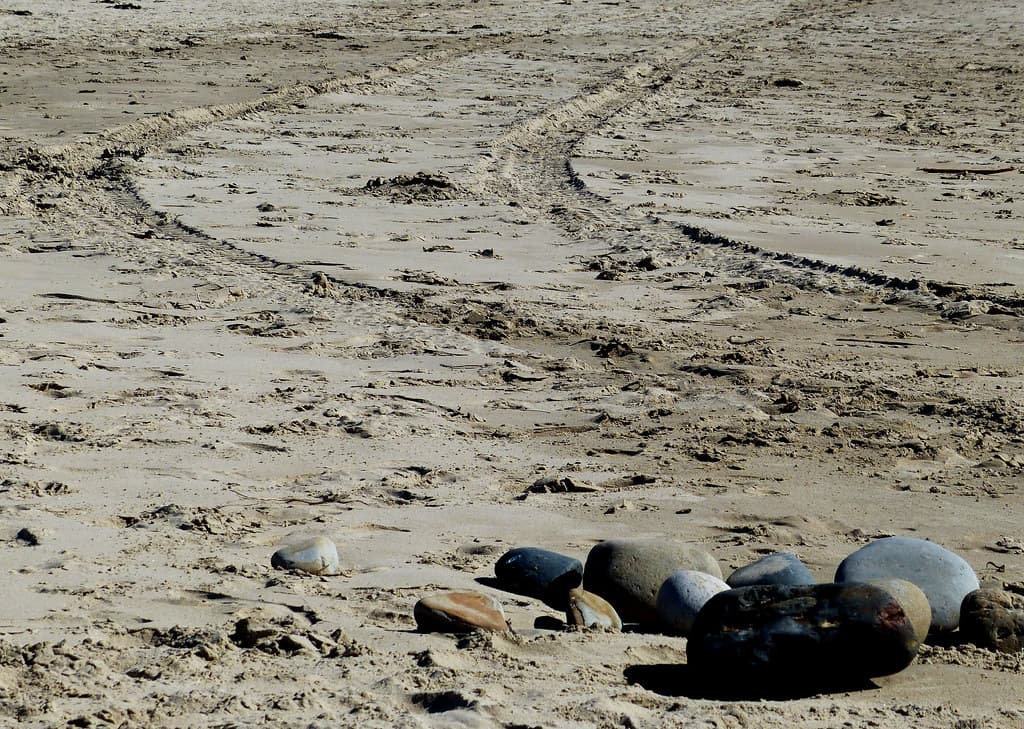
Sand tracks
The 1878 lighthouse—still operational, still keeper-staffed until 1987—commands the high ground, its red and white bands visible from every angle of the beach below. A walking track loops the headland through wind-sculpted coastal scrub, where you might catch migrating humpbacks breaching offshore between May and November. The rocks at the point are dark basalt, remnants of the Crowdy Head Volcanics formation, and they create the reefs that shape the surf breaks locals have ridden for decades.
This isn't a beach for idle sunbathing. The ocean here insists on your attention—whether you're paddling out past the shore break, scanning the horizon for whale spouts, or simply standing at water's edge while the wind reshapes the sand around your feet. The community remains small, tight-knit, built around fishing and the rhythms of swell and tide. There's no resort development, no beachfront high-rises. Just the lighthouse, the ocean, and the people who understand both.


