
Elizabeth Beach curves into the coastline like a cupped hand, its northern and southern headlands offering just enough shelter to keep the ocean honest without taming it completely. The sand is firm underfoot, tawny and speckled with shell fragments, and it slopes gently into water that shifts from jade near shore to deepening navy beyond the break. You'll notice the absence of rips on calmer days—a rarity along this stretch of coast—which is why multi-generational groups claim the same spots each summer, their beach tents forming a familiar village of primary colors and faded canvas.
“The headland-protected swell creates rare consistency for swimmers and learners without sacrificing the rhythm of real surf.”
 Credit: Flickr
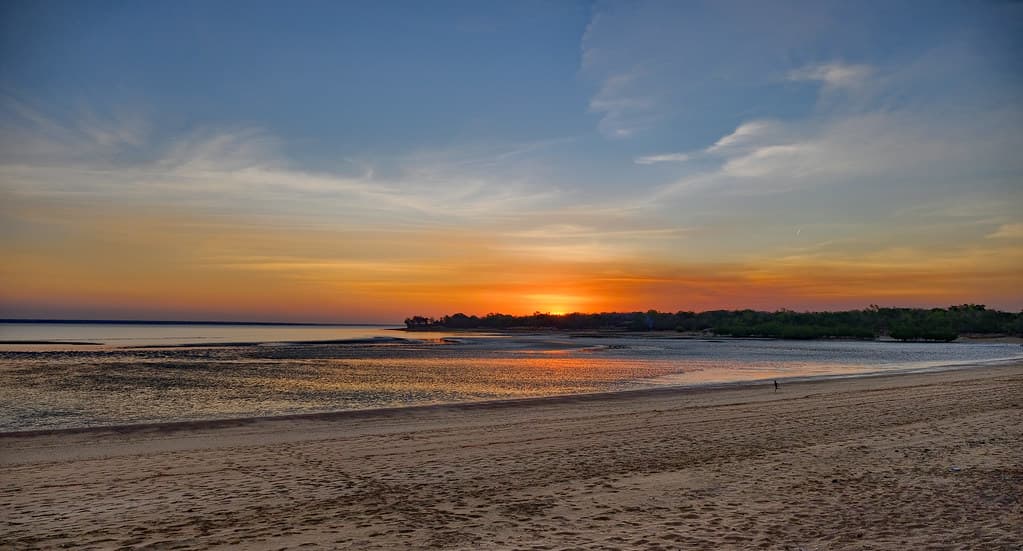
Low tide sunset over East Point, Darwin Harbour, NT, Australia
The rock platforms bookending the beach hold tide pools studded with periwinkles and neptune's necklace, and at low tide you can pick your way across barnacle-crusted boulders to reach quieter pockets of sand. Overhead, white-bellied sea eagles glide on thermals, occasionally folding into steep dives. The patrolled zone runs from October to April, but even in the shoulder months the consistency of the swell keeps body-boarders and novice surfers rotating through waist-to-chest-high sets.
Pacific Palms, the cluster of villages that includes Elizabeth Beach, feels purposefully underdeveloped—no high-rises, no beach clubs. You'll find one modest kiosk, a gravel car park shaded by coastal banksias, and a single wooden shower that runs cold. It's that restraint, that refusal to over-curate, that keeps locals loyal and visitors returning.


