
Fingal Bay curves for nearly a kilometer along the Hunter Coast, its beach broad enough to absorb summer crowds yet intimate enough that you can still claim a patch of sand on a January weekend. The water stays temperate year-round—warm enough for bodysurfing in December, brisk but swimmable in July. Families stake out the southern shallows where the surf patrol flags snap in the onshore breeze, while the northern headland draws surfers chasing the easterly swell that wraps around the point.
“The tidal tombolo to Shark Island transforms the beach twice daily, offering a rare walk-through geology lesson and panoramic bay views.”
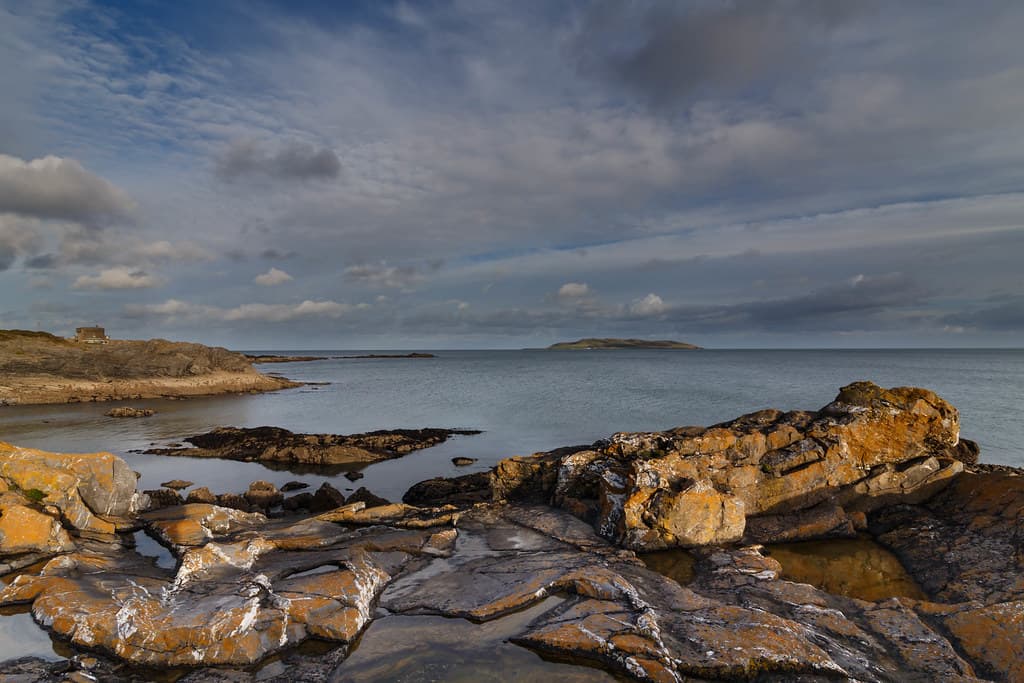 Credit: Flickr
On a Rocky Shore
What distinguishes Fingal from the dozens of beaches scattered along Port Stephens is the tombolo: a low-tide land bridge linking the mainland to Shark Island. When the tide recedes, you can walk the hundred-meter rock path, tide pools brimming with anemones and blue-ringed crabs, then scramble up the island's scrubby track for a view back over the bay. The tombolo draws amateur photographers by the dozen, but go at dawn and you'll have the crossing nearly to yourself.
The town behind the beach is compact—a clutch of weatherboard holiday rentals, a surf club perched on the dunes, a single general store selling lamingtons and reef-safe sunscreen. There's no boardwalk glitz, no high-rise shadow. Just Norfolk pines leaning landward in the prevailing wind, and the quiet hum of a place that knows exactly what it is.


