
The stones shift and clatter beneath your boots as you step onto Pebbly Beach, a sound like distant applause carried on the salt wind. Within minutes, you'll likely encounter your first eastern grey kangaroo—not in a zoo enclosure or wildlife park, but here on the sand, utterly unbothered by your presence. They graze on tussock grass near the dunes, mothers with joeys peering from pouches, big males reclining in the afternoon shade. The scene feels improbable: marsupials and shoreline, bush and breakers, as if two quintessentially Australian landscapes have collided.
“It's the only beach in Australia where wild kangaroos habitually share the shoreline with swimmers and walkers, grazing casually beside the surf.”
 Credit: Flickr
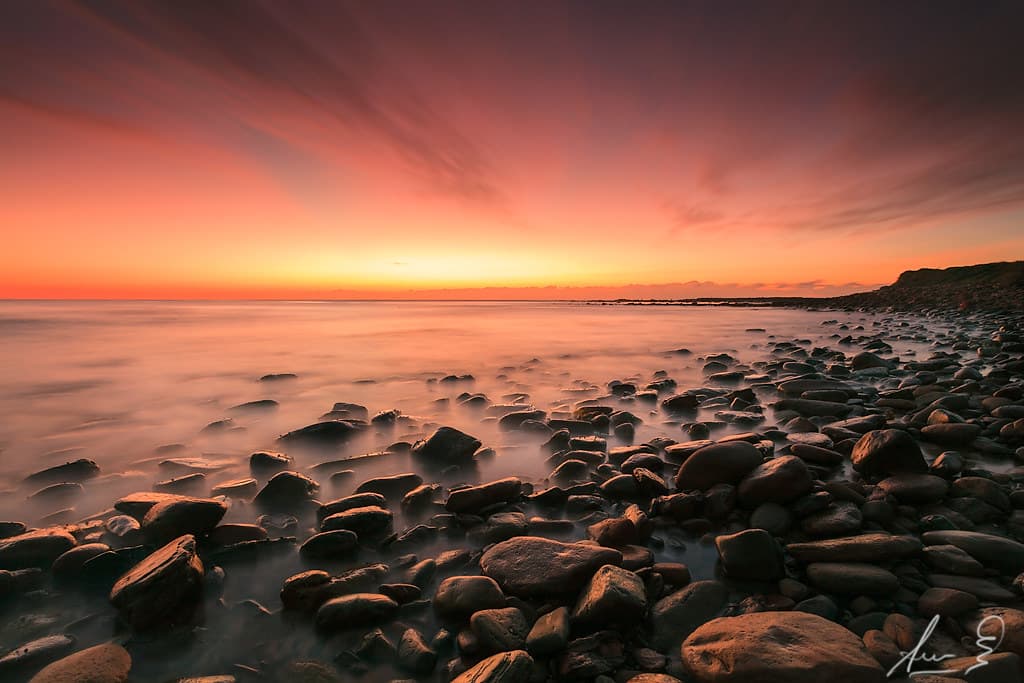
Long Reef First Light
The beach itself stretches in a south-facing arc, where rounded stones—polished by millennia of wave action—replace the expected sand. Murramarang National Park presses close behind, banksia and coastal wattle forming a dark green wall. The surf here is earnest, not gentle; waves slam onto the shore with force enough to tumble the pebbles into a growling percussion. Tide pools collect between rock platforms at the southern end, harboring anemones and small crabs.
You'll share this stretch with few others. The gravel road in discourages casual visitors, and the basic campground nearby attracts those willing to trade amenities for proximity to something rare: a place where wildlife moves through its daily routine as if humans are merely another feature of the coast. At dusk, kangaroos emerge from the forest in greater numbers, and you'll stand still, listening to the stones rattle and the waves break, watching Australia be itself.


