
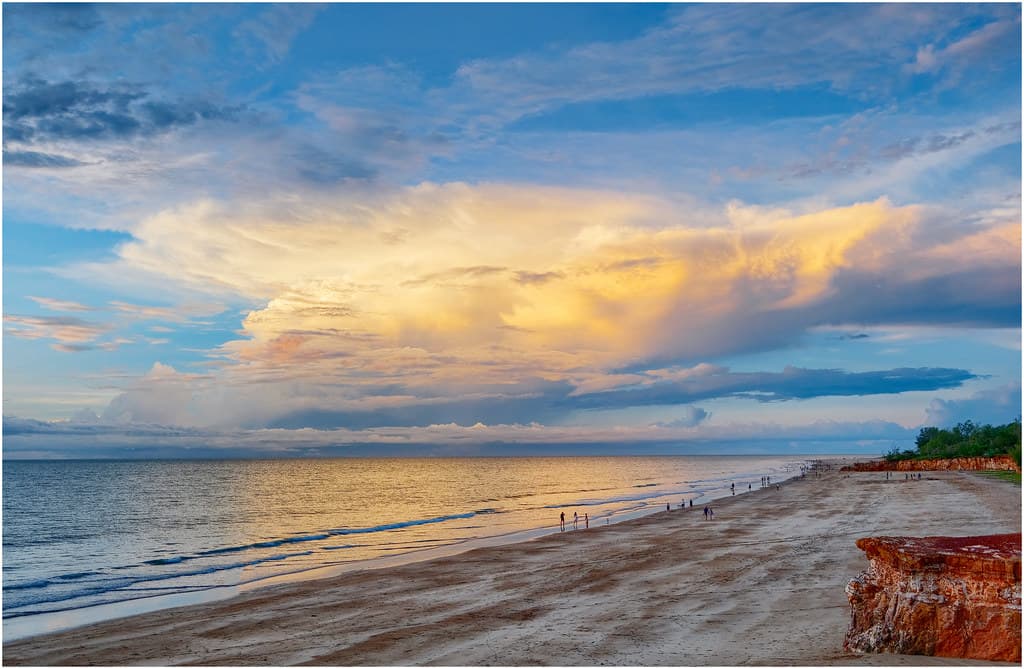
Launch your tinnie from the concrete ramp and you're moments from the rivermouth bar, but most visitors to Pilot Beach never leave the sand. The estuary side of Laurieton's twin-beach geography means you can read the shipping news on hulls moored fifty metres offshore while your children dig channels that actually hold water instead of draining into the sand. Families return to the same Norfolk pines for shade, claiming patches of lawn that slope gently toward the tideline.
“It's the only major swimming beach on Camden Haven's protected estuary side, where river current replaces ocean swell.”
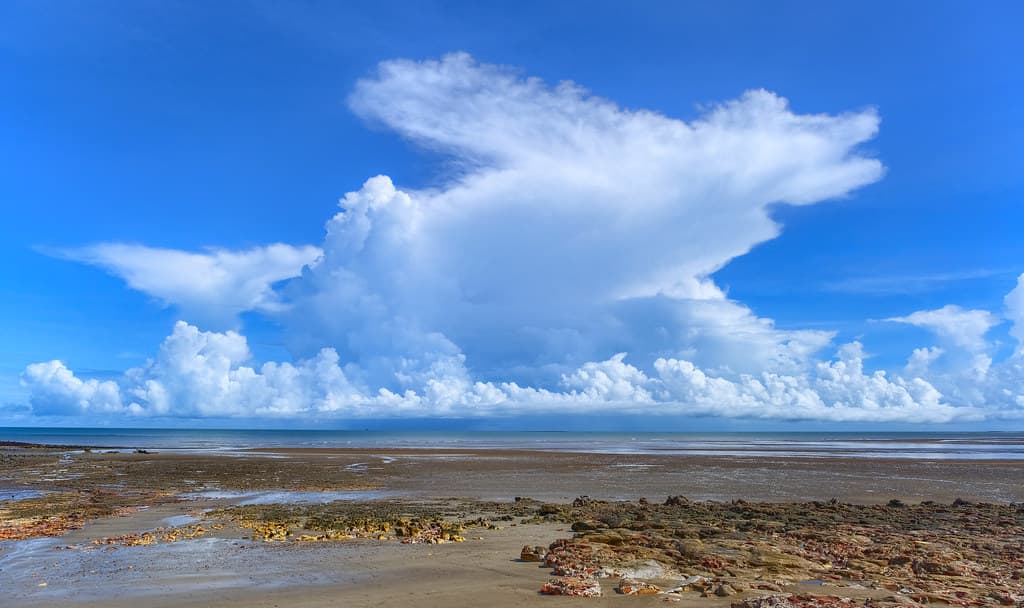 Credit: Flickr
Another iteration of Hector the Convector (see below information) - as seen from Nightcliff Beach, Darwin Harbour, NT, Australia (15 Dec 2020)
The water here runs a degree or two warmer than the ocean beaches across the headland, filtered through mangrove flats upstream and sheltered from the Tasman's winter chill. You'll see grandparents waist-deep in January, flathead fishermen casting into the channel at dawn, kayakers threading between moored yachts. The Camden Haven Yacht Club anchors the northern end, its deck crowded with sailors nursing post-race beers.
By late afternoon, the pontoons fill with teenagers practising backflips while their parents set up portable barbecues in the reserve behind the beach. This is swimming without the rip-current calculus, beaches without the tower flags and whistles—just tidal estuary water that changes personality twice a day and a shoreline that's claimed the same local families for generations.


