
The asphalt ramp descends through coastal she-oaks to meet a beach that refuses to perform. No branded surf shops flank the entrance, no beachfront apartments tower overhead—just the 1920s art deco surf club building and a car park where tradies eat fish and chips from the back of their utes. You'll kick off your sandals onto sand that holds the morning's coolness longer than the more exposed stretches up the coast, thanks to the shade thrown by Glenrock State Conservation Area's forested bluffs to the south.
“Dixon Park refuses to gentrify, remaining defiantly unglamorous despite sitting on one of Australia's most revitalized waterfronts.”
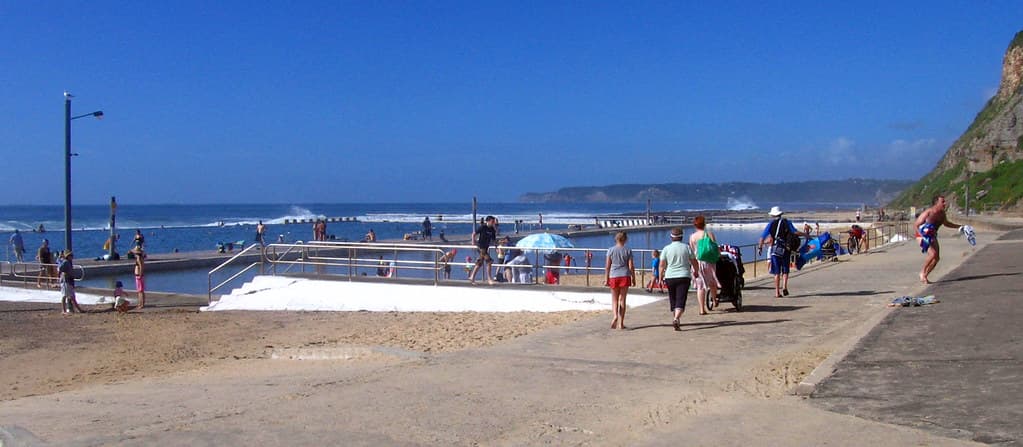 Credit: Flickr
Merewether Ocean Baths
The shore break pounds with dependable winter south swells, carving steep peaks that hold shape even when the wind roughens. Between sets, you'll notice the water carries the amber tint common to Hunter River-influenced beaches—not murky, just honest about where the coastline meets the region's industrial veins. Dog walkers claim the southern end near the rock platform at low tide, where shallow pools warm in the afternoon sun and reveal darting bream.
By mid-morning the ocean pool at the northern rocks fills with lap swimmers who've graduated from the Newcastle Ocean Baths up the coast. The grassed reserve behind the dunes hosts weekend soccer matches and the particular brand of Australian family gatherings where eskies outnumber people. You'll leave with sand in your car's floor mats and the sense that you've stumbled onto a beach that belongs to the people who actually live here, not the ones passing through.


