
You park in a small gravel lot beneath Norfolk Island pines, their needles crunching underfoot as you cross the low dune to reach the sand. Burgess Beach unfolds in a wide, unhurried arc—golden shore meeting the Tasman without theatrics or frills. The headland to the south blocks the view of Elizabeth Beach; here, you're simply alone with sandpipers working the tide line and wind combing the grasses behind you.
“Burgess holds solitude as its signature—a beach that refuses to be absorbed by the tourism machinery surrounding it.”
 Credit: Flickr
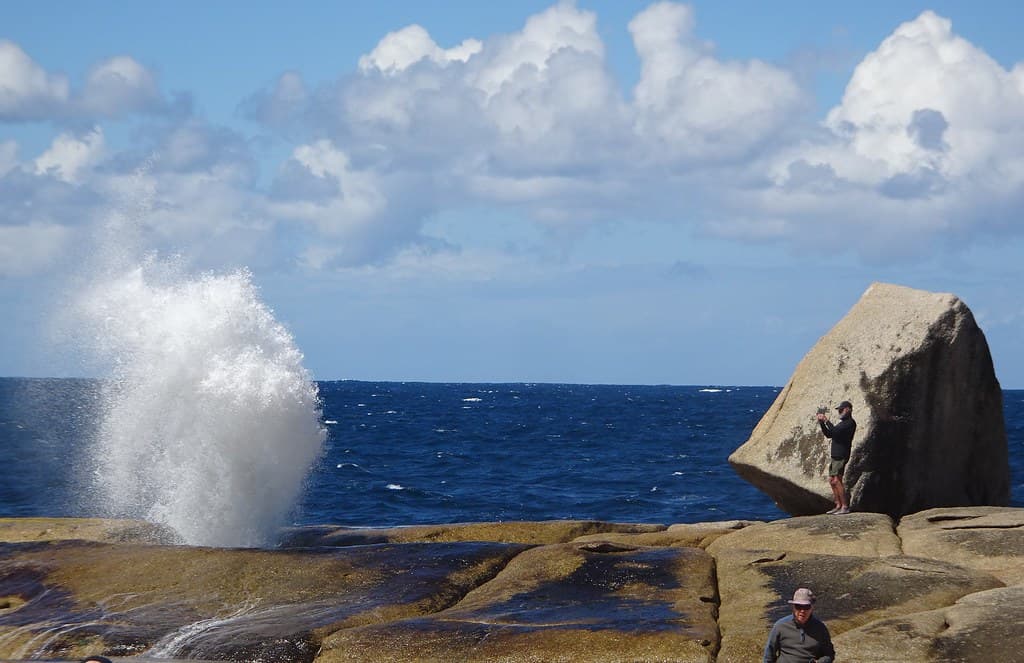
Bicheno Tas. The spectacular Blow Hole on granite outcrops along the coast.
The water runs cool year-round, the kind of bracing Pacific that makes you wade in deliberately, committing with each step. Shorebreaks arrive in small, neat sets, reforming over sandbars that shift with the season. Families spread towels near the flagged patrol zone in summer, but walk north past the rocks and you'll find stretches where footprints are your own.
Behind the beach, the wooded margin feels more hinterland than resort strip—koalas sometimes doze in the upper branches, and at dawn you might catch the flash of a sea eagle scanning the shallows for bream. There are no surf clubs jostling for real estate, no boardwalk vendors. Just the lap of small waves, the scent of eucalyptus on offshore wind, and the rare gift of a beach that hasn't been discovered to death.


