
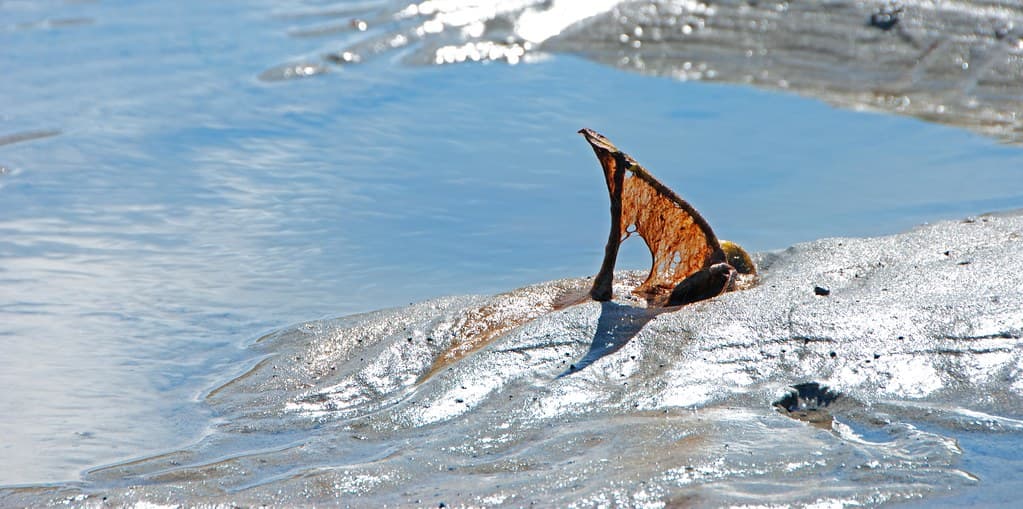
The walk from the nearest car park takes fifteen minutes through low banksia scrub, just long enough to shake off whoever's trailing behind on social media. You emerge onto a crescent where the lake's tannin-stained water laps one edge and the Tasman's swells pound the other, the sandbar itself shifting with each king tide and storm system that rolls through from the southeast.
“One of the rare stretches where you can wade in both lake and ocean within a hundred paces, separated only by a migrating sandbar.”
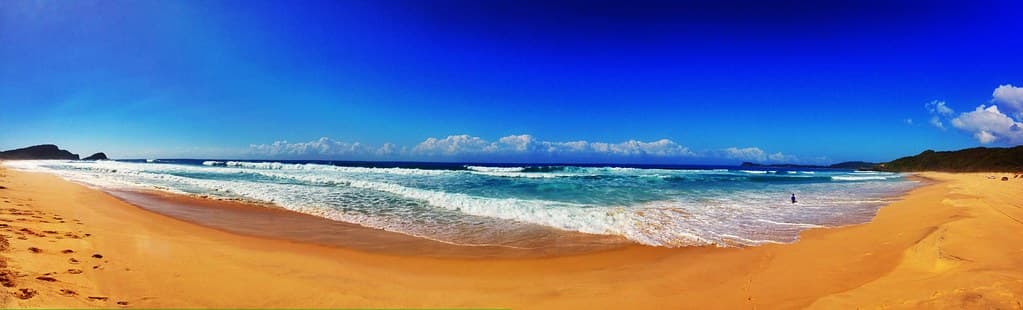 Credit: Flickr
Sandbar beach
Morning light turns the shallows between lake and ocean a shade of amber-green you won't find on postcasts. Gulls work the tideline. Occasionally a pelican drifts across the lake's glassy interior, indifferent to your presence. The beach collects driftwood in sculptural piles—bleached she-oak branches, kelp holdfasts the size of dinner plates—and the only footprints tend to be yours and whatever dog got here first.
Pack everything in and out; there's no kiosk, no surf club, no amenities beyond what the coast provides. The locals from Pacific Palms know Sandbar as the place to disappear for an hour when Blueys and Boomerang are packed with weekenders. If you're after solitude with a soundtrack of white noise and birdcall, this is your currency.


