
You'll find Red Head Beach tucked between its more famous neighbours along the Great Lakes Coast, a horseshoe of sand framed by the ochre headland to the south and grassy bluffs to the north. The beach takes its name from the iron-rich cliffs that glow rust-red in afternoon light, a geological signature that's unmistakable when you round the coastal road from Hallidays Point. Local dairy farms run right to the cliff edge, and you'll often spot black-and-white Friesians grazing as you descend the weathered timber stairs.
“The headland's iron-oxide cliffs create the only rust-red coastal geology along this stretch of the Manning shoreline.”
 Credit: Flickr
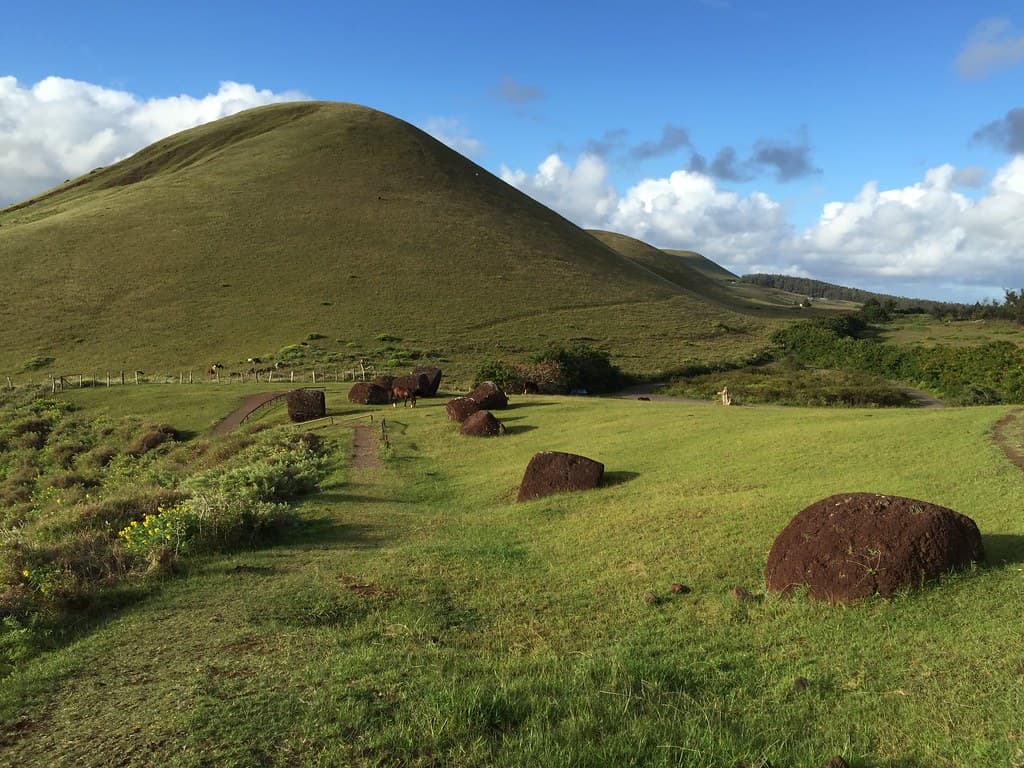
The Pukao(s), the Puna Pau Crater, the Extinct Volcano Maunga Vai-o-Hao, Rapa Nui (Easter Island), Chile, Polynesia, Oceania.
The waves here break with consistency year-round, thanks to the south-facing aspect that catches swells rolling up from the Tasman. You'll share the line-up with a handful of regulars who know the sand bar shifts after big easterlies, reshaping the break from week to week. Between sessions, the rock platform at the southern end reveals tidal pools thick with Neptune's necklace and cunjevoi, while brahminy kites circle overhead hunting for baitfish stranded in the shallows.
The beach remains pleasantly undeveloped—no surf club, no kiosk, just a small carpark and those stairs leading down through coastal scrub thick with banksias and she-oaks. Pack everything in and out; the nearest shops sit three kilometres back in Red Head village, where the general store still sells meat pies kept warm under heat lamps and the milk bar hasn't changed its awning since 1987.


