
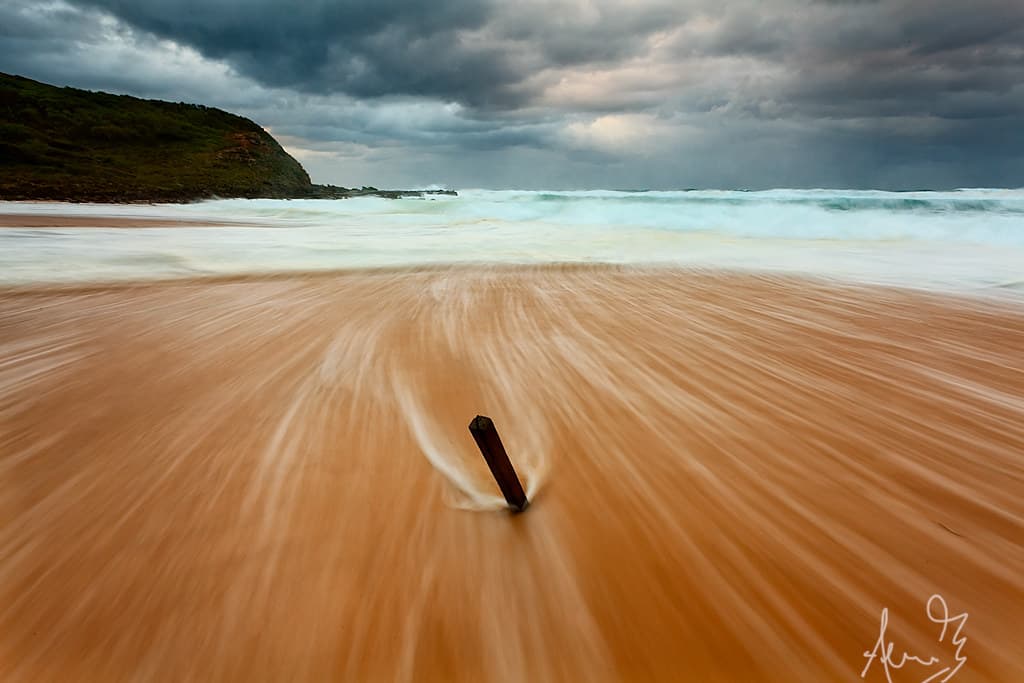
The descent into Garie reveals itself in stages: first the coast road winding past weathered she-oaks, then the glimpse of cobalt water through twisted branches, finally the car park where sand has blown across asphalt and saltbush clings to the dunes. You're forty minutes from suburban Sydney, yet the nearest building is a modest surf club tucked beneath the southern headland.
“Australia's oldest national park frames the only surf beach within Sydney's protected wilderness boundary.”
 Credit: Flickr
Australian Coastline
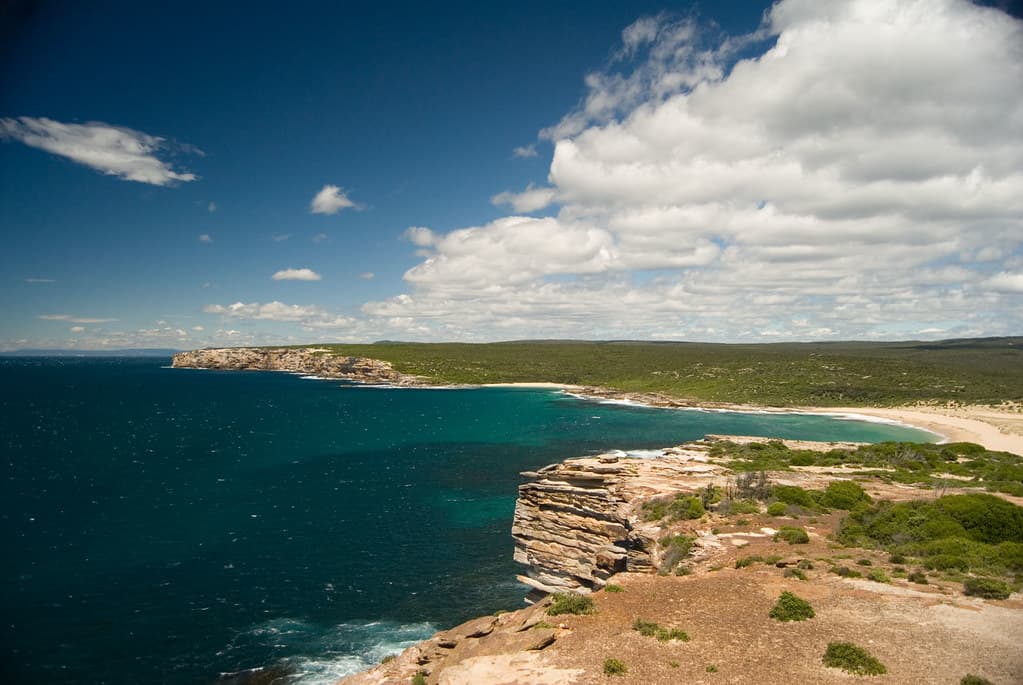
The beach stretches nearly a kilometer, hemmed by rock platforms dark with algae at low tide and headlands that glow amber in late afternoon light. Surfers paddle out near the northern rocks where the swell wraps cleanest; families spread towels closer to the patrol flags where the shore break softens. Behind the beach, a lagoon fed by Garie Creek meanders through ti-tree and reeds—wading depth for children, brackish and tea-colored.
What anchors you here isn't just the waves or the walking trails threading into the park's interior. It's the improbable proximity of genuine coastal wilderness to a city of five million. Dolphins surface beyond the break. Eastern water dragons sun themselves on boulders. The afternoon wind carries the scent of honeyed wattle, and when you turn your back to the ocean, there's nothing but bush stretching toward the sandstone plateau—as untamed now as it was when this became the world's second national park in 1879.


