
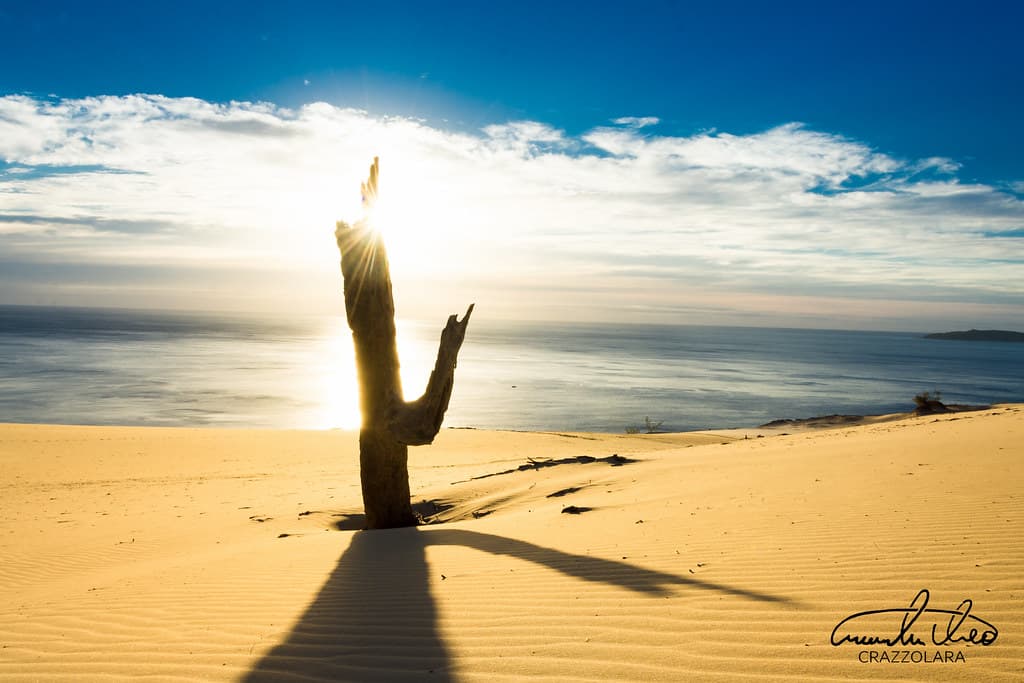
Sandy Beach reveals itself gradually. You park beneath the whispering she-oaks, cross a stretch of mown grass dotted with weathered picnic benches, then step onto sand the color of raw honey. The beach arcs southward for eight hundred metres, bookended by low headlands thick with coastal scrub. Morning light turns the water jade; by afternoon it deepens to indigo as the offshore breeze stitches patterns across the surface.
“A village beach untouched by commercial polish, where banksia and she-oak meet sand without a cafe or surf shop in sight.”
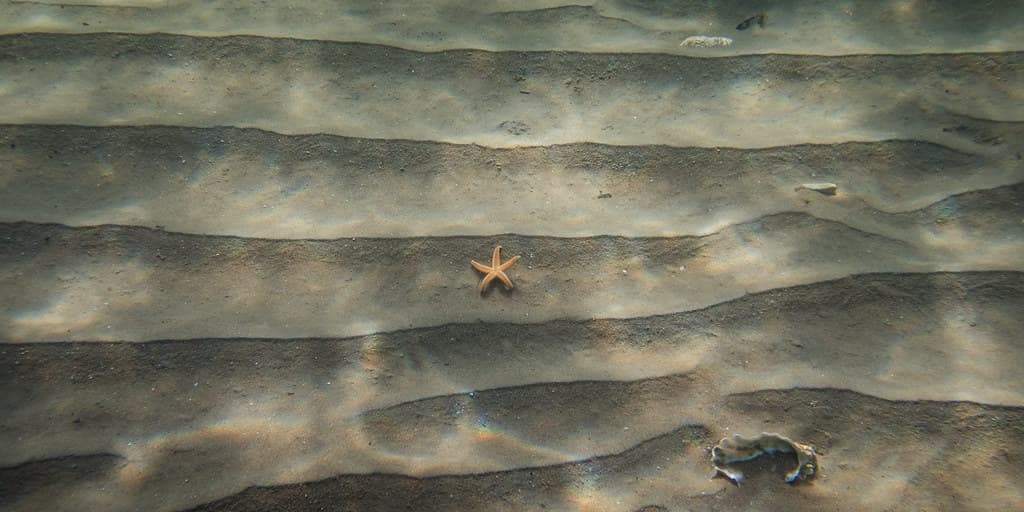 Credit: Flickr
Lone starfish, Long Beach, Sandy Bay
Families spread towels near the surf club, where the flagged swimming zone stays reliably calm. Walk north and you'll find the rockpool—a natural basin carved into the platform, warm and shin-deep when the tide cooperates. Local kids jump from the edge while parents wade in the shallows. The southern end attracts the occasional surfer; waves here roll in with more shape than power, forgiving enough for learners, fun enough to kill an hour between the flags.
The village itself barely qualifies as a dot on the map—a handful of holiday rentals, no cafés, no surf shops. That's the appeal. You bring your own provisions, claim your patch of grass or sand, and settle into the rhythm of a beach that hasn't bothered to reinvent itself. By late afternoon, the only sound is the thump of shorebreak and the distant clatter of a kookaburra in the paperbark grove behind you.


