
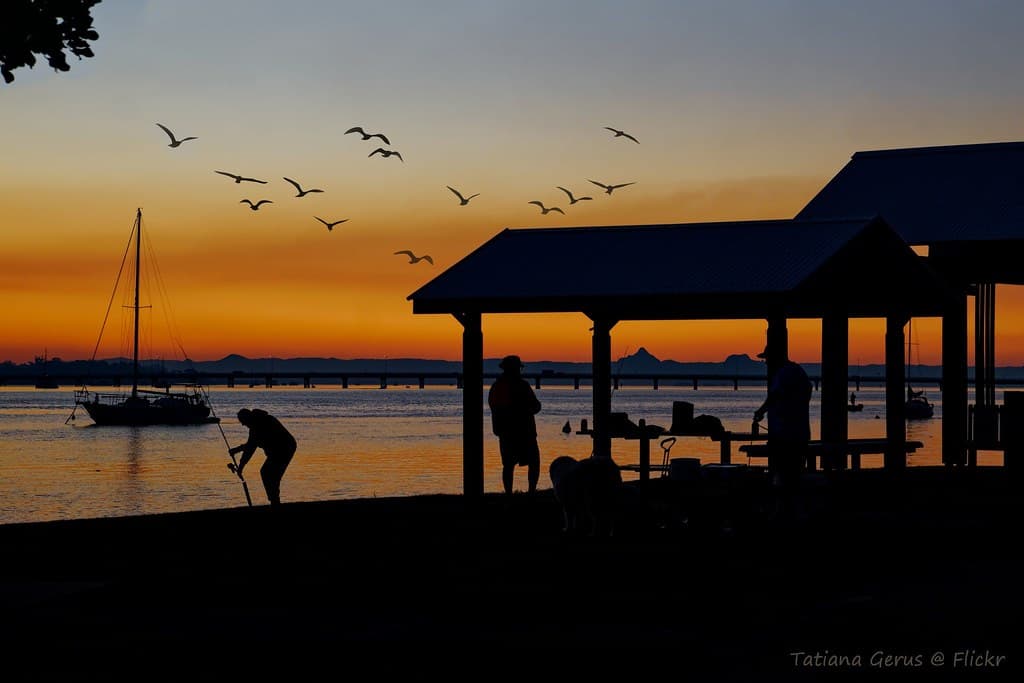
The track down feels more like a neighbors' shortcut than a proper beach access: sandy ruts, coastal scrub brushing your shins, the faint smell of salt and eucalyptus mixing as you descend. When the trees part, you see why locals named it plainly. A handful of tinnies rest on their trailers or tilt in the shallows, anchored for an afternoon's fishing. The beach itself curves tight—barely a hundred meters end to end—hemmed by boulders darkened with lichen and the occasional slick of kelp.
“A working boat-launch beach where locals still tie off tinnies and haul in the day's catch, untouched by resort development.”
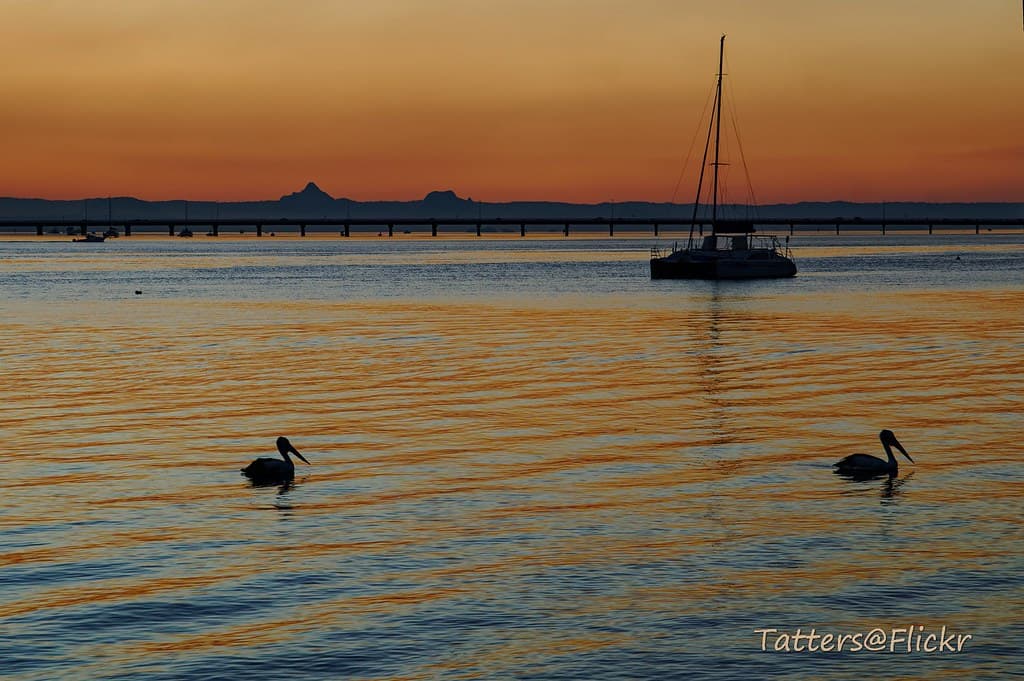 Credit: Flickr
Bribie island sunset
The water here reads differently depending on the tide. At high, waves fold gently against the rock platforms; at low, tide pools reveal anemones, crabs scuttling sideways, the odd stranded baitfish. Gulls wheel overhead, and if you time it right in winter, you might spot a pod of dolphins threading the channel beyond the point. There's no cafe, no flagged swim zone, no lifeguard tower—just a weathered bench someone bolted to a log and the rustle of casuarinas when the easterly picks up.
You won't find Boat Beach on most travel itineraries, and that's the charm. It exists for the fisherman launching at dawn, the family who's summered here for three generations, the photographer chasing that specific slant of afternoon light on stone. Bring what you need; leave only bootprints in the sand.


