
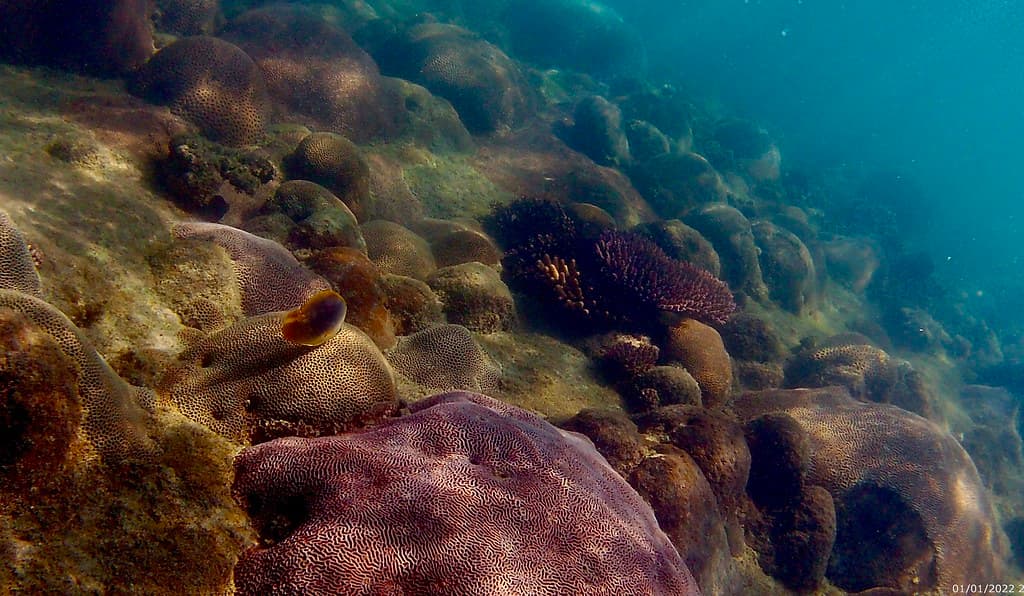
The bay announces itself as you crest the headland road—a perfect arc of sand tucked between Trial Bay to the north and Laggers Point to the south, the kind of symmetry that looks airbrushed until you're standing in it. You park under the pines, cross the grassy foreshore in bare feet, and step onto sand that squeaks underfoot. The water temperature hovers around 20°C even in winter, warmed by the East Australian Current that brushes this stretch of coast.
“Natural headlands create a swimming pool effect with ocean clarity but lagoon calm, rare along this exposed coastline.”
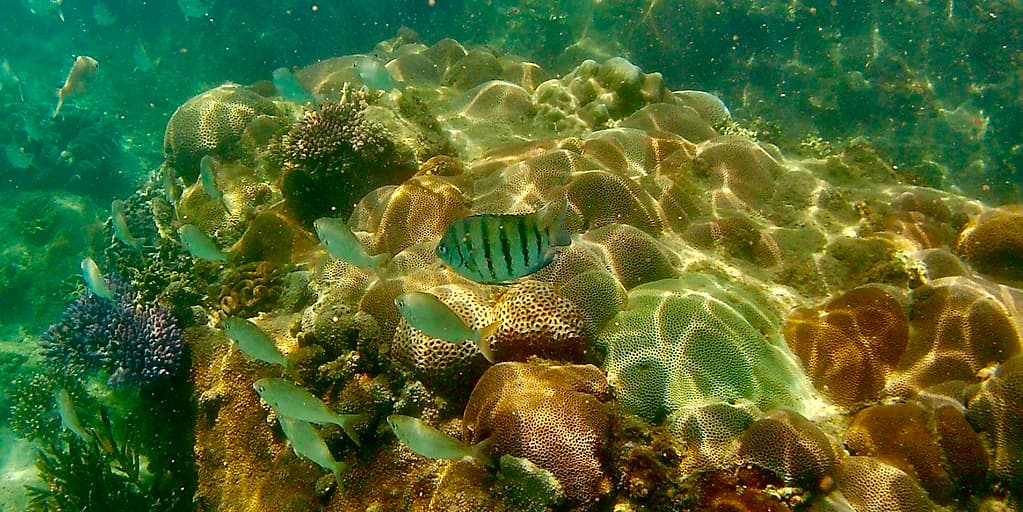 Credit: Flickr
Snorkeling the corals at Horseshoe Bay, Bowen (Great Barrier Reef), Australia
Families stake out the southern end where the shallows stretch widest; you'll watch toddlers chase dart fish in ankle-deep water while their parents float on inflatables twenty metres offshore, toes still touching bottom. The northern rock platform draws snorkelers at high tide—leather jackets, wrasse, and the occasional wobbegong shark rest in the kelp shadows. Local fishers work the edges at dawn, flicking soft plastics for bream and flathead.
By late afternoon the western headland casts a wedge of shade across half the beach. You'll spread your towel in the last patch of sunlight or retreat to the picnic tables beneath the she-oaks, where kookaburras wait for dropped chips and the smell of sausages on public barbecues drifts through salt air. The protected aspect means the bay stays swimmable when beaches five kilometres south turn to washing machines.


