
The drive down Beach Road winds through coastal heath and melaleuca scrub until the asphalt ends at a gravel carpark overlooking a beach that feels untouched by the tourism machinery grinding along the Pacific Highway twelve kilometers west. Hungry Head curves south from a rocky headland darkened by mineral stains, its sand coarse and speckled with shell grit. When the swell runs, you'll watch sets stack along the reef at the southern end, peeling left with enough punch to make the paddle worthwhile.
“The convergence of river mouth and reef creates shifting sandbars and unpredictable breaks that require genuine local knowledge to navigate safely.”
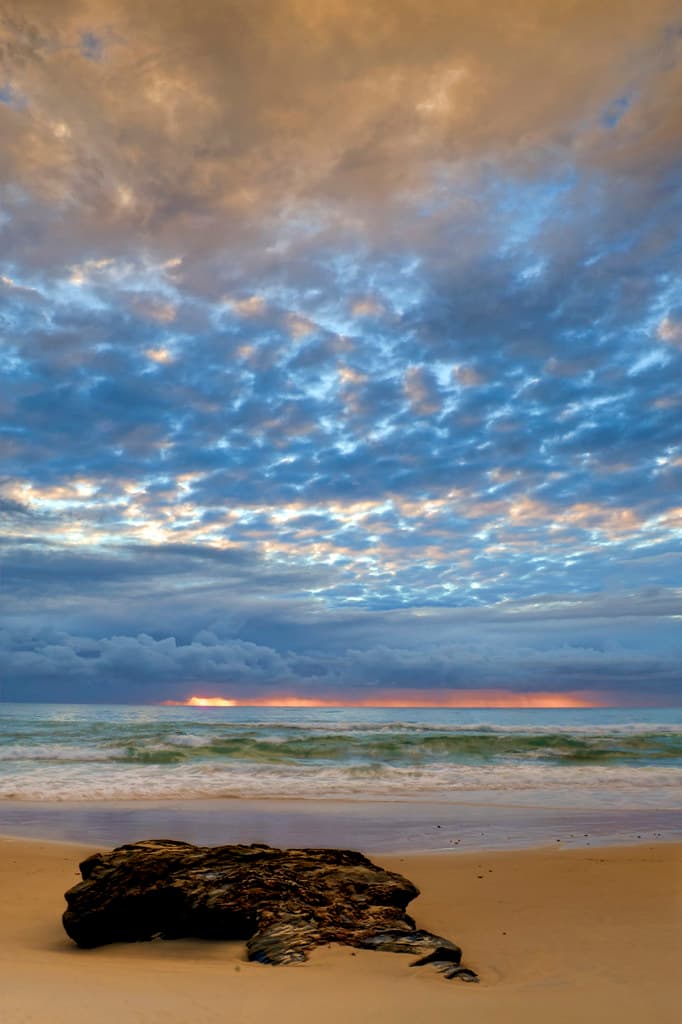 Credit: Flickr
Ocean view
The beach sits in the pocket between Urunga's estuary calm and the raw coast that stretches toward South West Rocks. Pandanus palms lean landward from decades of onshore winds; banksias drop their cones across the dunes. At low tide, tidal pools form in the basalt platforms, and you can walk the full sweep of sand to where the Nambucca River mouth churns brown water into the blue. Pelicans patrol the current line. Terns work the shallows.
There's no surf club, no patrolled flags, no kiosk selling overpriced sunscreen. You bring what you need, take what you came for, and leave before the afternoon nor'easter turns the surface to chop. The few who know Hungry Head guard it quietly—not out of possessiveness, but because some places earn their anonymity through isolation and a shoreline that demands respect, not selfies.


