
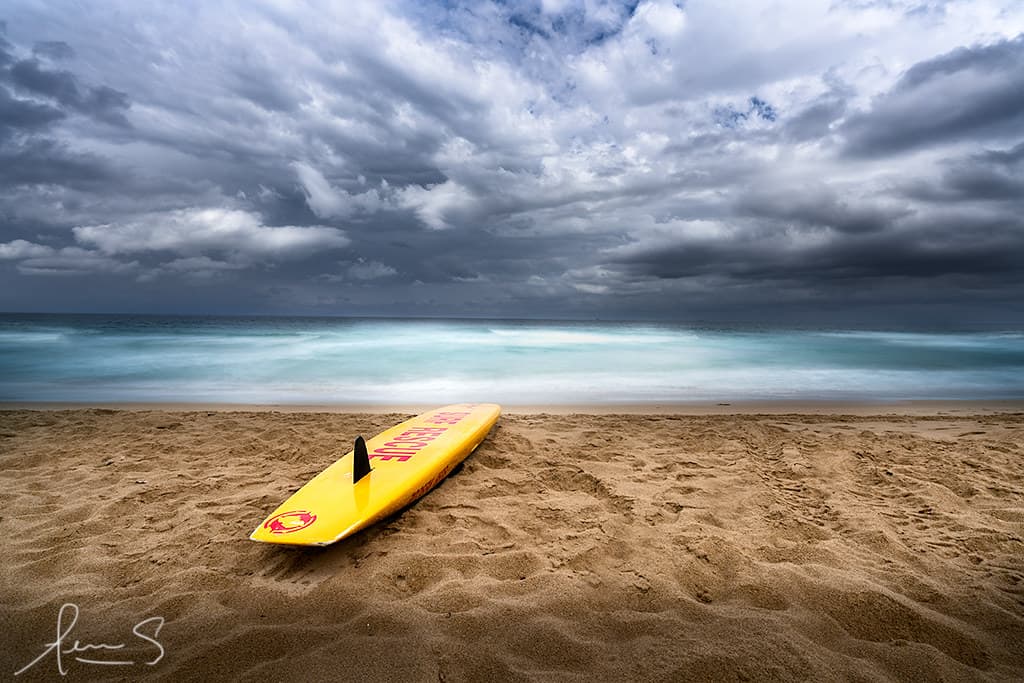
The flag-marked swimming zone sits at the northern end, sheltered by the harbour breakwall, where lap swimmers cut through rollers in the early hours and parents wade with toddlers by mid-morning. South of the flags, the beach opens into a consistent surf break that catches southeasterly swells year-round, drawing longboarders and shortboarders who share the lineup with a relaxed, small-city civility. Behind you, the teal-and-white pavilion houses change rooms and the kind of beachside café where tradies in hi-vis order bacon rolls alongside wetsuite-clad locals still dripping saltwater.
“This is the Illawarra's everyday beach where a working city meets the Pacific without pretense, framed by industrial harbor and forested escarpment.”
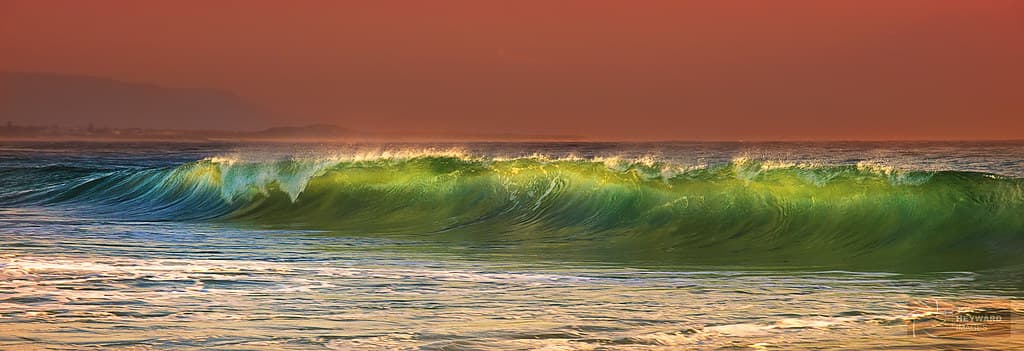 Credit: Flickr
IMGP6450_NthGong-Sunrise-Wave-Pano
The Illawarra escarpment rises steeply behind the city grid, cloaking the beachfront in afternoon shadow earlier than beaches farther north, but mornings blaze with direct sun that throws the clifftop rainforest into sharp relief. You'll follow the paved coastal walk that threads north toward the working harbour or south past rock pools toward Wollongong Head, where anglers cast into the swell and wedding parties pose against the lighthouse. The setting is unmistakably industrial-coastal: container cranes punctuate the northern skyline, while hang-gliders launch from the escarpment ridge above.
Weekends bring a cross-section of Wollongong itself—Sudanese families grilling at the barbecues, university students sprawled on towels, retirees walking terriers along the hard sand. The beach works because it doesn't try to be boutique or remote; it simply absorbs the rhythms of a regional city built between mountain and ocean.


