
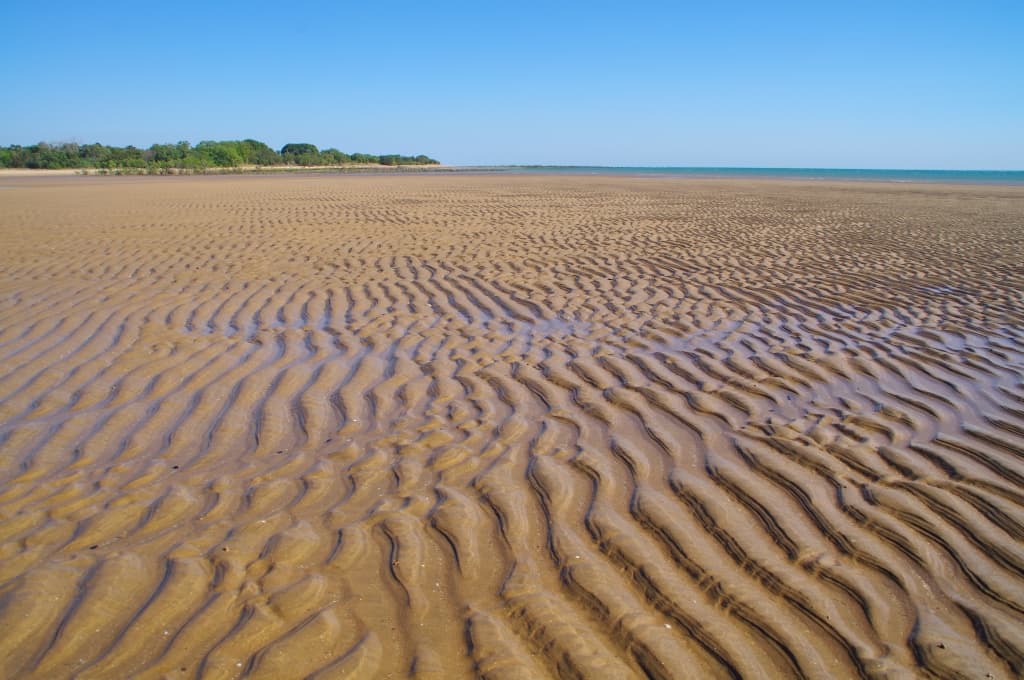
You leave Darwin behind on the Cox Peninsula Road, passing cattle stations and pockets of monsoon forest until the sealed road gives way to red dirt. Wagait Beach announces itself with a small boat ramp, a scattering of weathered picnic shelters, and a shoreline so placid it barely qualifies as surf. The water here is bathtub-warm year-round, and at low tide the flats stretch a hundred metres out, revealing sand ripples and tidal pools that hold tiny fish and the occasional stingray shadow.
“A tidal beach so shallow and calm that toddlers can wade out fifty metres without losing their footing.”
 Credit: Flickr
Low Tide P3379
Families claim the shade beneath paperbark trees, spreading blankets on grass that meets the sand without ceremony. There's no kiosk, no patrol flags, no Instagram hordes—just the hum of cicadas, the distant thrum of a tinny heading out to check crab pots, and the occasional four-wheel-drive trundling down to launch. The simplicity is the point. You swim, you eat sandwiches that taste better outdoors, you let the afternoon unspool without agenda.
By late afternoon the light turns apricot, gilding the mangroves that fringe the northern end and casting long shadows across the flats. Oystercatchers stalk the tideline. The water, still shallow, glows copper. You'll leave with salt-stiff hair and sand in the car, already planning the next visit—because beaches like this, unhurried and unadorned, become quiet addictions.


