
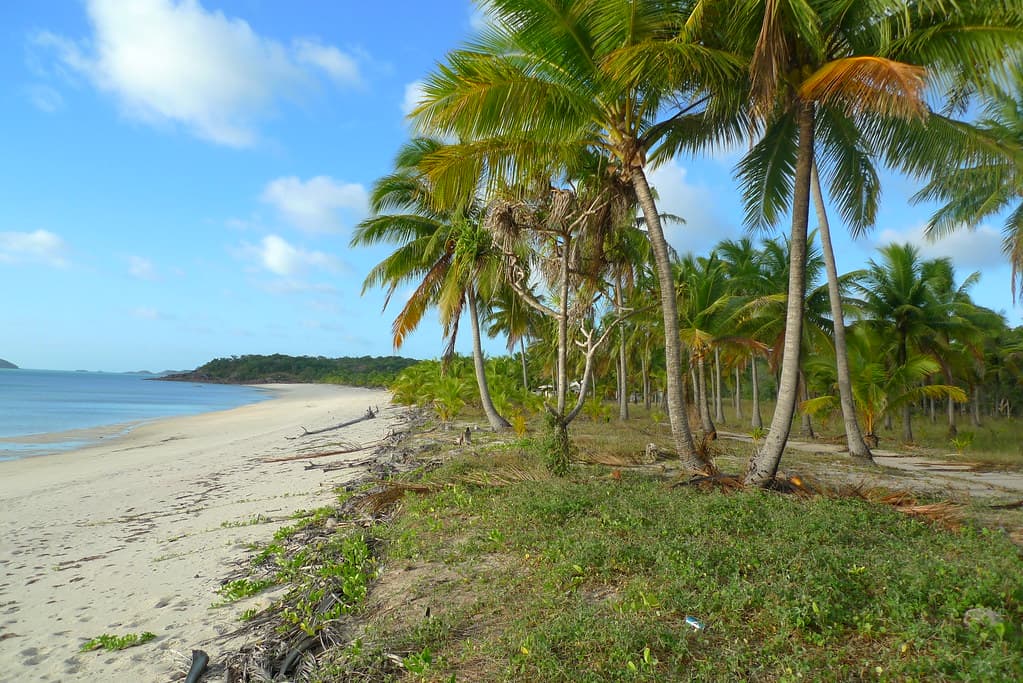
The flight from Horn Island skims low over the Torres Strait, a turquoise maze of reefs and sandbars that separates mainland Australia from Papua New Guinea. When you touch down on Badu Island, the pace shifts immediately. This is a place governed by tide tables, not tour schedules—a Kaurareg homeland where the beach unfolds in long, gentle arcs of bone-white sand fringed by pandanus and coconut palms. The water is bath-warm year-round, shallow enough to wade out fifty meters before it reaches your waist, and alive with darting fish that scatter at your ankles.
“This is one of the few beaches in Australia where you're more likely to encounter dugongs than other travelers.”
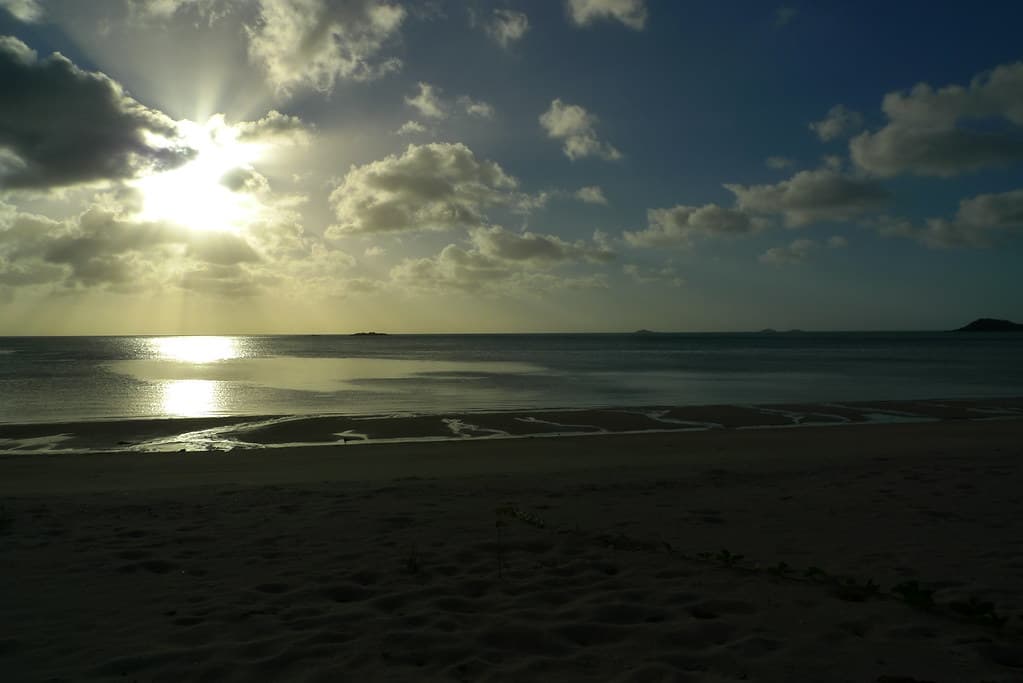 Credit: Flickr
Badu Island Lilly Beach
You won't find beach clubs or even a coastal café here. What you will find is silence broken only by the rustle of casuarina trees and the occasional splash of a sea turtle surfacing offshore. The island's small community welcomes respectful visitors, and a walk along the beach at dawn or dusk often means you're the only person for kilometers. Locals fish from the rocks at the northern end, casting handlines for coral trout and sweet-lipped emperor.
The remoteness is the point. Badu sits in a part of Australia that feels untethered from the rest of the country, a place where the rhythm of the day follows the sun and the tide, not the clock. You'll leave with sand still in your bag and the memory of a shoreline that felt, for a brief moment, entirely yours.


