
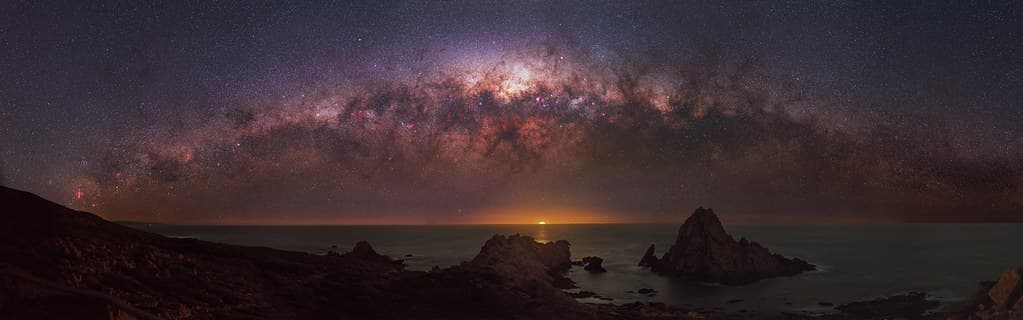
The burnt-sienna hue of Red Beach's sand sets it apart from Bribie's pale ocean-side stretches. You park under shaggy paperbarks, cross a narrow reserve, and step onto a shoreline where kelpies chase tennis balls and stand-up paddleboarders glide toward the mangrove creeks fringing Pumicestone Passage. The water here is bath-warm and shin-deep for fifty metres out—ideal if you're coaxing a toddler in or simply floating on your back while cockatoos screech overhead.
“The iron-oxide sand and protected passage waters create a rare off-leash haven where locals have gathered for generations.”
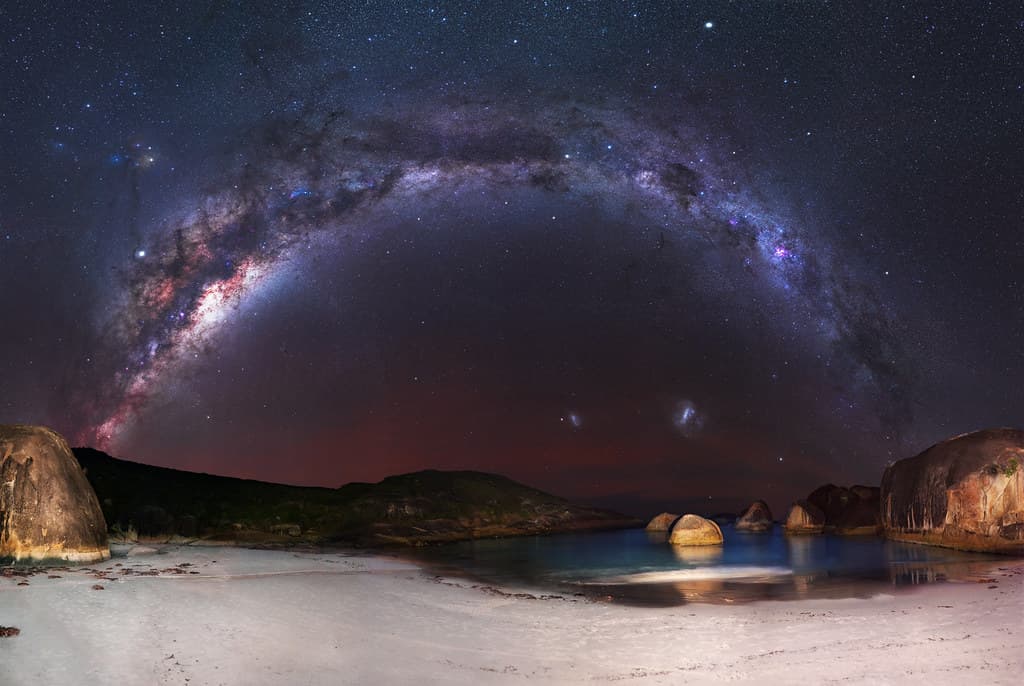 Credit: Flickr
Milky Way at Elephant Cove - Denmark, Western Australia
This isn't the surf-pounded ocean face; it's the sheltered western coast, facing the mainland across a channel studded with navigation markers and fishing boats puttering home at dusk. Locals arrive with thermoses and collapsible chairs, staking out the same patches of sand they've claimed for decades. You'll see retirees wading in knee-high, regulars tossing sticks into the shallows, and the occasional kite-surfer harnessing the afternoon southeasterly that funnels up the passage.
Red Beach earns its identity not from postcard drama but from ritual: the 6 a.m. dog walkers, the families who picnic under the same she-oak every Sunday, the kayakers who know which creek mouth hides the best bream. You won't find beach clubs or surf schools here—just a boat ramp, a grassy foreshore, and the kind of unhurried rhythm that makes you check your watch and realize two hours have vanished while you watched pelicans dive.


