
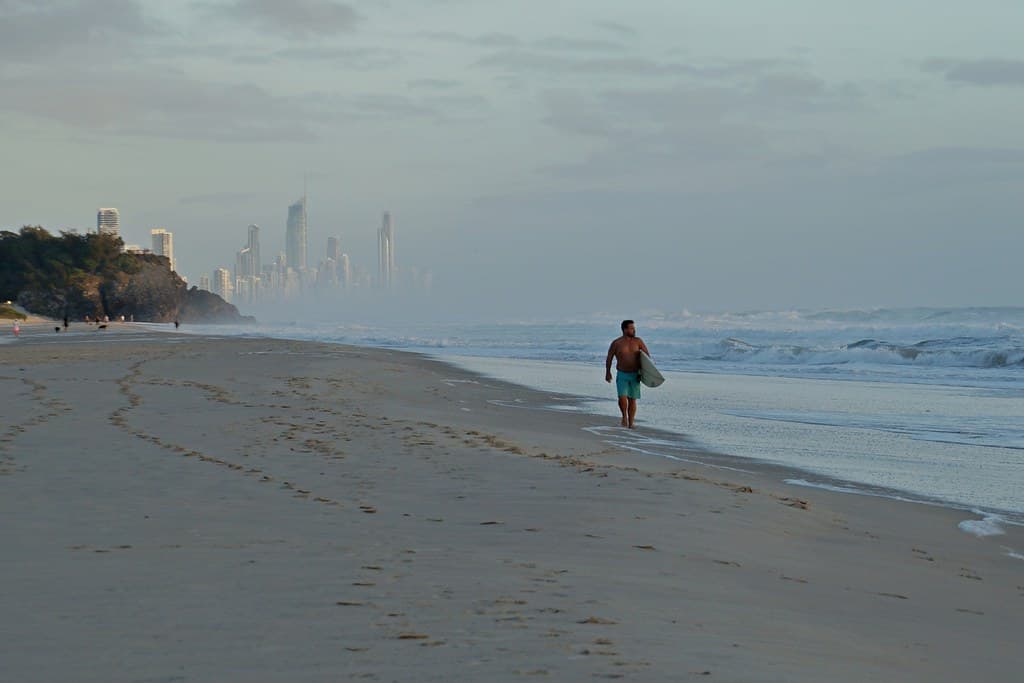
The point break at Burleigh Heads wraps around a knuckle of 23-million-year-old lava, creating one of southeast Queensland's most reliable left-handers. You'll paddle out beside the headland where Norfolk pines tower overhead and the Burleigh Heads National Park pushes dense subtropical forest down to the high-tide mark. Between sets, surfers drift over sandy patches between volcanic reef shelves, the water shifting from jade to navy as channels deepen.
“A volcanic headland anchors both a world-class point break and a thriving rainforest enclave, creating rare dual wilderness in a built-up coastal strip.”
 Credit: Flickr
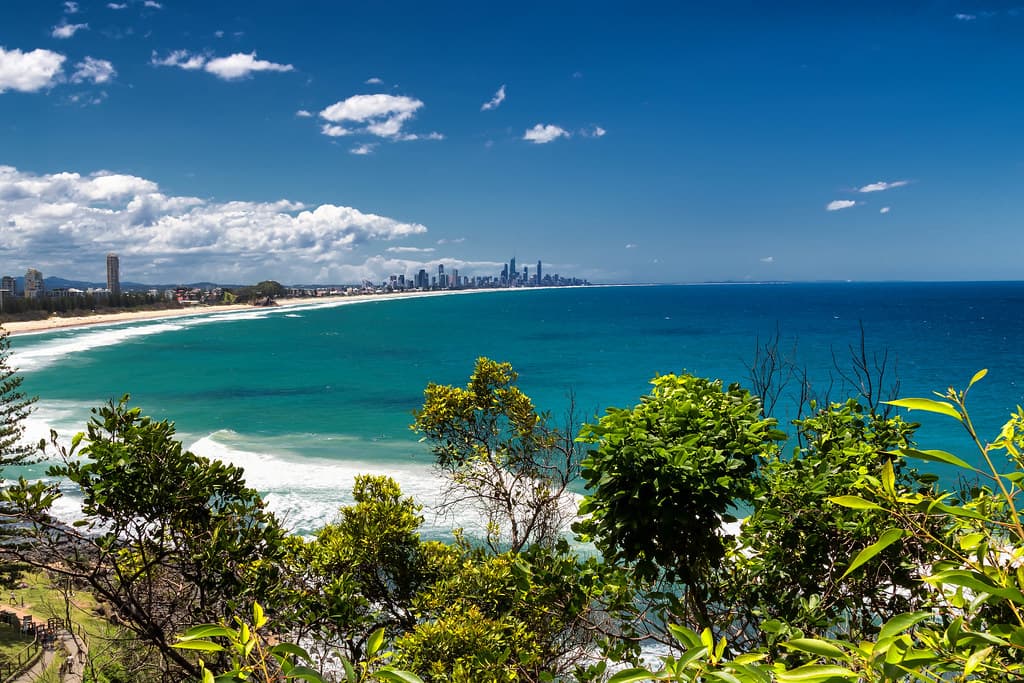
Gold Coast Skyline viewed from Burleigh Heads National Park
When the swell drops, the beach unfurls northward—a long crescent of beige sand where families plant umbrellas near the patrolled zone and bodysurfers work the shorebreak. The grassy plateau atop the headland fills by mid-morning: picnickers sprawl on checked blankets, yoga practitioners face the horizon, and regulars claim the same weathered bench they've occupied for decades. Food trucks idle in the carpark, sending smoke signals of grilling fish and espresso steam into the salt air.
The walking track through the national park ribbons through bangalow palms and scribbly gums, emerging at Tallebudgera Creek to the south. You'll round the headland with the Pacific on three sides, spotting turtles surfacing beyond the break and, June through November, humpback whales blowing on their northward migration. By late afternoon, the western slope of the headland becomes a stone amphitheater for sunset, the offshore breeze carrying the scent of flowering grevillea down to the sand.


