
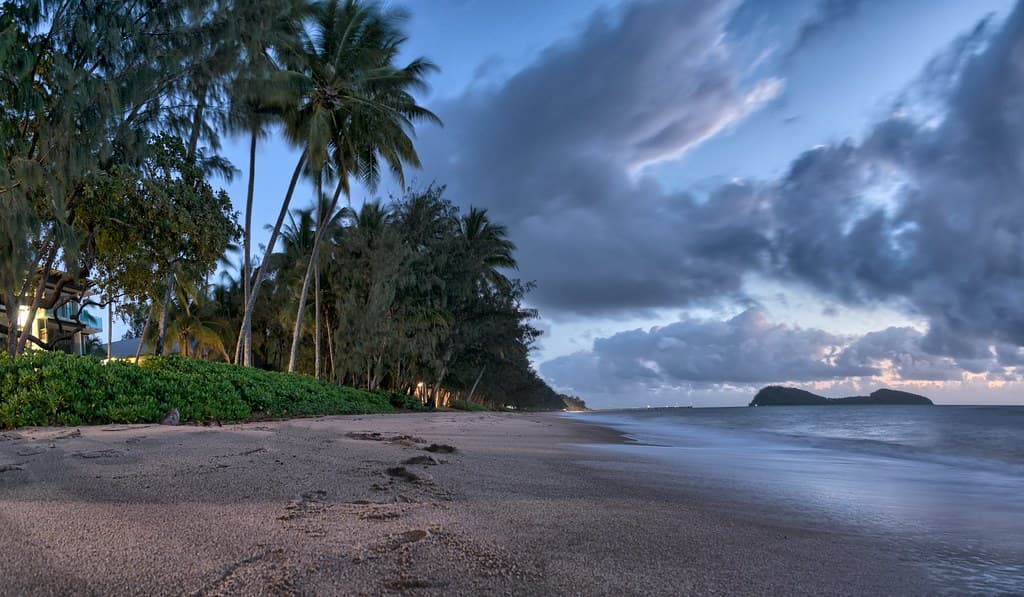
Palm Cove unfurls along a crescent bay twenty-five kilometres north of Cairns, where the Coral Sea laps a shoreline so gentle that kite-tails drift lazily above ankle-deep water at low tide. The beach runs barely a kilometre end to end, bookended by rocky headlands draped in rainforest, and the melaleuca trees—paperbarks with peeling, sun-bleached trunks—lean toward the tideline as if eavesdropping on conversations happening over coconut gelato at the beachfront kiosks. You'll notice the absence of high-rises; a 1980s planning decision capped building heights, so the skyline remains uncluttered, the sightlines clean.
“Melaleuca groves shade the entire esplanade, filtering dappled light onto sand fine enough to squeak audibly with every step.”
 Credit: Flickr
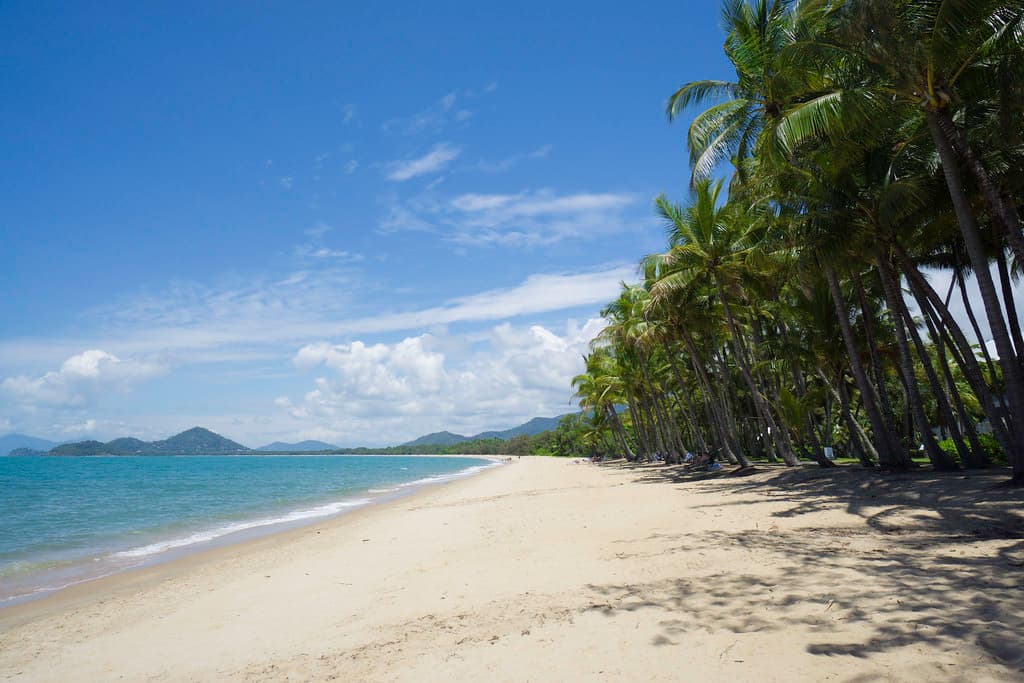
Palm Cove Beach - Cairns
Between November and May, stinger nets cordon off swimming areas—box jellyfish season—but the enclosures feel generous, not restrictive, and lifeguards patrol daily. Families spread picnic blankets on the grass strip separating sand from esplanade, where ibis peck at sandwich crusts and toddlers chase rainbow lorikeets. The water temperature hovers around twenty-eight degrees in summer, cooling to twenty-three in winter, warm enough year-round that wetsuits feel excessive.
You'll find the pace here deliberately unhurried. Locals sip flat whites at Vivo Bar & Grill while scan-reading the reef forecast, and visiting families return year after year, booking the same low-rise apartments with frangipani views. The reef pontoons depart from nearby Port Douglas, but Palm Cove offers something rarer: a tropical beach town that never forgot it was, first and foremost, a beach.


