
Trinity Beach arcs for half a kilometer between headlands draped in monsoon forest, its shoreline edged by a grassy esplanade where joggers dodge fruit-bat droppings at dawn. The sand slopes gently into water that shifts from milky jade near shore to deep teal beyond the swimming enclosure nets—a necessity this far north, where box jellyfish drift inshore November through May. Lifeguards in zinc and broad hats scan the break from their elevated tower, flags snapping in the trade winds that funnel down from the Atherton Tablelands.
“This is Cairns' most democratic beach—no resort gatekeepers, no tide-dependent access, just a reliable crescent that works for retirees and gap-year travelers alike.”
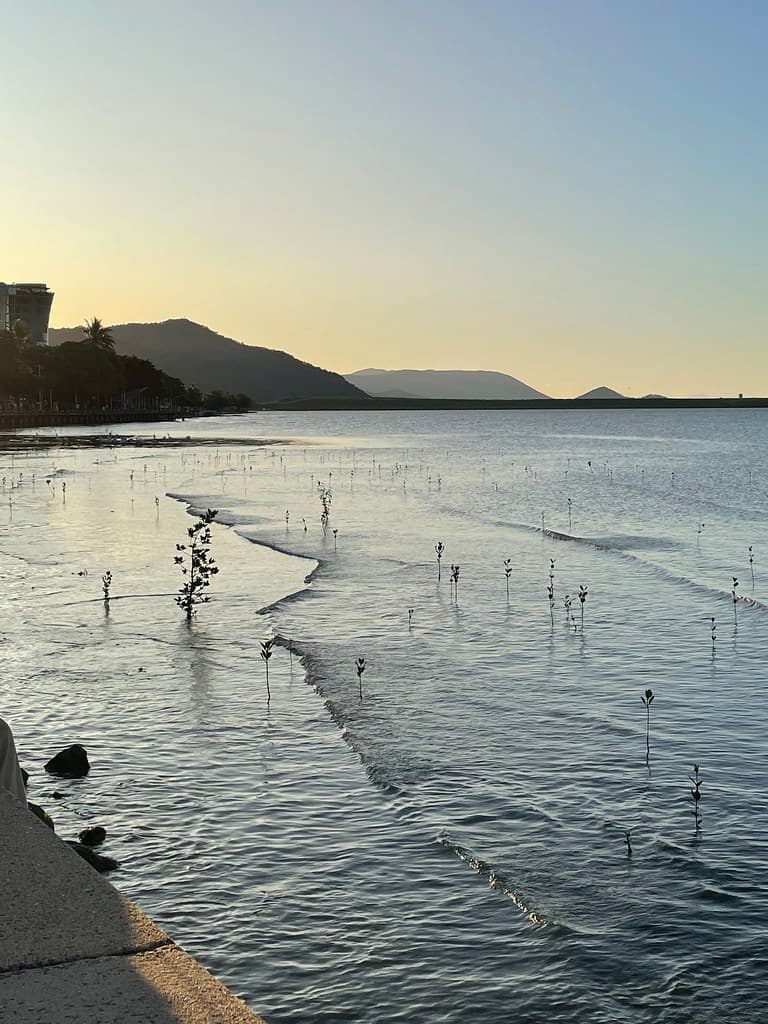 Credit: Flickr
Tide coming in
The village behind the beach feels purpose-built for long stays: gelato shops, Thai massage parlors, a bottle shop with Bundaberg Rum on special, vacation rentals with slatted shutters. Retirees from Brisbane sip flat whites at pavement cafés while backpackers in Havaianas consult tide charts for nearby snorkel sites. Unlike Port Douglas to the north, Trinity hasn't chased luxury; unlike Palm Cove next door, it hasn't calcified into boutique snobbery. It simply offers what you came to tropical Queensland for—warm water, reliable sun, and enough infrastructure that you won't starve or get bored.
Come late afternoon, the hills behind the beach glow copper, and the smell of frangipani competes with frying garlic from the Vietnamese place across the road. You'll leave with salt stiff in your hair and the faint itch of sand in your towel, already planning which morning you'll return.


