
The Juipera people walked this shoreline for millennia, and you can still see why they chose it: a crescent of bronze sand framed by paperbark trees and hoop pines so dense the canopy forms a living wall. At high tide, waves unfurl just metres from the rainforest's edge, salt spray mingling with the scent of eucalyptus. The beach curves gently north, its rockpools alive with anemones and tiny fish that dart between the volcanic boulders tumbled along the southern headland.
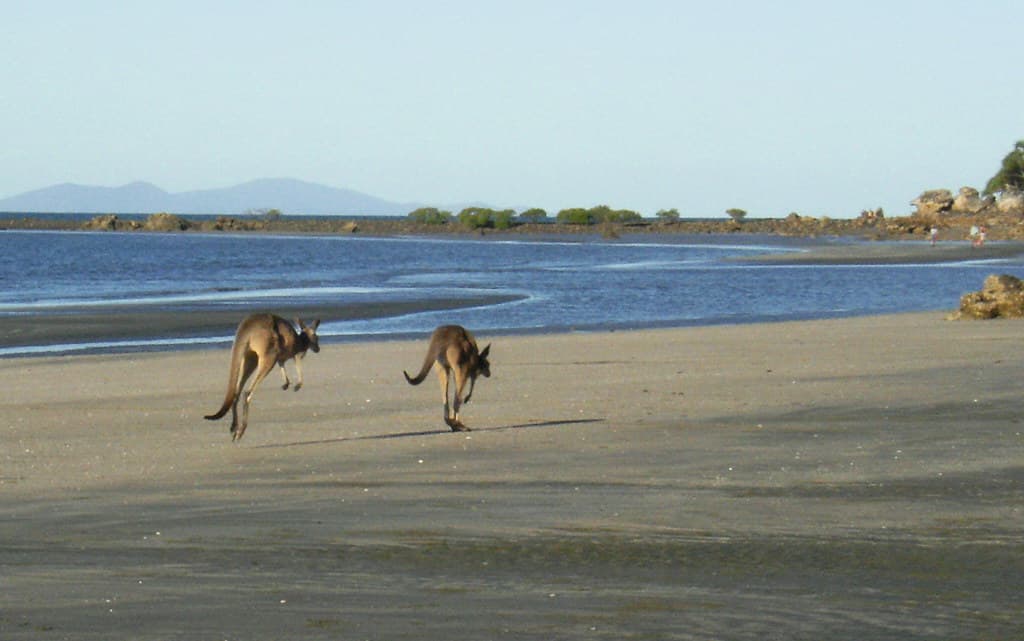
“It's the only easily accessible beach in Australia where you can reliably encounter wild kangaroos and wallabies foraging in the intertidal zone at sunrise.”
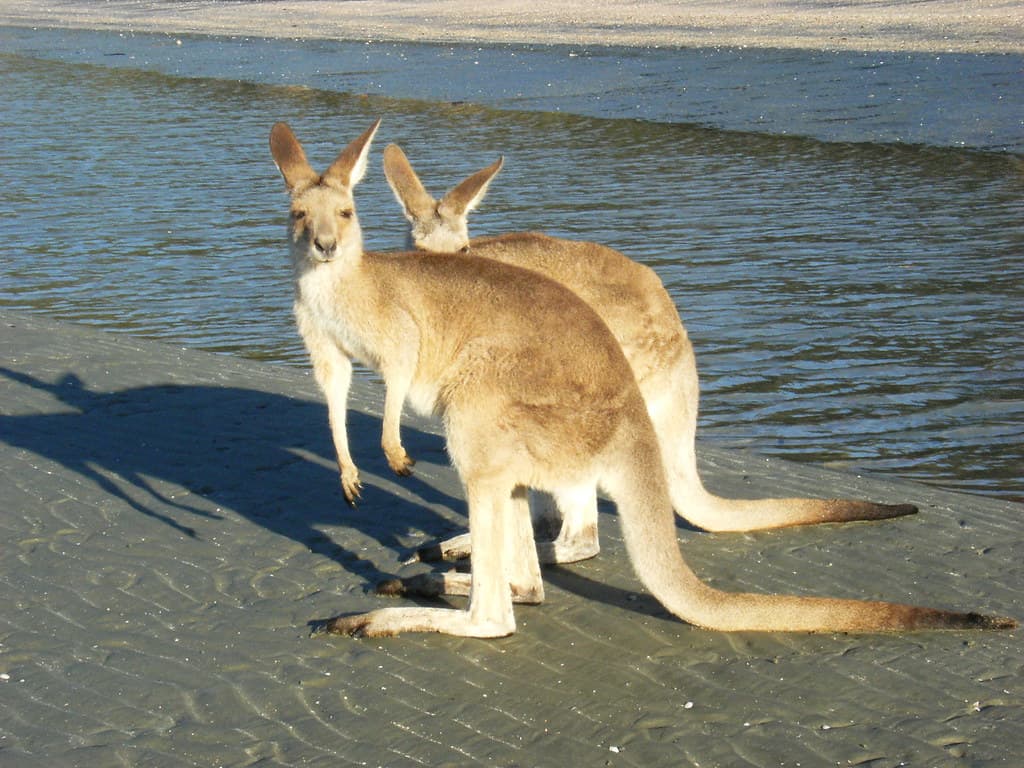 Credit: Flickr
Känguru am Strand
Most mornings between dawn and eight, marsupials descend from the Andrews Point walking track to feed. You'll watch wallabies nibble kelp, unbothered, close enough to hear the thump of hind legs on compacted sand. Bring a telephoto lens and stay still; the animals tolerate observers but scatter at sudden movement. By mid-morning they retreat uphill, leaving behind paw prints that the incoming tide erases.
The national park buffer means no high-rises, no jet skis—just a small campground tucked into the trees and a single resort where the pub serves cold beer and reef fish. Walk the Diversity Boardwalk through mangroves where mudskippers leap, or follow the track to Wedge Island's lookout for views across the Whitsunday passage. The water stays warm year-round, though stingers appear November through May. Pack a wetsuit or choose the cooler months when the sea is both swimmable and safe.


