
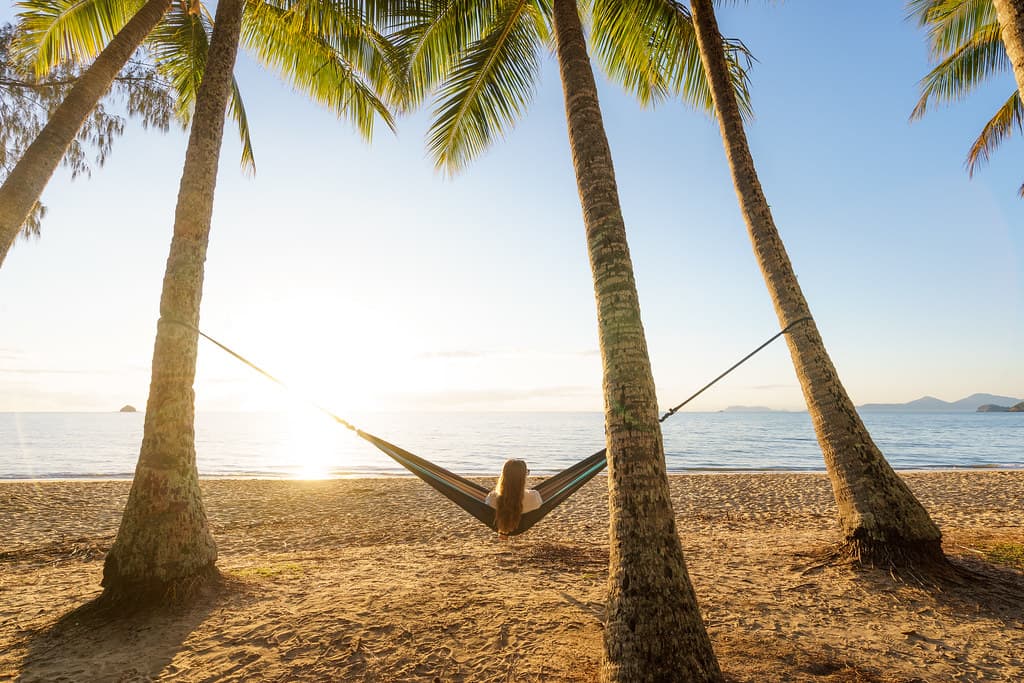
The flight from Cairns takes you over dozens of reef-ringed islands before touching down on Coconut Island's grass airstrip, where the humidity wraps around you like a warm towel. From there, it's a short walk through coconut groves to the beach, where the sand feels more powder than grain and the water shifts from turquoise to deep sapphire within a few strokes.
“This beach sits on the ancestral lands of the Kaurareg people at Australia's northernmost edge, where Torres Strait culture shapes every tide.”
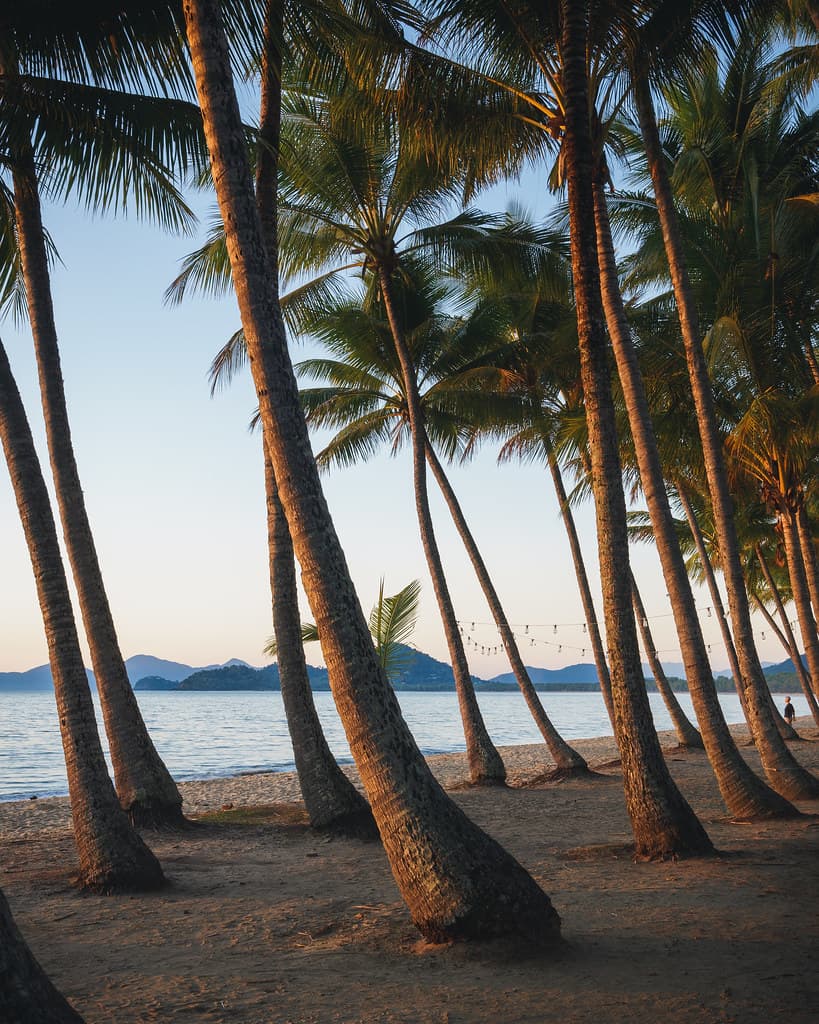 Credit: Flickr
Palm Cove, Queensland, Australia
You'll notice the silence first—no beach bars, no jet skis, just the rustle of palm fronds and the occasional cry of a Torres Strait pigeon. The reef sits close enough to wade out during low tide, though most visitors simply float in the shallows, watching schools of batfish gather in the shadows beneath overhanging trees. The local Kaurareg people have lived here for thousands of years, and their connection to these shores shows in the way they navigate the tides and harvest mud crabs from nearby mangroves.
Bring everything you need: there's no shop selling forgotten sunscreen or cold drinks. The wet season from December to April brings afternoon downpours that clear as quickly as they arrive, but the water stays warm year-round. Pack insect repellent for dawn and dusk, when sandflies emerge from the vegetation, and check tide tables before planning your swim—the difference between high and low can expose fifty meters of reef shelf.


