
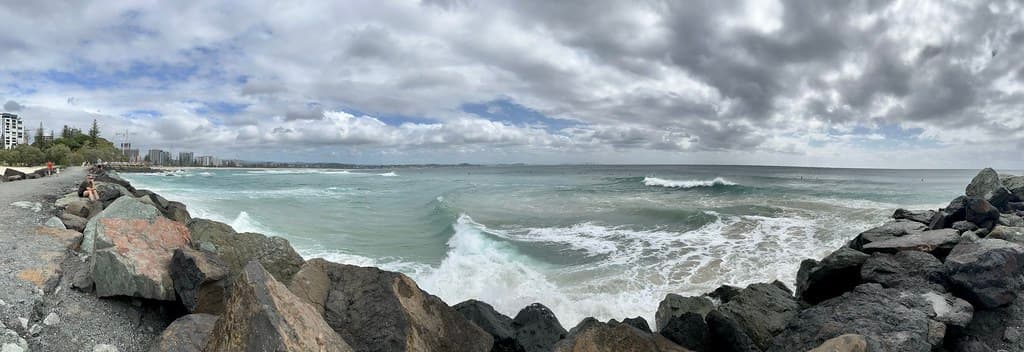
Kirra sits at the southern end of the Gold Coast, where the state border with New South Wales draws an invisible line through the sand. The beach curves in a tight crescent, backed by a grassy reserve dotted with pines that have stood sentinel for decades. When the swell angles in from the south or east, the point transforms: waves wrap around the headland and peel across the shallow sandbar in long, hollow sections that can run for two hundred meters on the right day.
“When the sandbar aligns, Kirra delivers one of the world's longest, hollowest right-hand barrels over sand—a wave that has defined Australian surf culture for generations.”
 Credit: Flickr
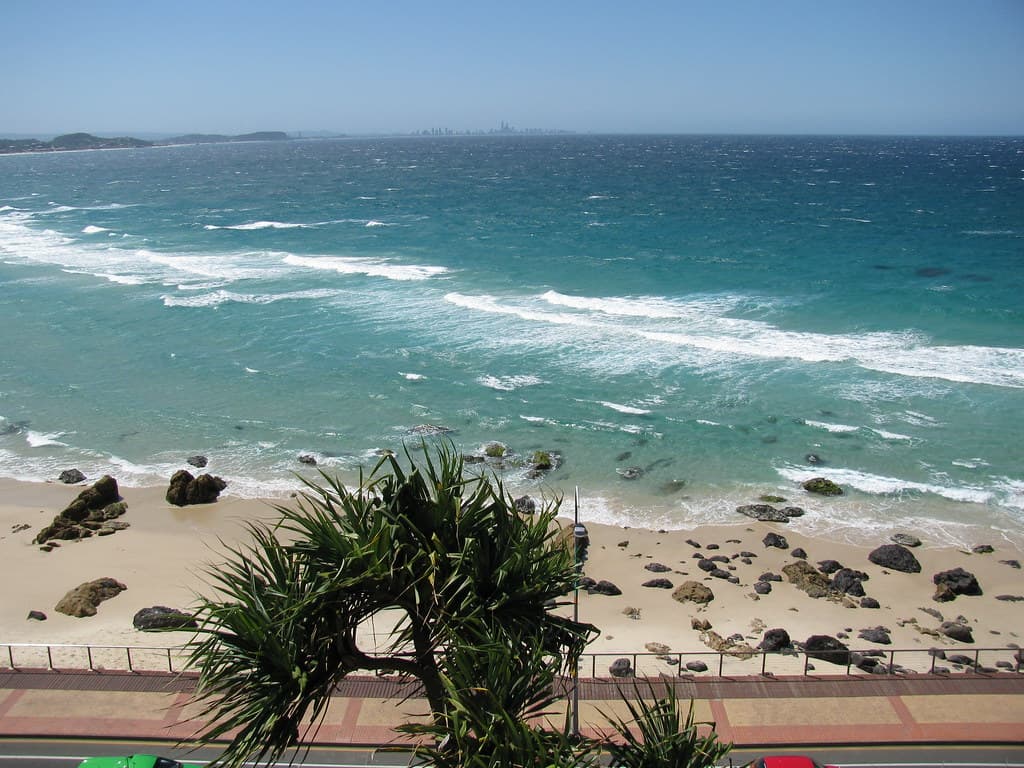
Kirra Beach Coastline
The sand shifts with every season, sculpted by currents and storms. Some years the bank builds perfectly, stacking wave after wave in mechanical perfection. Other times it scatters, and the magic goes quiet. Locals check it obsessively, studying the way the water colors change from jade to navy as the depth drops off. You'll see them standing barefoot in the carpark at dawn, squinting at the lineup, reading the ocean like a text only they can parse.
Beyond the break, Kirra offers a peculiar mix of surf-town grit and family-beach ease. The esplanade runs tight against the sand, lined with low-rise apartments where retirees sip tea on balconies and teenagers wax boards on concrete walkways. Fish-and-chip shops smell of malt vinegar. The rockpool at the point fills with each tide, and children crouch over anemones while their parents sprawl on striped towels, skin sticky with salt and sunscreen.


