
The approach is unassuming—a narrow access road through coastal scrub, a small carpark, then the sudden reveal of dark basalt boulders framing turquoise shallows. You step across sun-warmed rock platforms, feeling the grip of ancient lava underfoot, and lower yourself into water so transparent you can count the spines on a blue-spotted ray gliding over the sand.
“Volcanic rock platforms double as natural aquariums, delivering reef-quality snorkeling without the boat ride.”
 Credit: Flickr
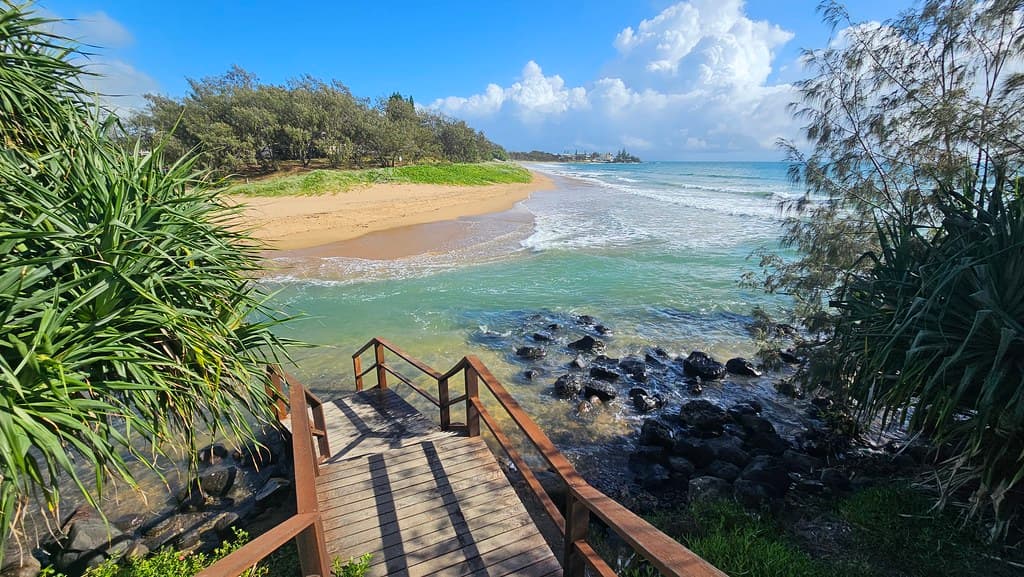
Coral Cove Beach — photo by GavGTP
Coral Cove earns its name not from reef-building corals but from the intricate rock formations that cradle its protected pools. At low tide, the platforms become natural viewing galleries where you can peer into tidal gardens of algae and anemones. Bring a mask and fins; the rocky outcrops create channels where bream and wrasse patrol, and if you time it right during the turtle nesting months, you might spot a green sea turtle cruising the deeper pockets beyond the breakwater.
The beach itself is a slim crescent of coarse sand, intimate rather than expansive. A handful of Norfolk pines offer dappled shade by midday, and the absence of kiosks or lifeguard towers reinforces the cove's unpolished character. You pack in what you need, you pack out what you bring, and you leave with saltwater still tingling on your skin and the quiet satisfaction of having found a place that refuses to perform for the masses.


