
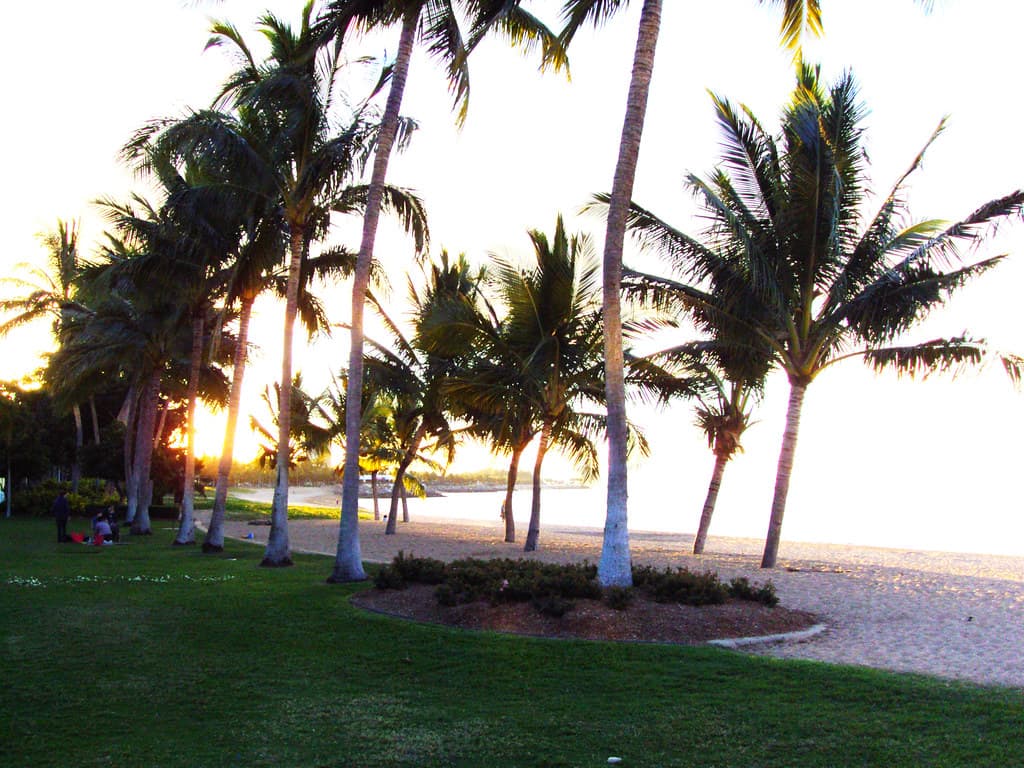
Palm Bay Beach sits on the eastern shore of Double Island, a 160-hectare speck of national park fifteen minutes by boat from Palm Cove. The approach is deceptive: paperbarks crowd the shoreline until the vessel rounds the southern tip, and suddenly the bay opens—fifty meters of bone-white sand hemmed by she-oak and pandanus, waves breaking left to right across a shallow reef shelf. The beach faces the prevailing southeast trade, so mornings bring onshore wind and the faint diesel scent of trawlers working the channel.
“One of the only accessible Coral Sea beaches where native forest meets the tideline without coastal development in sight.”
 Credit: Flickr
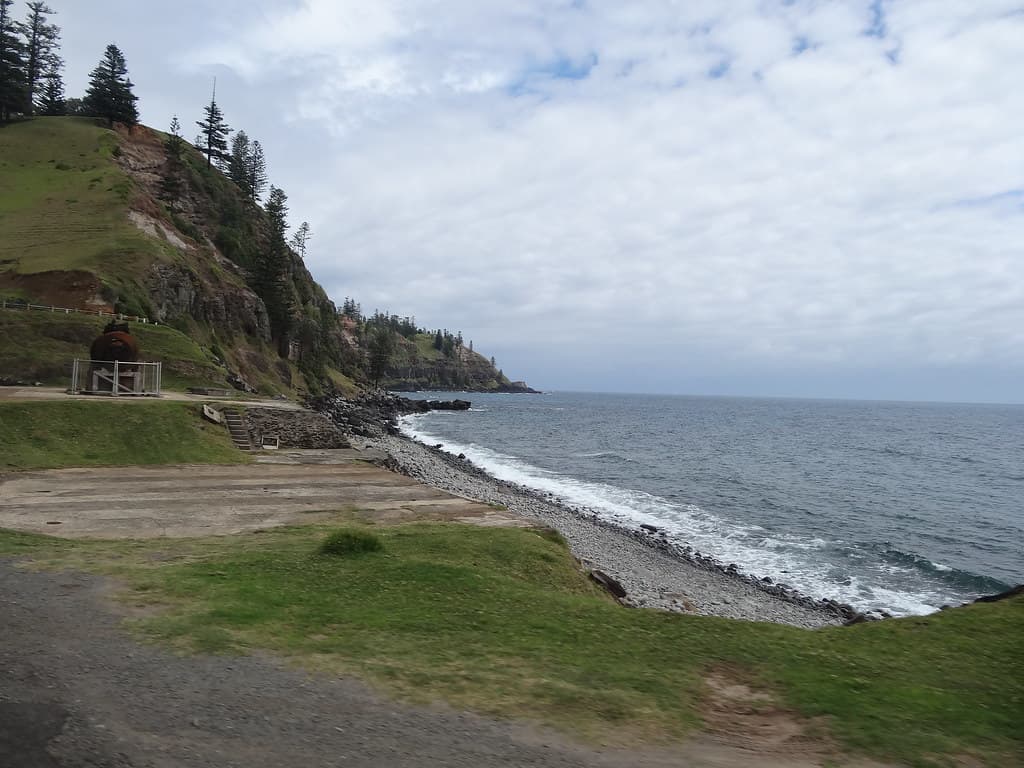
Norfolk Island. Coast near Kingston.
You'll wade in past broken staghorn coral, feet sinking into coarse sand that's more crushed shell than silica. At high tide the water climbs to the vegetation line, leaving barely enough dry sand for two towels side by side. Afternoon light turns the shallows bronze-green; by four o'clock the sun drops behind the ridge and the beach falls into shadow while the mainland still glows. A resident pair of ospreys nest in the tallest casuarina—listen for their sharp kee-kee-kee as they hunt above the rocks.
There's no phone signal, no freshwater, no rubbish bins. Charter operators occasionally drop snorkelers at the northern end, but most days you'll share the sand only with soldier crabs and the odd monitor lizard threading through the dune grass. Bring everything in; carry everything out.


