
You park beneath the Norfolk pines that line the esplanade, their shadows striping the foreshore where Emu Park's red-and-yellow flags have flown since 1932. The beach curves northwest in a gentle crescent, its sand packed firm enough for barefoot cricket and boogie-board sessions that stretch across low tide. Families commandeer the same spots year after year—near the surf club if you want the amenities, toward the rocky headland if you prefer tide pools and relative quiet.
“One of Queensland's oldest surf life-saving clubs still anchors a beach that has resisted resort development for nearly a century.”
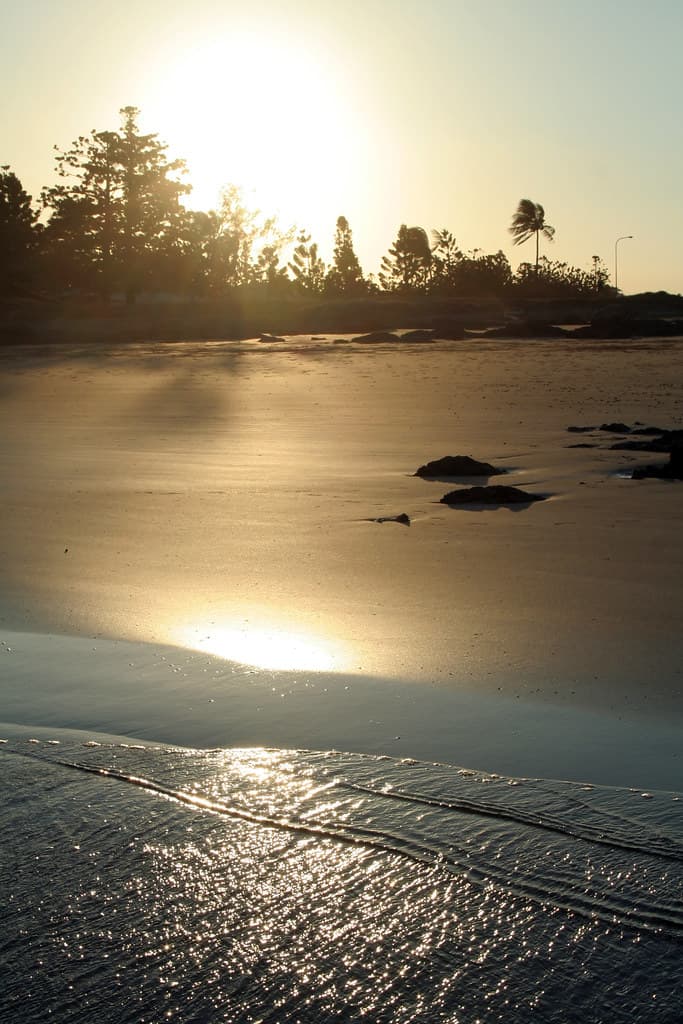 Credit: Flickr
dusty sand at Emu Park
The water here lacks drama; Keppel Bay's island-sheltered embrace keeps waves modest, the shore break rarely topping waist-high even when easterlies push through. That makes it ideal for floatie-clad toddlers and lap swimmers who trace long parallels to shore, though surfers seek elsewhere. At the northern end, the Singing Ship—a white latticed sculpture designed to hum in sea breezes—marks the spot where Cook charted this coast in 1770, its pipes catching afternoon wind in eerie, off-key notes.
Sunset transforms the esplanade into an informal promenade. You'll join retirees on benches, ice-cream-clutching children, and couples angling phones westward as the sky bruises purple over the ranges behind Yeppoon. The fish-and-chip queue at the kiosk lengthens. Someone's dog noses a beached jellyfish. This is Emu Park at its most reliably itself—a working beach town that never aspired to be anything fancier.


