

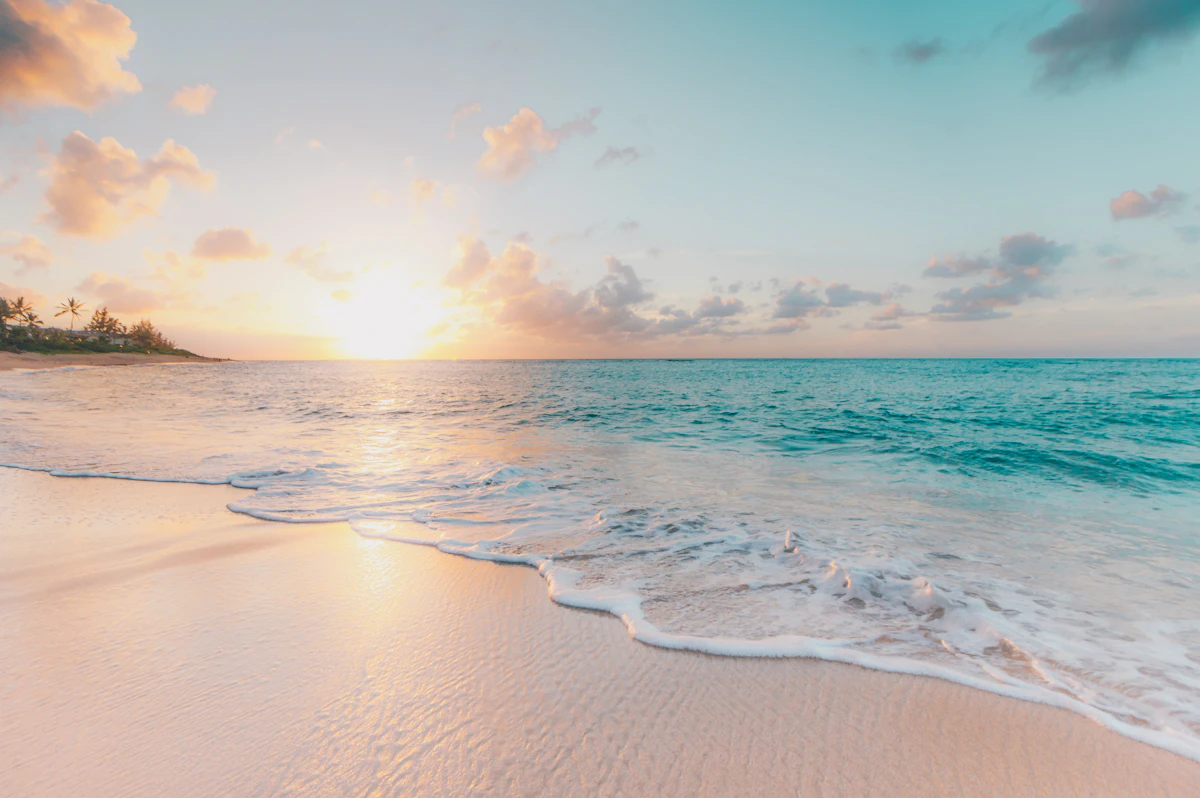
Long Beach unfolds along Great Keppel's western shore like a postcard that somehow forgot to exaggerate. The sand compresses beneath your feet with a soft squeak, each grain rounded by centuries of tide and current. Shallow sandbars extend fifty meters offshore, turning the bay into a vast wading pool where the water rarely climbs past your knees. Families stake claims under the casuarinas, spreading towels on sand that stays cool even at midday, while couples wade out to where the aquamarine deepens to cobalt.
“Long Beach offers the rare combination of family-friendly shallows and a discreet clothing-optional zone within the same sweeping bay.”
 Credit: Unsplash
Aerial view of turquoise tropical bay
The beach earned its reputation not through drama but through dependability. No rips tear at the shoreline, no rocks lurk beneath the surface. You can swim straight out from any point along the kilometer-long arc and find only soft sand and gentle gradient. Snorkelers drift over scattered coral bommies near the southern headland, where wrasse and parrotfish nose through the shallows, seemingly indifferent to human observers floating above.
By late afternoon, the western exposure transforms the bay into a theater of color. The sun descends behind the mainland ranges, backlighting the water in shades of copper and rose. You might notice other beachgoers slipping away toward the northern end, where clothing becomes optional and the atmosphere shifts to something more liberated. As the sky deepens to violet, fruit bats begin their nightly commute overhead, their silhouettes crossing the first stars.


