
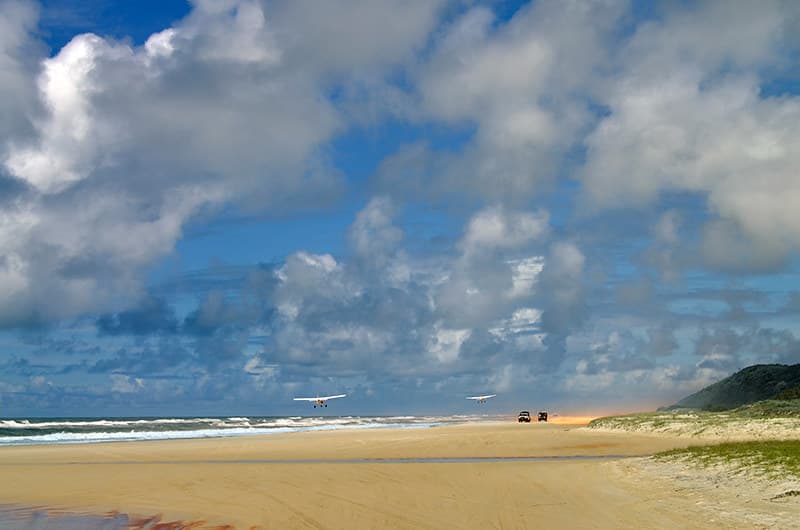
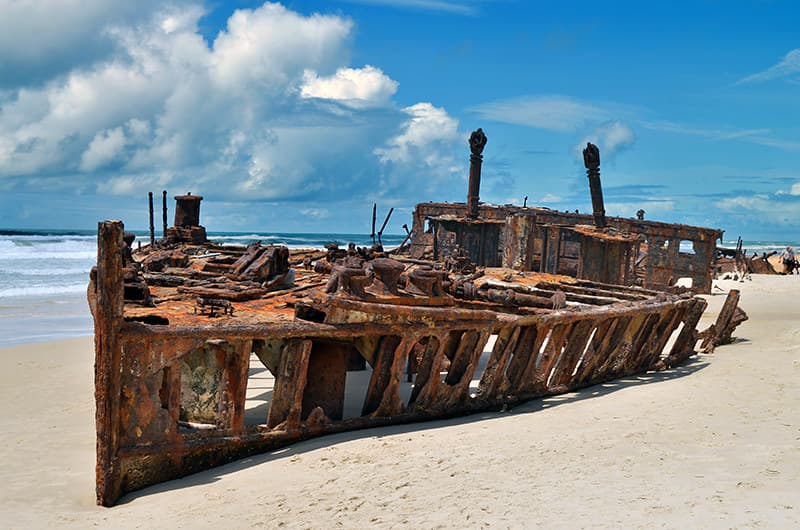
The moment your four-wheel-drive drops onto the compacted sand, you realize this isn't a beach in the conventional sense—it's a gazetted highway where aviation markers dot the shoreline and tide charts dictate your route. You'll share the corridor with tagged vehicles, intrepid campers, and the occasional light aircraft using the hard-packed sand as a runway. The ocean here is muscular and unforgiving, churning with riptides that render swimming a spectator sport. Rusty shipwrecks emerge from the surf like iron sculptures, their hulls testaments to the coast's untamed power.
“It's the world's only beach designated as a national highway, where vehicles, aircraft, and wildlife share the same corridor of sand.”
 Credit: Flickr
Fraser Island, Australia
The forest presses close behind the primary dune system: blackbutt, scribbly gum, and satinay trees rising from sand that shouldn't support them. Dingoes patrol the tide line at dawn, their tracks stitching patterns alongside yours. You'll pass freshwater streams bleeding into the salt, their tannin-stained water carving temporary channels across the beach before the next tide erases them entirely.
Driving requires constant vigilance—soft patches swallow wheels, incoming tides claim the unwary, and the nearest tow truck is a barge ride and several hours away. Yet there's a frontier thrill in piloting your vehicle where the continent surrenders to the Coral Sea, where navigation is measured in landmarks like the Maheno wreck and Eli Creek rather than street signs.


