
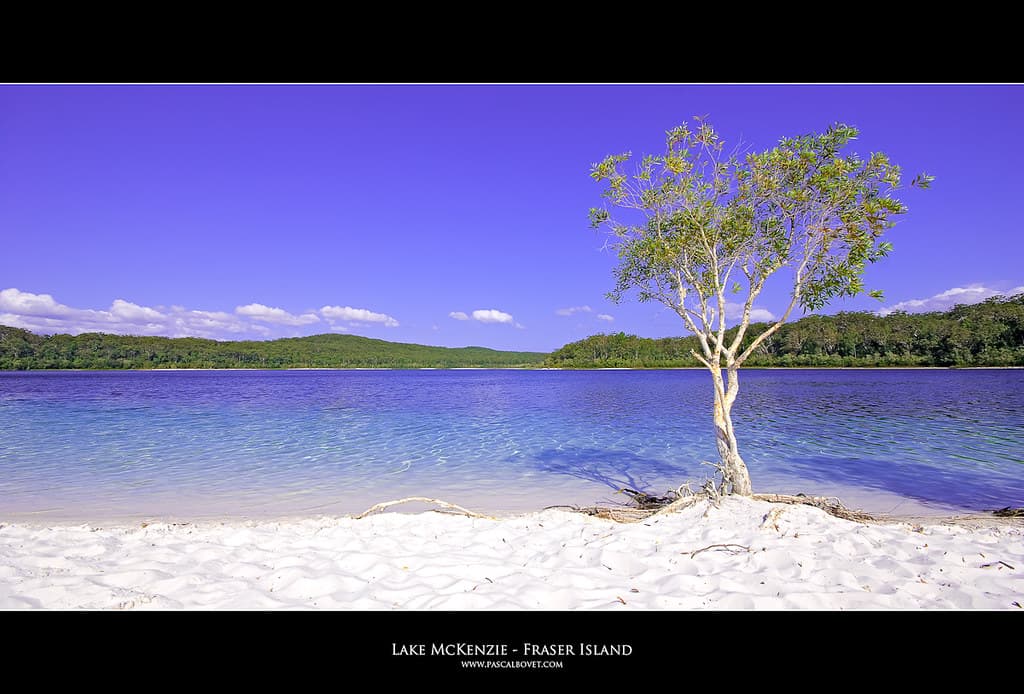
Your feet sink into sand that feels like powdered sugar, cool even under midday sun. Lake McKenzie stretches before you, a perched dune lake sitting forty metres above sea level, its water so pure and acidic that almost nothing lives in it—no fish, no seaweed, just you and the liquid mirror reflecting scribbly gums and wallum heath. The silica is fine enough to exfoliate your skin, which locals have done for generations, rubbing handfuls along their arms until they gleam.
“Lake McKenzie is one of fewer than forty perched dune lakes worldwide, holding rainwater filtered through pure silica for up to a century.”
 Credit: Flickr
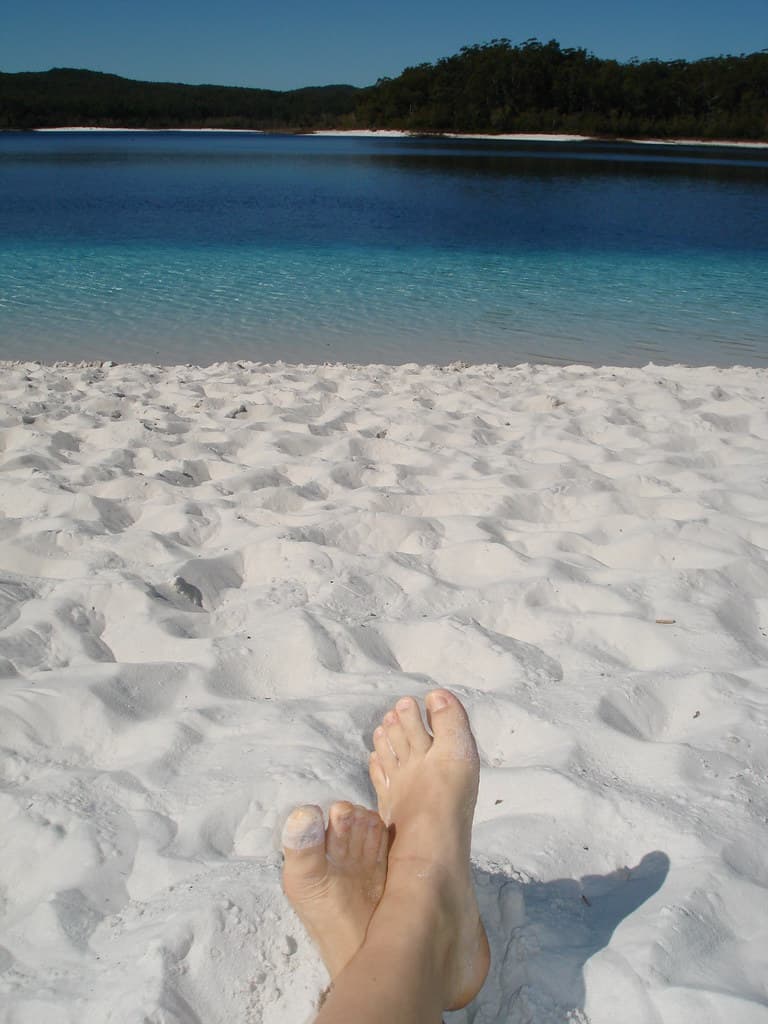
Relaxing at lake McKenzie, Fraser Island, Australia.
The lake's isolation creates its magic. Rainwater percolates through layer upon layer of ancient sand, emerging filtered to near-distilled clarity. You'll wade in and still see your toes in water up to your chest. The temperature hovers around eighteen degrees Celsius year-round—bracing, but the kind of cold that makes you feel awake. Families spread picnic blankets under banksia trees along the eastern shore, while the western edge offers deeper water and fewer footprints.
You'll reach the lake via a sandy track accessible only to four-wheel-drive vehicles and tour coaches, the approach itself a reminder that K'gari remains wild. The car park sits steps from the shore, but the lake feels worlds removed from anywhere else. By late afternoon, when day-trippers depart, the surface stills to glass, and you'll understand why this particular stretch of sand and water has become the island's most photographed landmark.


