
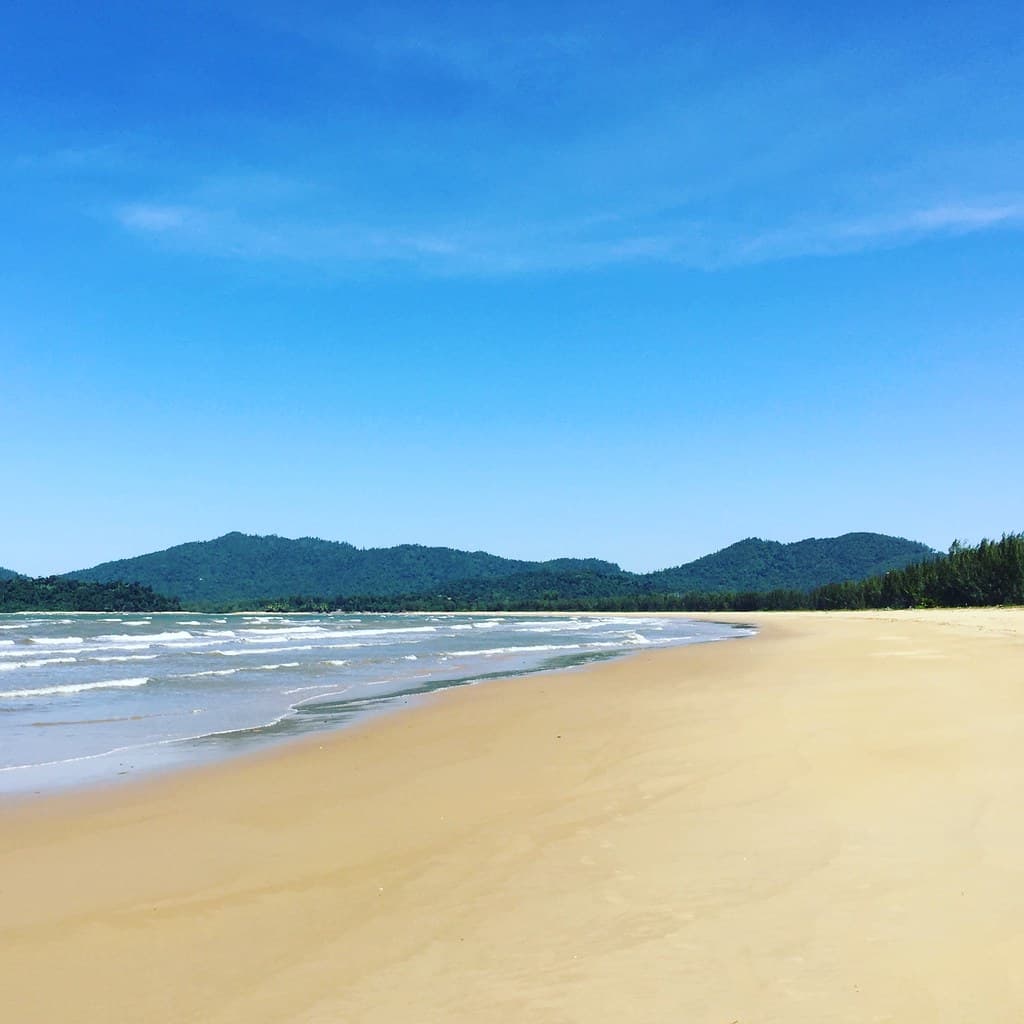
Stand at the high-tide mark and you'll notice what's missing: the crashing surf that defines most of Queensland's eastern edge. Kurrimine Beach hides behind a natural offshore reef system that transforms the Coral Sea into a broad, wadeable lagoon. During the stinger season—roughly November through May—enclosure nets cordon off designated swim zones, and lifeguards patrol the foreshore on peak weekends. The sand beneath your toes is fine and beige, compacted enough for morning jogs, soft enough that toddlers tumble without consequence.
“Its reef-protected shallows create Queensland's rare year-round swim zone safe enough for toddlers to wade far from shore.”
 Credit: Flickr
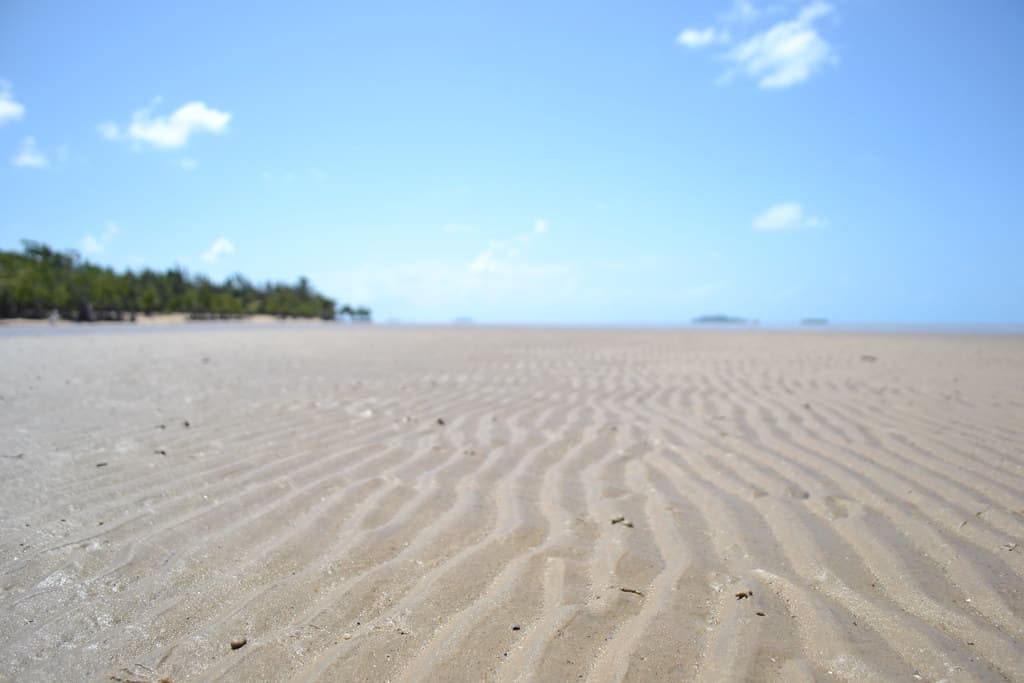
Waves in the sand
The holiday parks lining the Esplanade fill quickly during school breaks, their caravans and cabins facing a beach that rewards low tide with tidal flats perfect for crabbing and shell-hunting. You'll find families waist-deep a football field from shore, still standing comfortably. The jetty stretches seaward—a favored spot for evening fishermen casting for queenfish and trevally as the light turns amber over the Hinchinbrook Channel.
Palm groves and she-oak thickets edge the sand, offering dappled shade by mid-morning. The beach curves gently southward, framed by the distant silhouette of Hinchinbrook Island's granite peaks. There's no boardwalk glamour here, no surf club façade—just a working coastline where sunscreen, esky lids, and crab pots tell the story of an Australian family summer done right.


