
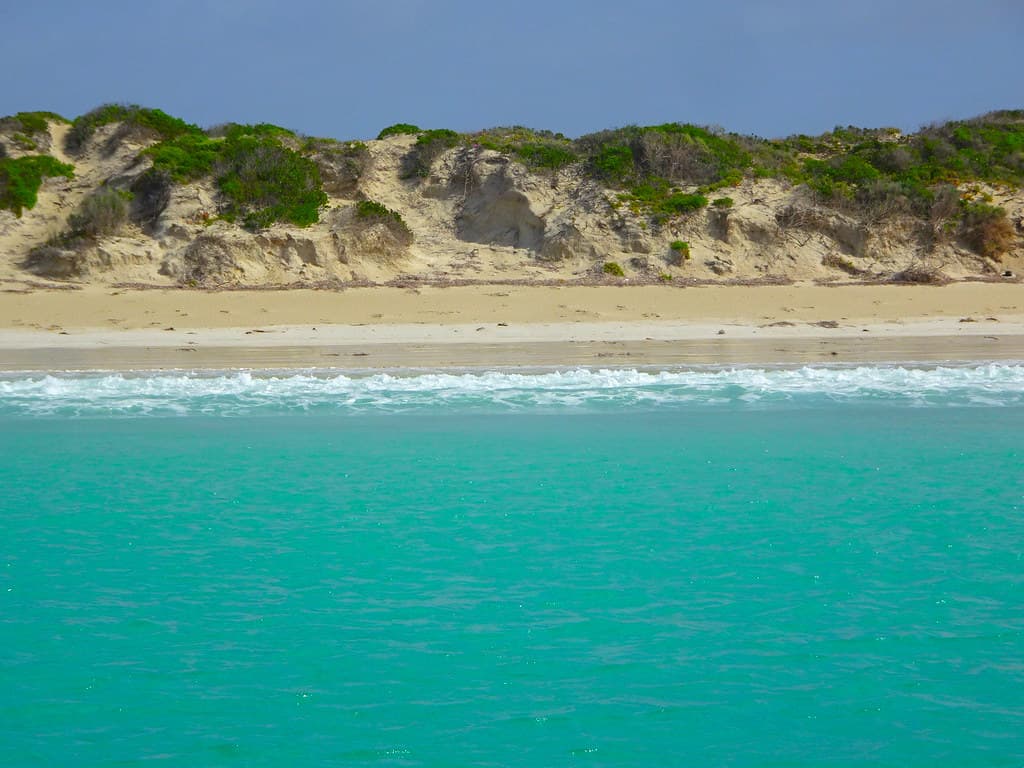
The shore unfurls in a gentle arc along Mer's eastern edge, where coconut palms lean landward and the Coral Sea laps at sand composed of countless broken shells and coral fragments. You'll notice the water shifts through bands of turquoise and navy as the seabed drops away toward the reef. Local children still splash in the shallows after school, their laughter carrying across the same stretch where generations of Meriam people have fished, gathered, and told stories under the Southern Cross.
“This is the birthplace of native title in Australia, where one man's fight for his ancestral beach changed a nation's law.”
 Credit: Flickr
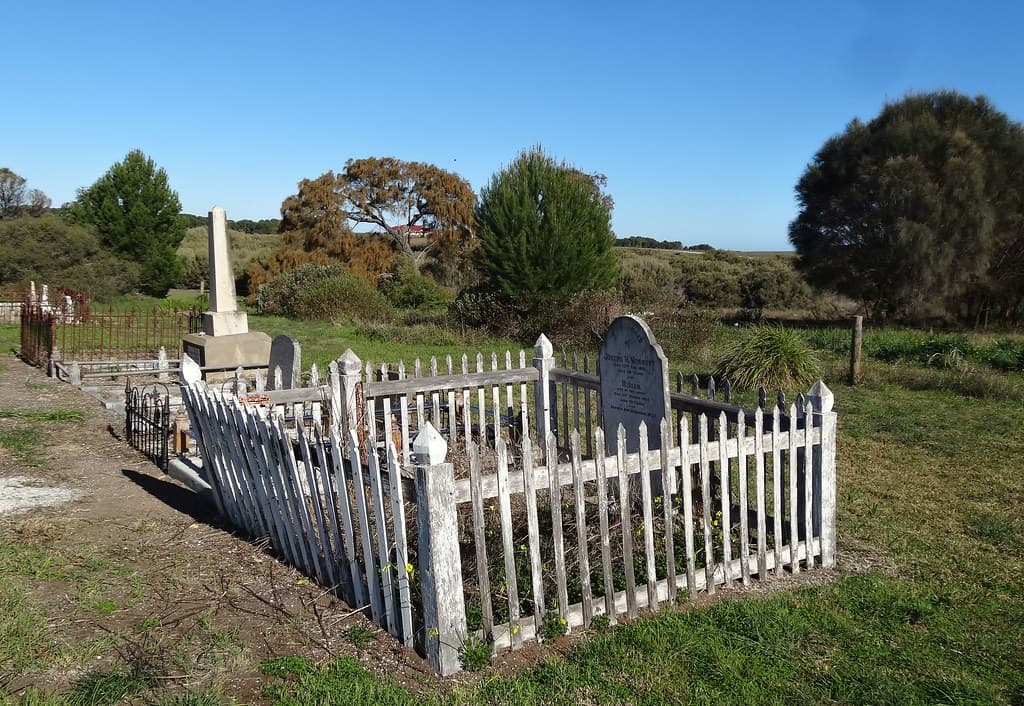
Hindmarsh Island. The island cemetery.
This isn't a beach shaped by tourism infrastructure or resort development. No beach bars punctuate the treeline, no jet skis disturb the morning calm. Instead, you'll find a working waterfront where dinghies rest on the sand and fishing nets dry in the sun. The cultural landscape here extends far beyond the visible: every rock outcrop, every section of reef carries names and narratives in the Meriam Mir language, a living connection between people and place that stretches back millennia.
The 1992 Mabo decision, which overturned the legal fiction of terra nullius, began with Eddie Koiki Mabo's determination to secure his people's rights to this very ground beneath your feet. Walk the shoreline at low tide and you're tracing the edges of a landmark that redrew Australia's understanding of itself—a beach that proved home was never empty, never unclaimed, never waiting to be discovered.


