
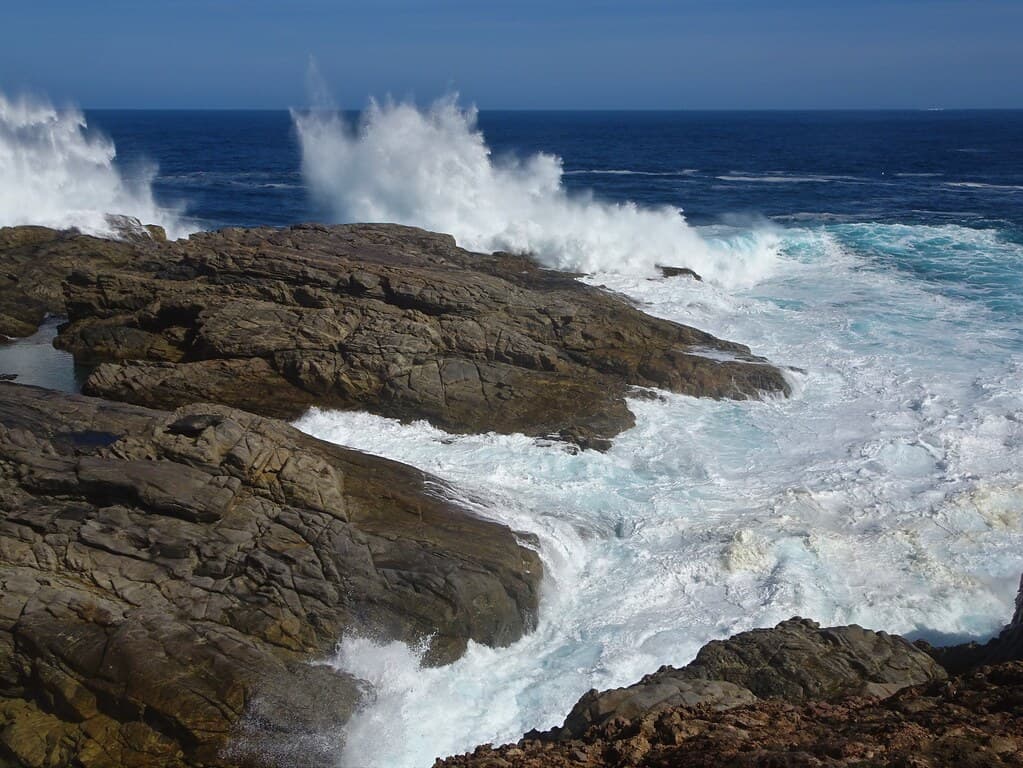
Little Cove sits in the crook of Noosa National Park's eastern edge, a ten-minute walk from the Main Beach car park yet missed by most visitors who turn inland after their first swim. The approach requires commitment: you follow the coastal boardwalk past Norfolk pines until timber steps cut down through coastal scrub, releasing you onto sixty meters of blonde sand cupped by volcanic rock.
“The only protected swimming cove in Noosa National Park where ocean meets lagoon-like calm without artificial barriers.”
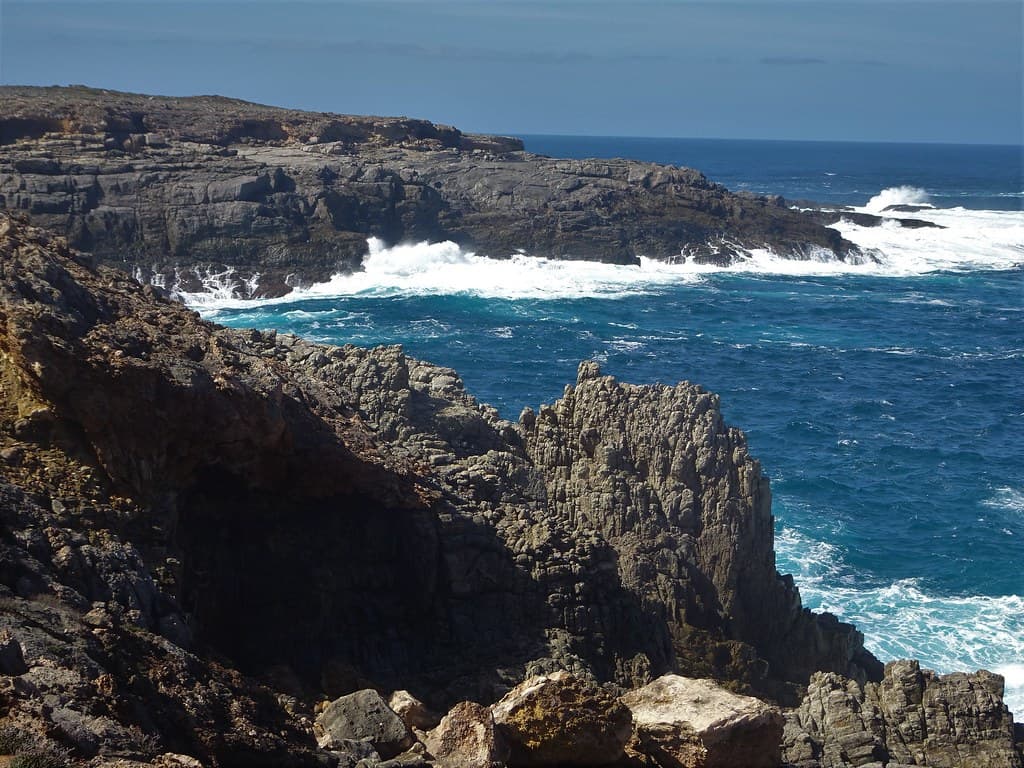 Credit: Flickr
Port Lincoln Eyre Peninsula. The rocky and rugged coastline of Whalers Way.
The water here refuses to behave like the open ocean beyond the headland. Protected by the promontory's bulk, it lies still as a lake most mornings, so clear you can count pebbles at chest depth. Rock platforms frame the northern end—locals drape towels there, feet dangling into pools warmed by Queensland sun. By noon, the cove fills with the particular quiet of shallow swimming: children's voices, the knock of a beach cricket bat, someone shaking sand from a sarong.
You won't find facilities or vendors. That omission is deliberate. Noosa Heads keeps this cove for those willing to carry their own water, to descend stairs without guardrails, to accept a beach that offers nothing but the swimming itself. The pandanus palms lean overhead. The sand holds warmth past dusk. You stay as long as your provisions last, then climb back up when the light goes gold.


