
You step from the car park onto sand the color of raw sugar, and the first thing you notice is the quiet. No hawkers, no jet skis—just the gentle percussion of wavelets folding onto the shore and the occasional cry of a sea eagle circling overhead. Kewarra Beach stretches in a gentle crescent, bordered by she-oaks and fan palms, their shadows lengthening across the sand as the afternoon wears on. The water here is shallow and placid, sheltered by the Great Barrier Reef lying offshore, so children wade out past their knees without a ripple of concern.
“Kewarra offers reef-protected calm and genuine solitude just minutes from Port Douglas's tourist trail.”
 Credit: Flickr
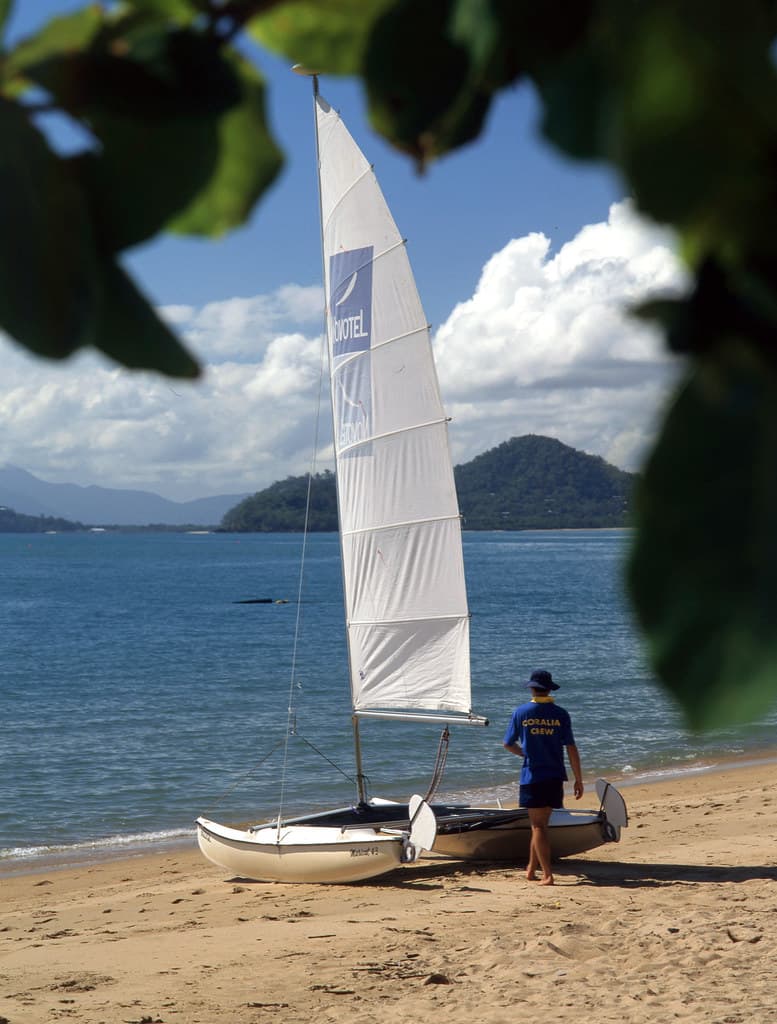
Sailing boat on Palm Cove beach, Cairns, 1998
Local families claim their usual patches beneath the casuarinas, setting out eskies filled with mango and cold prawns. You spread your towel, feel the warmth radiating up through the grains, and watch a heron pick its way along the tideline. There's a single patrol tower, lifeguards keeping a lazy eye on the handful of swimmers drifting in the bath-warm shallows. Behind you, a grassed reserve with picnic tables and a playground hums with the low chatter of weekend barbecues.
By late afternoon, the sky softens to apricot and the sea turns molten. You walk the strand barefoot, collecting fragments of coral rubbed smooth by the tide, and realize you haven't checked your phone in hours. Kewarra doesn't shout for attention—it simply unfolds, unhurried and unadorned, a pocket of the Coral Sea coast that still belongs to those who know where to look.


