
Little Cove Beach announces itself with a wooden staircase that drops through she-oak trees, their needle-like leaves whispering in the trade winds. By the time your feet hit sand, the hum of Wharf Street has vanished, replaced by the rhythmic slap of wavelets against granite. The beach measures barely sixty meters across, hemmed in by lichen-splashed boulders that glow rust-orange in afternoon light.
“Port Douglas's only true pocket beach, where rainforest and reef meet in a space small enough to cross in twenty strides.”
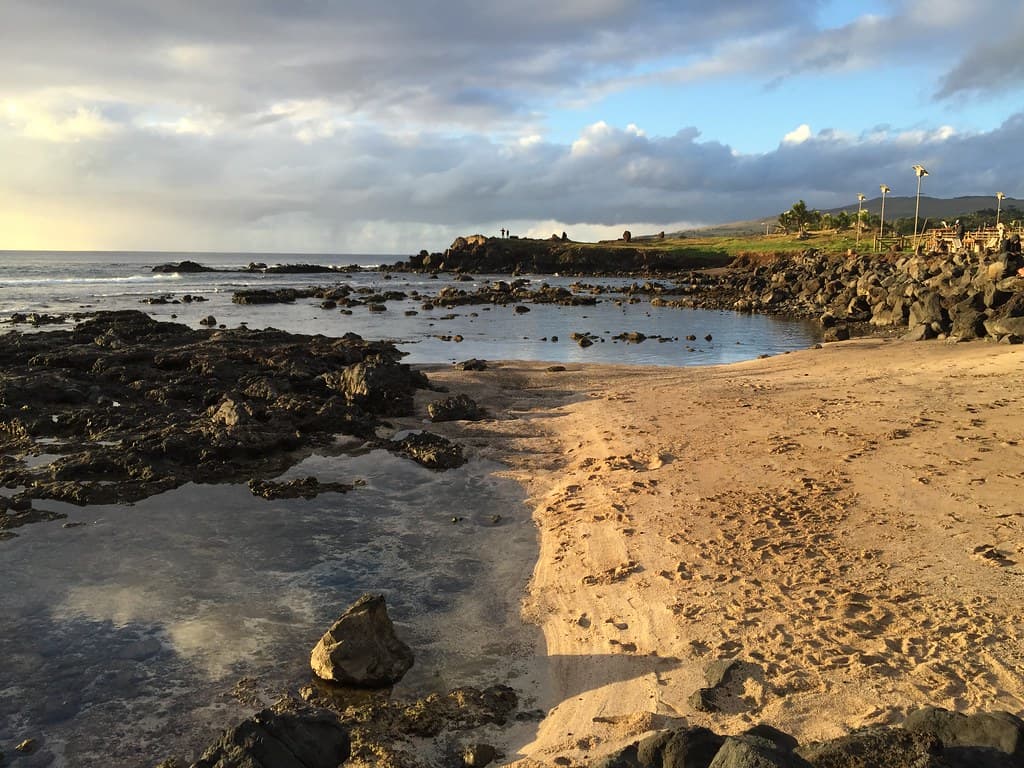 Credit: Flickr
Pea Beach, Hanga Roa Otai, Hanga Roa, Rapa Nui (Easter Island), Chile, Oceania.
Most mornings you'll share the cove with perhaps three other souls—retirees doing slow laps in the bathwater-warm shallows, a photographer crouched at the tide line waiting for the right slant of sun. The seabed here is a patchwork of sand and coral rubble, home to parrotfish that crunch loudly enough to hear from shore. Bring reef shoes; the entry is forgiving, but scattered rock makes barefoot wading a careful dance.
By late afternoon, shadows from the southern headland creep across the water, turning it from turquoise to pewter. The cove empties entirely. This is when you understand why locals guard this place quietly—not because it's difficult to find, but because its smallness demands a kind of reverence. There's no kiosk, no rental stand, no lifeguard tower. Just sand, stone, and the patient work of waves.


