
You turn off Captain Cook Highway onto a narrow lane that tunnels through rainforest, then suddenly the trees part and you're looking at a bay so calm it mirrors the sky. Oak Beach is what locals call a "protected beach"—a slight bend in the coastline and a fringing reef offshore conspire to keep the water placid, even when the Coral Sea kicks up elsewhere. Pandanus and she-oaks frame the sand, their roots exposed where the tide has carved miniature cliffs into the foreshore.
“A reef-protected bay where the water stays shallow and glassy while the rest of the coast churns, making it the Coral Sea's rare all-weather swimming spot.”
 Credit: Flickr
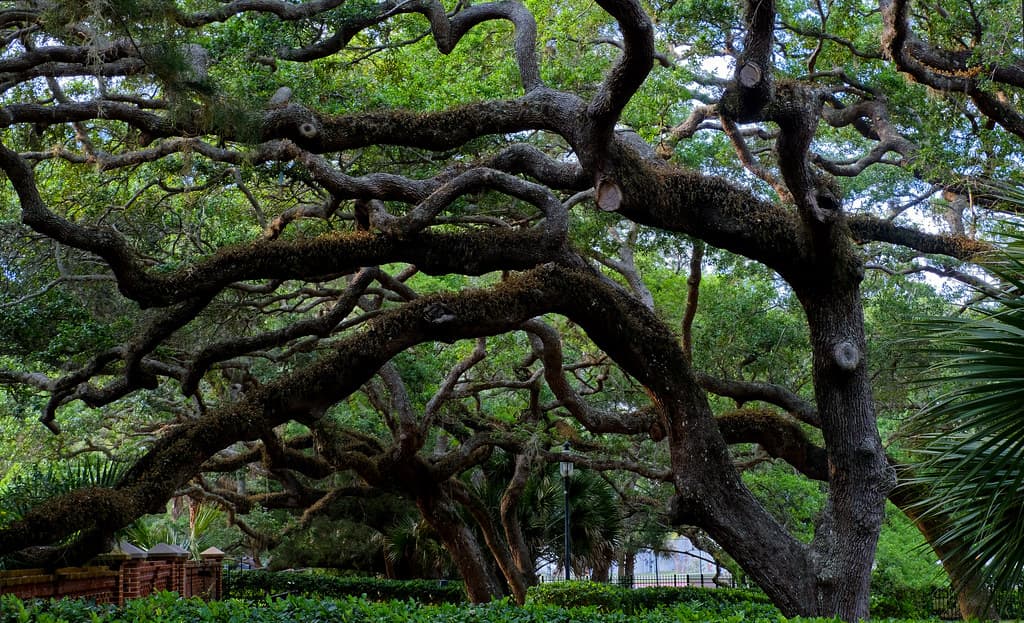
Subtropical Oak Trees, St Augustine, Florida
This is not the postcard Port Douglas scene of sailboats and resort umbrellas. Oak Beach draws families who want their children to wade without worry, photographers chasing the interplay of light on the Coral Sea at first dawn, and locals who've learned that weekday mornings here mean solitude. The sand is coarse underfoot, golden-brown rather than white, and littered with tiny bivalve shells that crunch as you walk. At low tide, the waterline retreats two hundred meters, leaving behind warm tide pools where toddlers can squat and poke at hermit crabs.
There are no facilities—no kiosk, no lifeguard tower, no rental stands. You bring what you need, and you take it with you. That bare-bones simplicity is precisely what keeps Oak Beach off the tour-bus itinerary and on the weekend calendar of Douglas locals who value a beach that still feels like a secret worth keeping.


