Counting the waves…
Counting the waves…
A refined fusion of water purity, environmental stability, and communal vibrancy for Trinity Beach.
View MethodologyAnalyzed via live sensors and environmental data.
Wave height, wind, and atmospheric stability.
Live footfall and crowd balance metrics.
Community reviews and curated sentiment.
“You'll recognize Trinity Beach by the scent of sunscreen mixing with salt air and the sound of kookaburras laughing from the paperbarks behind you. The shoreline stretches nearly two kilometers, wide enough that your…”
Limited recent visitor reports — live OBI telemetry is your best guide for current conditions.
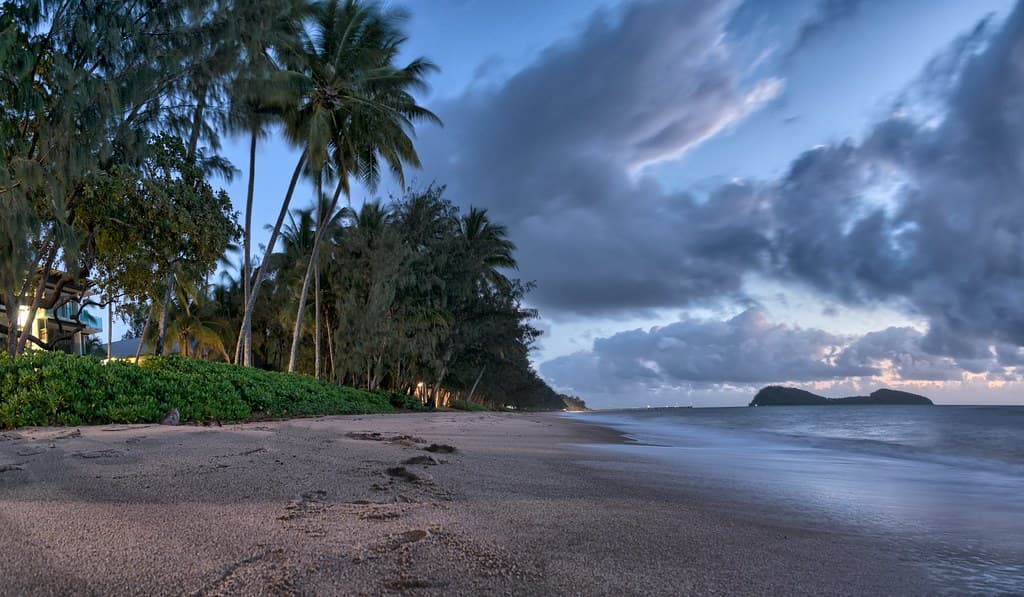
Trinity Beach curves gently between rocky headlands twenty minutes north of Cairns, where the Coral Sea laps at sand the color of raw sugar. Unlike its resort-heavy neighbors, this stretch remains decidedly residential—joggers pass at dawn, retirees claim the same shaded benches by 9 a.m., and the single esplanade of cafés closes early enough that you'll hear waves after dinner instead of bar music.
The water stays bathing-temperature year-round, protected by stinger nets from November through May and calm enough most days that you can float on your back and watch brahminy kites circle overhead. Casuarina trees lean over the northern end, their needle-like leaves whispering in the trade winds, while the southern rocks reveal tidal pools at low water where striped sergeant majors dart between anemones.
 Credit: Unsplash
people on beach during daytime
 Credit: Unsplash
green trees on mountain near body of water during daytime
Swim safe November to May
Low tide reveals sergeant majors
Flat whites facing the Coral
Where it is
Trinity Beach
Port Douglas, Queensland, Australia
-16.756200°, 145.698300°
Weather
Loading…
Swell
—
Temp
Warm · Restorative
UV Index
Moderate
Wind
—
Tidal State
Last known
Max Sunlight
—
Ideal Shade
—
May - Sep (Peak)
Jan - Dec (Off-season)
Historical data suggests peak visibility and stable sea temperatures occur during the prime visitation window.
Select a category to load nearby places.
Unlock restaurants, luxury stays and curated maritime experiences within 2km
Trinity Beach is generally safe for swimming, with calm, protected waters ideal for families and children. Lifeguards patrol the beach during peak seasons, and stinger nets are installed from November to May to protect against jellyfish. Always swim between the flags and observe warning signs. During stinger season, wear protective stinger suits as a precaution. The beach's sheltered position typically means gentle waves and minimal currents, making it suitable for less confident swimmers and snorkelers exploring the nearby reef areas.
Trinity Beach enjoys tropical weather year-round, with the dry season (May to October) offering the best conditions—sunny days, low humidity, and temperatures around 25-28°C. The wet season (November to April) brings afternoon storms and higher humidity but remains warm and swimmable. November to May is stinger season, requiring protective swimwear. Winter months (June-August) provide perfect beach weather without extreme heat. The beach is less crowded than nearby Port Douglas, making it pleasant any time of year for those seeking a relaxed tropical experience.
Trinity Beach is located about 15 minutes north of Cairns Airport and 20 minutes south of Port Douglas along the Captain Cook Highway. The beach is easily accessible by car with free street parking along the Esplanade and surrounding streets. Sunbus operates regular public transport services from Cairns to Trinity Beach. Most visitors drive or arrange transfers from Cairns or Port Douglas. The beachfront area is compact and walkable once you arrive, with the main facilities clustered along Trinity Beach Esplanade.
Trinity Beach offers diverse dining options along the Esplanade, from casual cafés to beachfront restaurants serving fresh seafood and modern Australian cuisine. You'll find coffee shops, takeaway outlets, and family-friendly pubs within walking distance of the beach. Accommodation ranges from budget-friendly holiday apartments and motels to upscale resorts and vacation rentals, many with ocean views. The village atmosphere means most amenities—supermarkets, convenience stores, and boutiques—are easily accessible. It's a self-contained destination with everything needed for a comfortable beach stay.
Trinity Beach offers a more laid-back, residential alternative to Port Douglas's Four Mile Beach. It features calmer waters due to its sheltered position, making it particularly suitable for families with young children. The village atmosphere is quieter and less commercialized than Port Douglas, with lower accommodation costs. While Port Douglas offers more upscale dining and shopping, Trinity Beach provides a genuine local beach community feel with excellent swimming conditions, reef access for snorkeling, and stunning tropical scenery without the tourist crowds.
Photos