
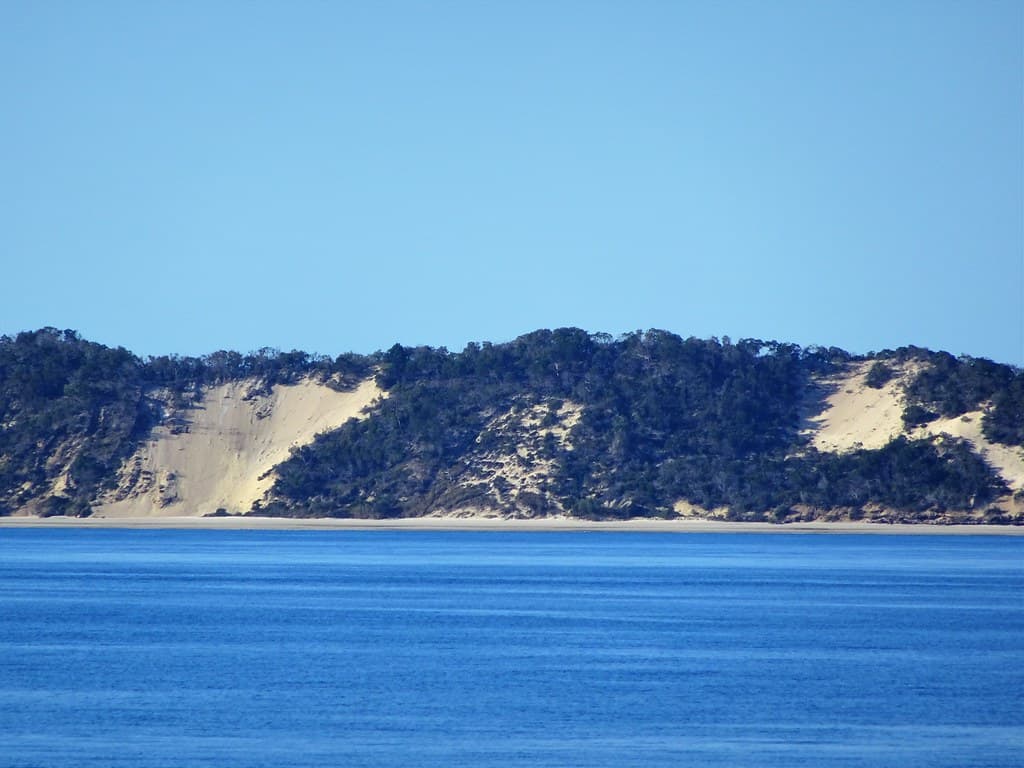
The spit curves like a scythe between the Coral Sea and the Tully River mouth, a narrow finger of sand anchored by she-oaks that rattle in the onshore breeze. You'll notice the difference immediately—no lifeguard towers, no surf schools, no kiosks hawking zinc and inflatable dolphins. Just a gravel turnaround, a weathered information board, and the kind of beach where you count other visitors on one hand.
“One of the few Cassowary Coast beaches where rainforest wildlife sightings and reef access coexist without lifeguard infrastructure.”
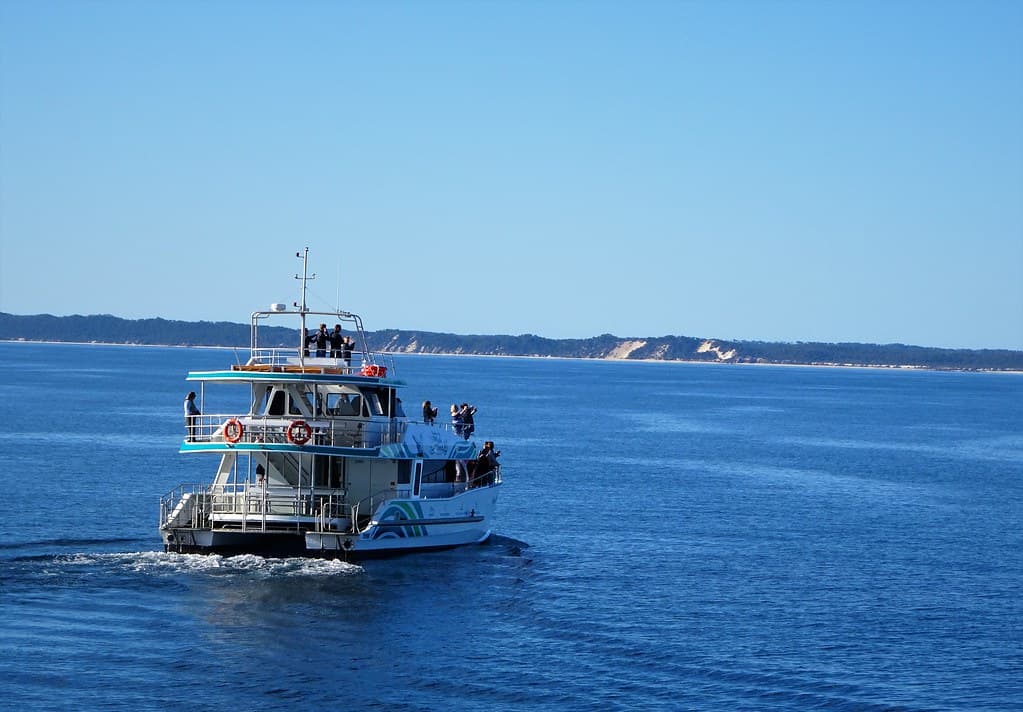 Credit: Flickr
Hervey Bay with Fraser Island in the background. Whale watching boat in July.
The sand underfoot is coarse and honest, studded with fragments of coral and tiny shells that crunch as you walk. Wade in and the bottom stays visible for thirty meters, the water the pale green of unripe limes over sand rippled by tidal currents. Dunk Rock sits offshore like a dark knuckle, waves folding around it in neat white pleats. Behind you, the dense green wall of the Wet Tropics rainforest presses close—close enough that you might spot a cassowary threading through the pandanus palms at dawn.
This is Mission Beach stripped of the amenities and the signage, a place that rewards the effort of driving past the main swimming enclosures. Bring what you need. The nearest café sits three kilometers north, and the only shade comes from trees or the umbrella you remembered to pack. The spit doesn't perform for you—it simply exists, tidal and teeming and real.


