
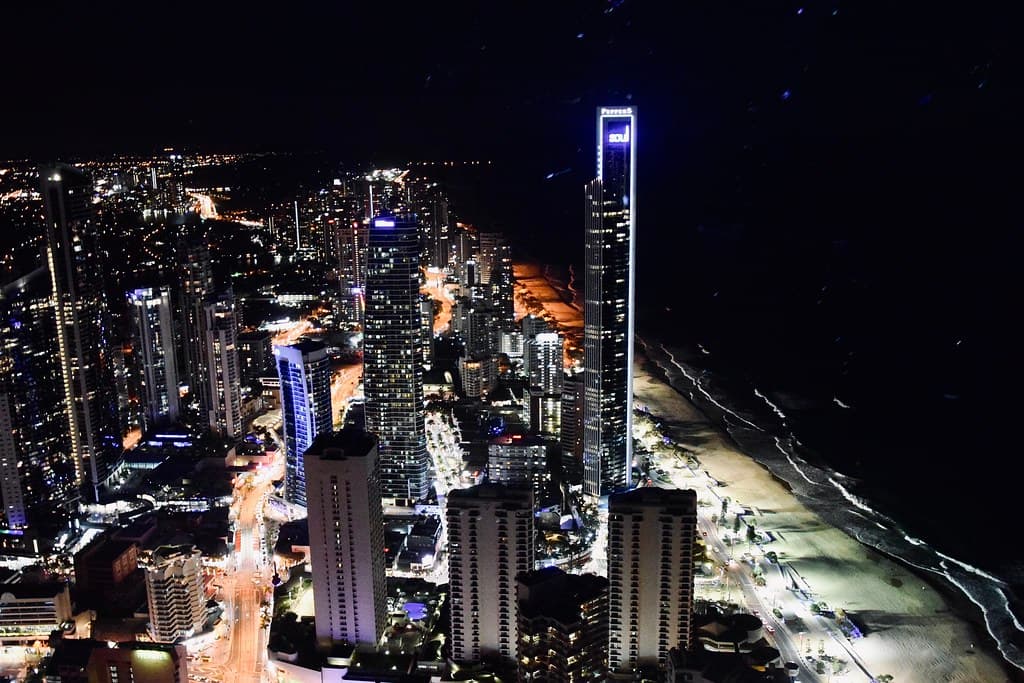
The sand stretches north and south in a gentle arc, flanked by apartment towers that catch the morning light and throw long shadows across the beach by late afternoon. You'll find the water temperature hovers around 24°C most of the year, warm enough to forget a wetsuit in summer, manageable even in the brief winter. The waves arrive in clean, rolling sets—best at the northern end near the rock groyne, where the break holds shape even when the afternoon sea breeze kicks in.
“It's the rare urban beach where the cityscape amplifies rather than diminishes the coastal experience, high-rises framing the horizon instead of blocking it.”
 Credit: Flickr
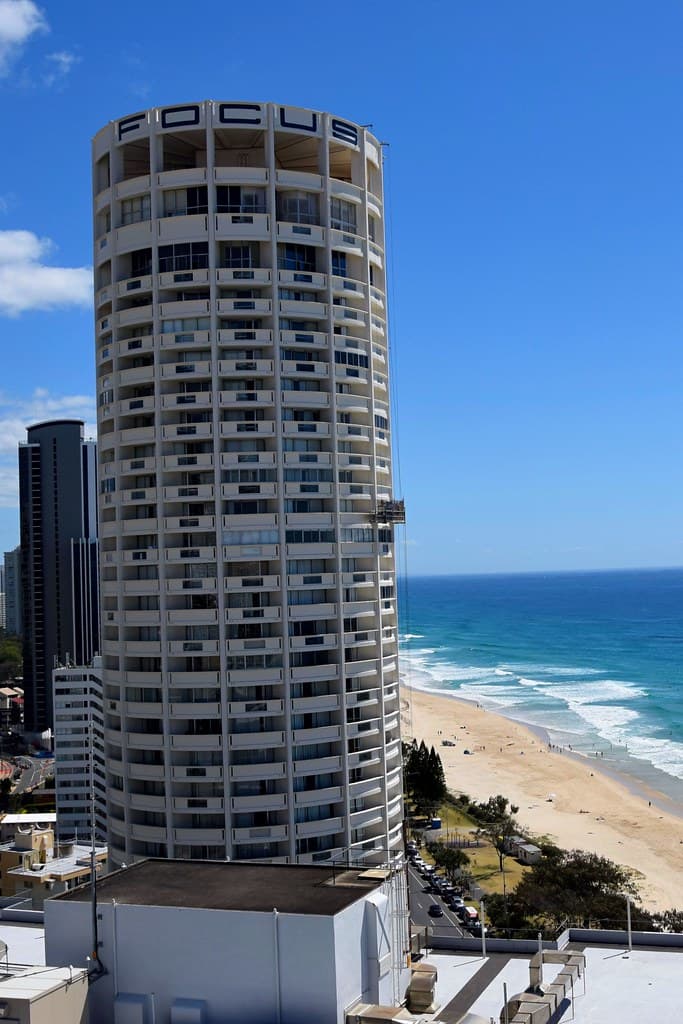
Focus Tower - Surfers paradise, Gold Coast, Australia 2016
Cavill Avenue funnels straight from the Surfers Paradise sign to the sand, a corridor of gelato shops and surf rental kiosks that smells of hot chips and sunscreen. You'll walk barefoot on pavement that scorches by midday, then feel the cool relief of the shoreline. Lifeguard towers punctuate the beach every few hundred meters, red and yellow flags marking the safest swim zones where rips are monitored and the current predictable.
The beach empties slightly at the southern end near Elkhorn Avenue, where families spread picnic blankets and toddlers dig moats that the tide erases within the hour. By evening, the western sky turns apricot and rose behind the skyline, and the beach takes on a quieter rhythm—walkers, a few persistent surfers, the distant thump of music from a rooftop bar. It's a beach that works year-round, never quite surrendering to the urban sprawl that defines it.


