
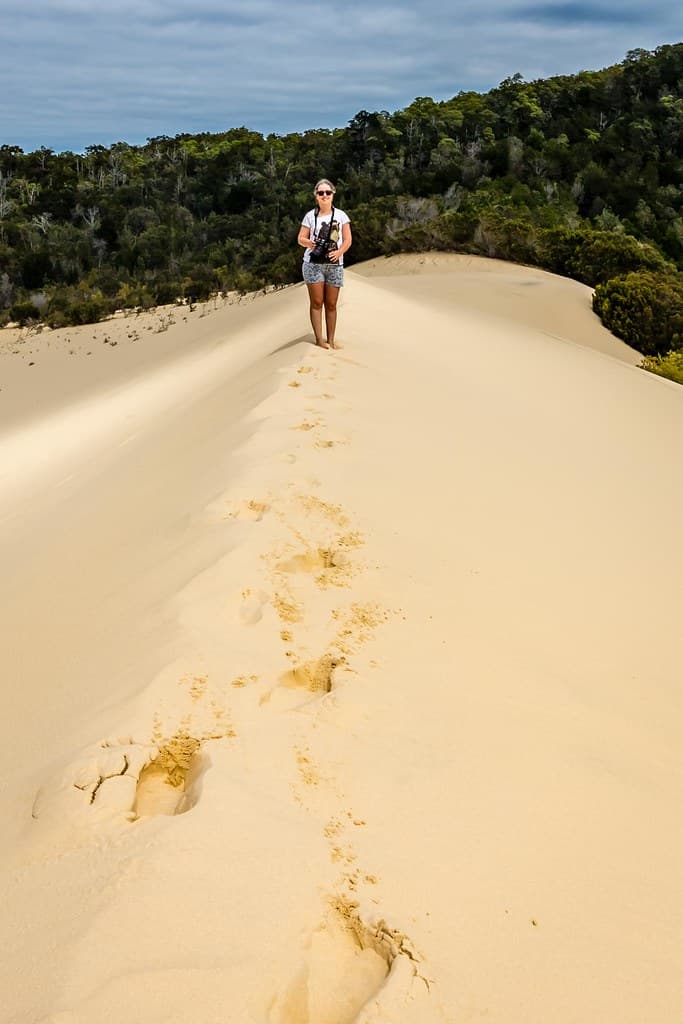
You step off the catamaran onto Tangalooma Jetty, and the scent of salt mingles with sunscreen and diesel. The beach curves northward in a wide crescent, its sand the color of raw cashews, packed firm enough for barefoot walking but soft where the tide has just retreated. Families spread picnic blankets beneath pandanus palms while children chase soldier crabs into their sand burrows. The water graduates from ankle-deep aquamarine to deeper cerulean, and two hundred meters offshore, the dark shapes of the Tangalooma wrecks break the surface—fifteen vessels deliberately sunk in 1963 to form a breakwater, now encrusted with oysters and sea tulips.
“Nowhere else can you snorkel accessible shipwrecks from a sandy beach without a boat or dive certification.”
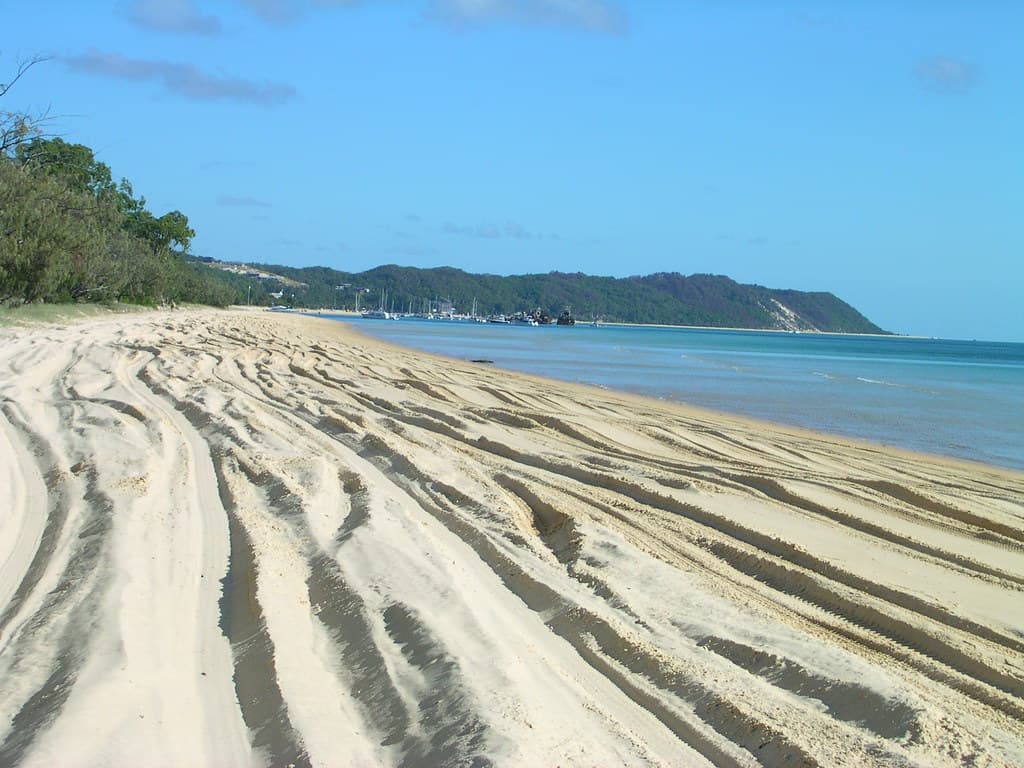 Credit: Flickr
Beach Tracks, Moreton Island
You pull on fins and a mask, wading past the swimming enclosure where toddlers splash under shade sails. The water temperature hovers around twenty-four degrees year-round, warm enough to snorkel without neoprene in summer. As you reach the first wreck, a rusted steel hull listing to starboard, sergeant major fish swarm around your legs. You duck beneath the waterline and peer into the skeletal interior—wrasse nibble at sponges clinging to iron ribs, and a pufferfish inflates lazily near a porthole frame.
Back onshore, the resort hums with activity: guests line up for the evening dolphin feed, a tradition that draws wild bottlenoses to the shallows each dusk. You rinse sand from your feet at the outdoor showers, watching a wedge-tailed shearwater skim the waves. The western sky begins to blush tangerine, and the wrecks turn to black silhouettes against the light.


