
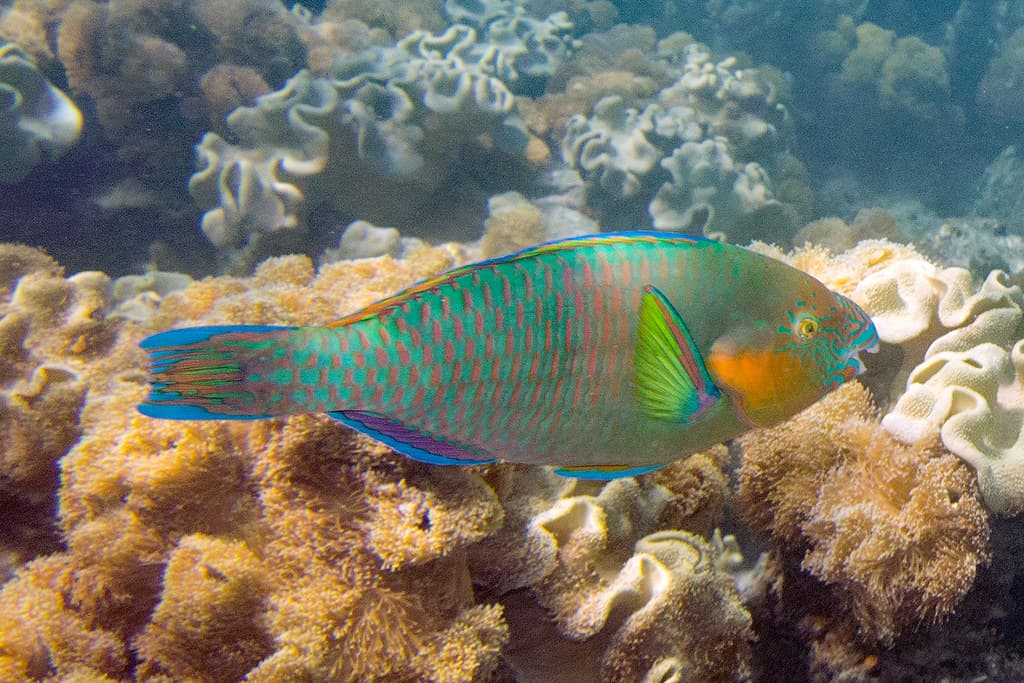
You'll motor past the familiar haunts of Great Keppel Island—the day-tripper beaches, the resort ruins—and continue north until the shoreline pinches into a shallow arc backed by she-oaks and coastal scrub. This is Clam Bay, a pocket of sand and reef that sees fewer visitors in a month than its famous neighbors see in an afternoon. The water here runs shallow for twenty meters before dropping onto coral bommies, their edges soft with purple fan corals and the occasional green turtle gliding past in slow motion.
“The reef begins immediately offshore, eliminating the long swim-out that plagues so many snorkeling spots.”
 Credit: Flickr
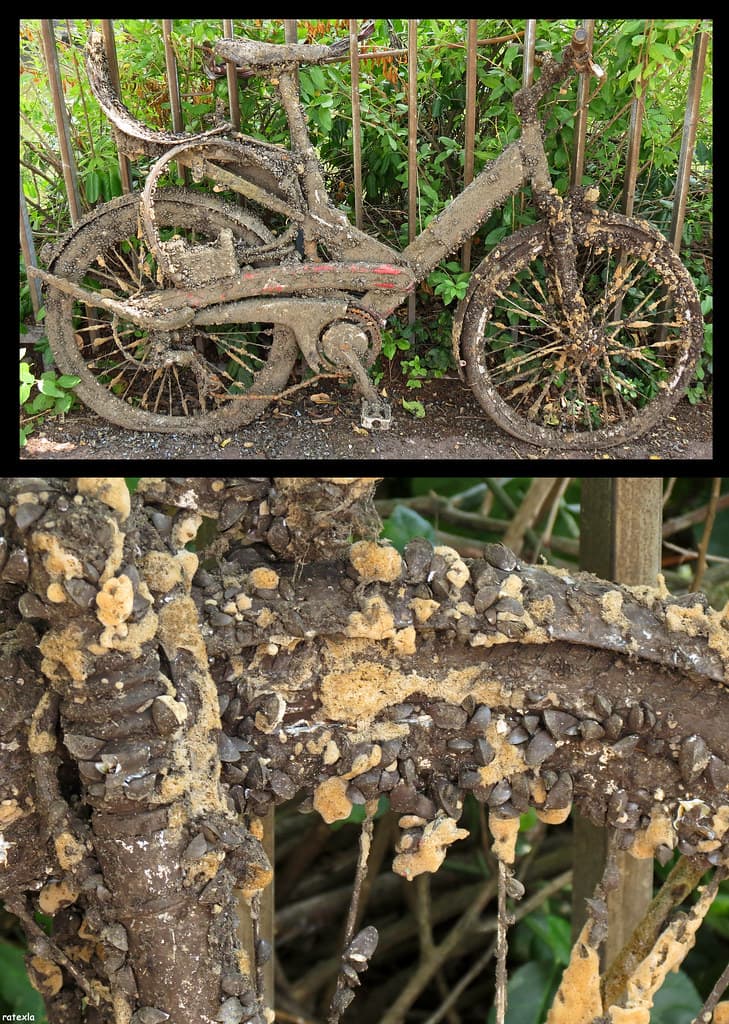
20120622_16k ... HAVE YOU EVER SEEN A BIKE COVERED WITH SO MANY CLAMS & SPONGES? :O | Berlin, Germany
There's no jetty, no kiosk selling icy drinks, no lifeguard tower. You wade ashore with your daypack held overhead, feet sinking into firm, shell-flecked sand. A stand of paperbarks offers patchy shade; behind them, the bush presses close, alive with the calls of honeyeaters. The snorkeling begins the moment you can't touch bottom—schools of fusiliers, parrotfish grinding at coral, and if you're quiet and lucky, a reef shark tracing the sand channels.
Most visitors anchor for an hour, swim, then move on. But linger through the tidal shift and you'll watch the bay transform: sandbars emerge, rock pools reveal themselves, and the light turns the shallows into gradients of jade and turquoise that no camera quite captures. It's the kind of place that makes you understand why people buy boats.


