
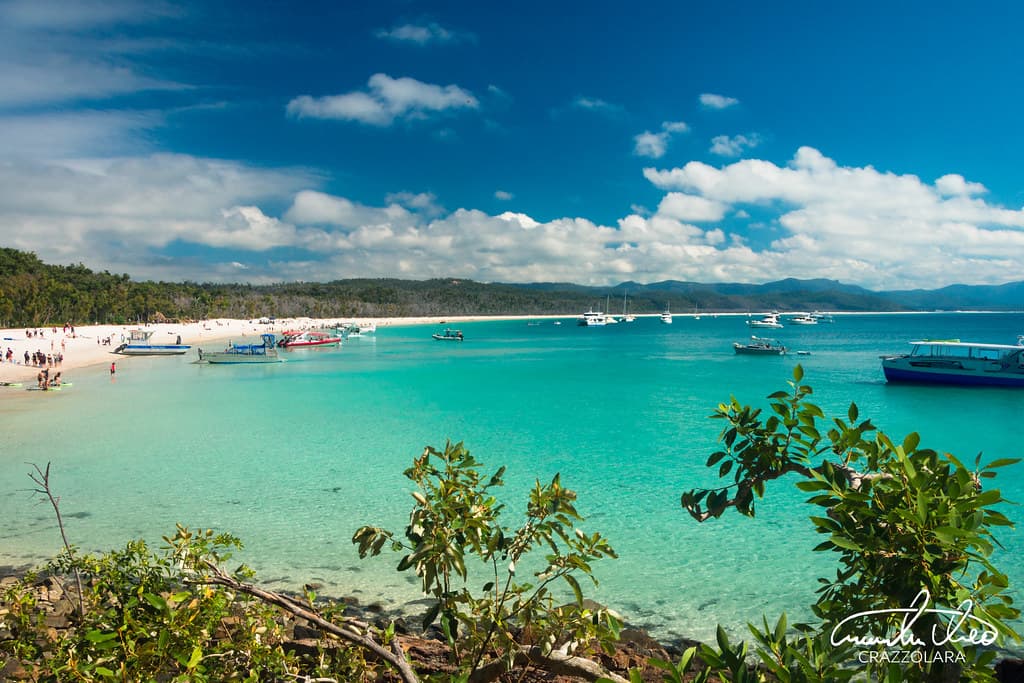
The sand arrives first as a rumor, then as a shock: seven kilometers of silica so fine and pale that it doesn't behave like ordinary beach sediment. It doesn't compact underfoot. It doesn't hold heat. Instead, it squeaks audibly with each step, a phenomenon caused by the spherical grain shape rubbing together. NASA once borrowed samples for telescope lenses. You'll borrow it for the afternoon, watching it sift through your fingers like flour.
“The 98-percent-pure silica sand neither retains heat nor compacts, squeaking audibly underfoot while staying cool enough for barefoot midday walks.”
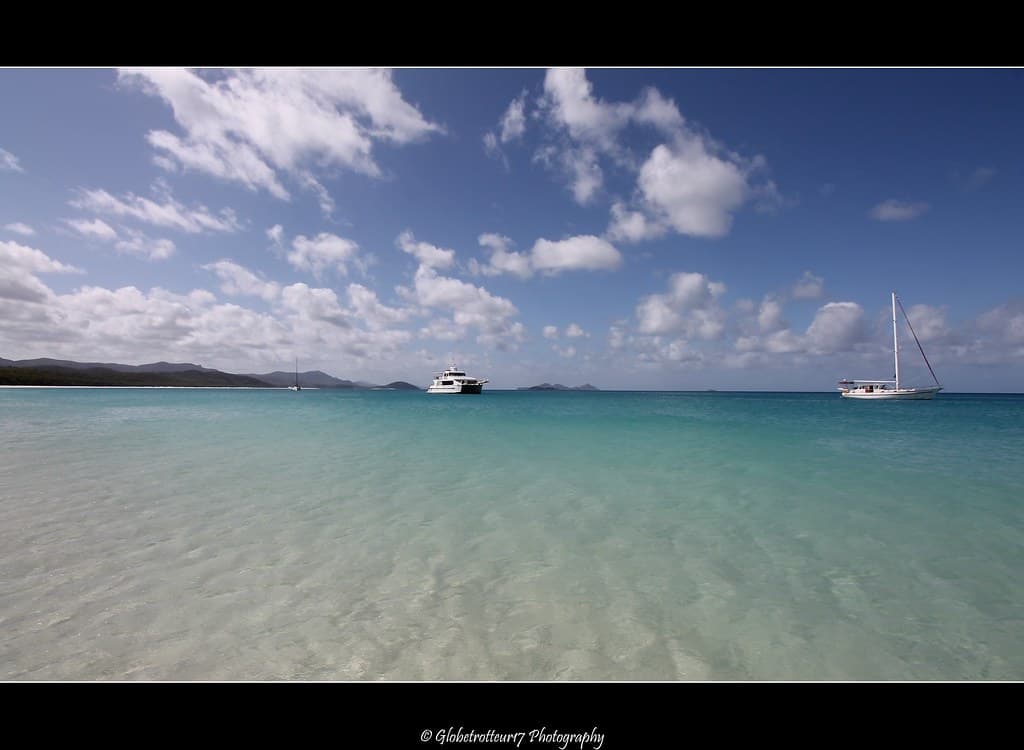 Credit: Flickr
Whitehaven Beach- Whitsunday Island- Queensland- Australia- Australie
The northern end delivers the famous view—Hill Inlet at its tidal ballet, where sandbars shift daily and seawater braids itself into marbled patterns of aquamarine and navy. From the lookout trail, the scene resembles a Rothko canvas that somehow learned to move. Below, the beach stretches south in an unbroken arc, backed by paperbark trees and she-oaks that provide the only shade for miles.
You'll arrive by boat or seaplane, since Whitsunday Island maintains no roads, no resorts, no permanent structures beyond basic camping facilities. The lack of infrastructure isn't an oversight—it's the point. The sand remains pristine partly because it's protected national park, partly because silica doesn't harbor the organic matter that usually clouds tropical waters. The result is visibility that extends thirty meters offshore, where green sea turtles graze on seagrass beds indifferent to your presence.


