
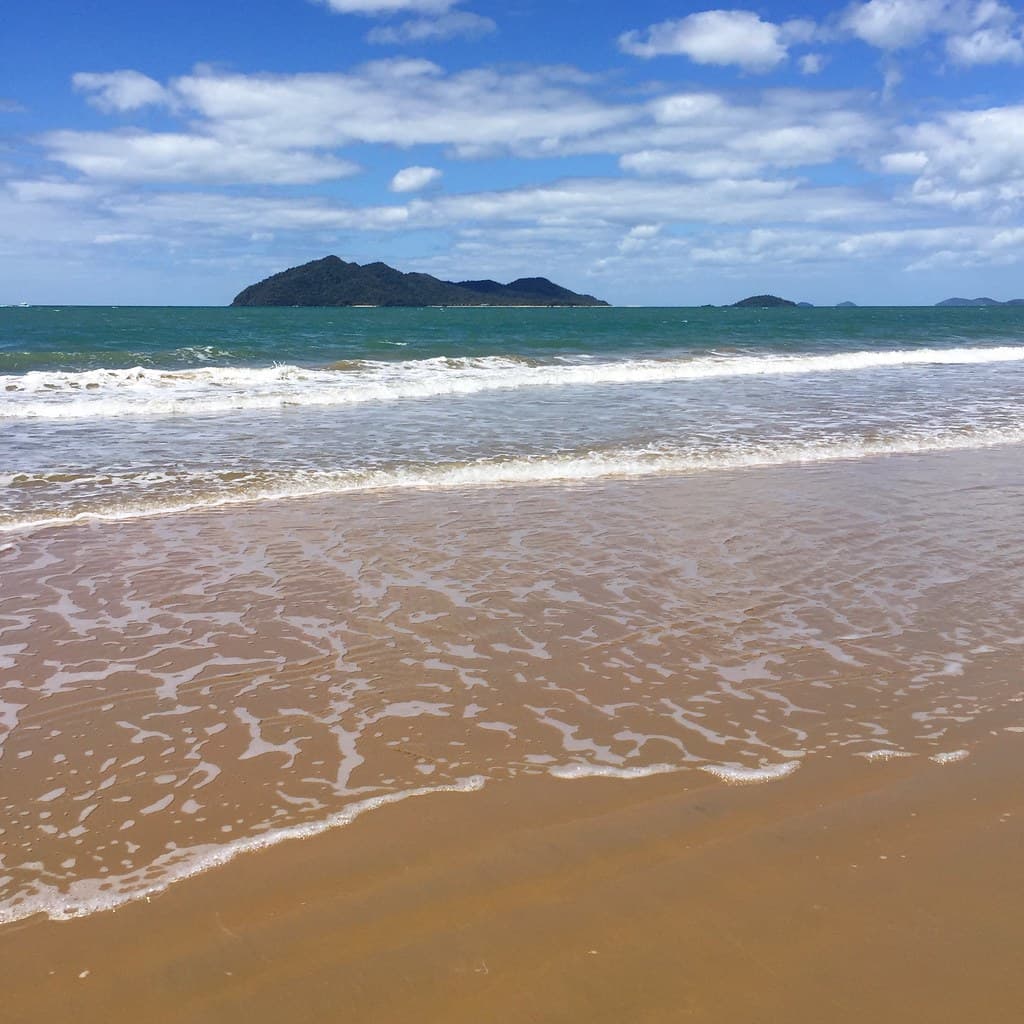
Wongaling unfurls along the quietest end of Mission Beach's fourteen-kilometer ribbon of sand, where the Wet Tropics rainforest spills almost to the waterline. You'll notice the absence of high-rises—planning laws keep buildings beneath the canopy—and the tide pulls back hundreds of meters at dawn, exposing sandbars ribbed like corduroy and tide pools warm enough for toddlers. Local families claim their usual spots beneath the she-oaks by seven, staking shade before the sun climbs over Dunk Island's silhouette.
“One of the only beaches in Australia where endangered cassowaries still forage at the forest edge, occasionally crossing onto the sand at dawn and dusk.”
 Credit: Flickr
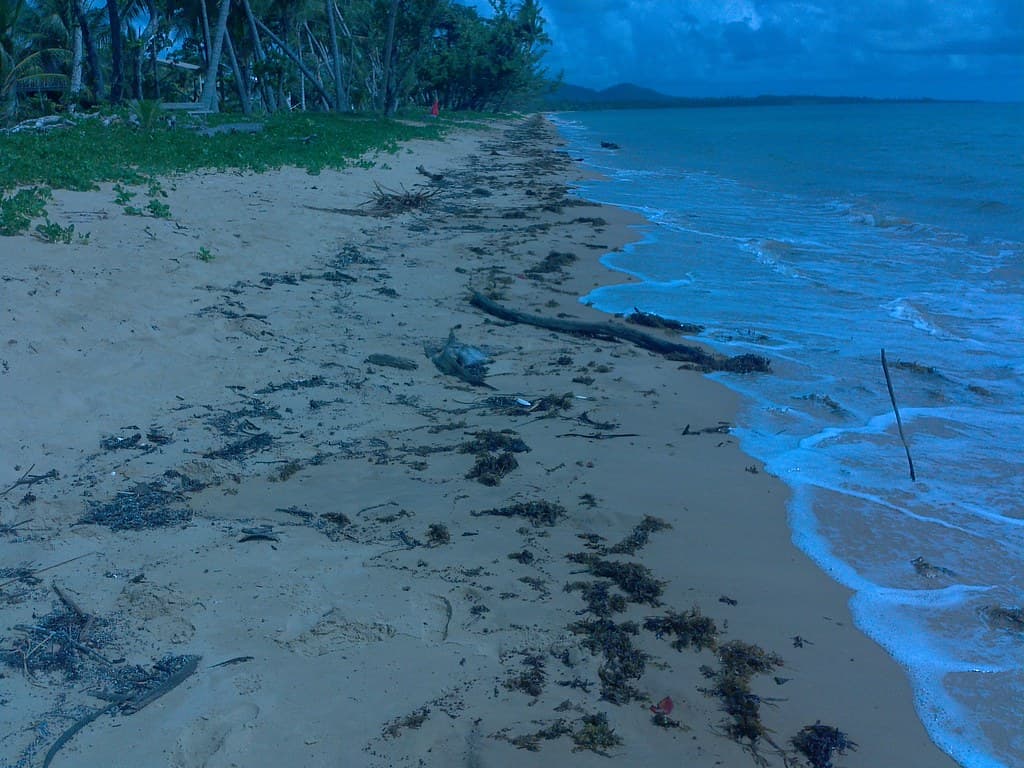
Wongaling Beach - tide on previous day seemed just a little higher - windier conditions?
The sand here is ground coral and shell, brilliant white against turquoise water that stays shallow for fifty paces out. Lifeguards patrol the netted enclosure daily during stinger season, and you'll share the shallows with pied cormorants diving for baitfish and the occasional flathead cruising the drop-off. Backing the beach, the Wongaling Beach Motel and a handful of low-slung holiday units sit behind pandanus groves, and the village's single shopping strip—a bakery, fish-and-chip shop, bottle store—is a three-minute barefoot walk inland.
Come at five-thirty when the light turns apricot and the wind dies. You'll watch the sun drop behind the Cardwell Range while fruit bats stream overhead toward the mango trees, their wings backlit in gold. Some evenings, if you're quiet near the creek mouth at the southern end, a cassowary might step from the treeline to drink, blue wattles glowing in the dusk.


