
The approach to Cape Finniss reveals itself in layers: first the metallic glint of the ocean through scraggly coastal vegetation, then the sudden drop where farmland gives way to wilderness. You park where the track ends and walk over a low saddle of dune, and there it is—a crescent of sand the color of burnt sugar, flanked by headlands dark with lichen-covered rock. The beach curves for nearly two kilometers, uninterrupted, untamed.
“One of the last truly uncommercial beaches on the Eyre Peninsula, where dune systems remain untouched by boardwalks or signage.”
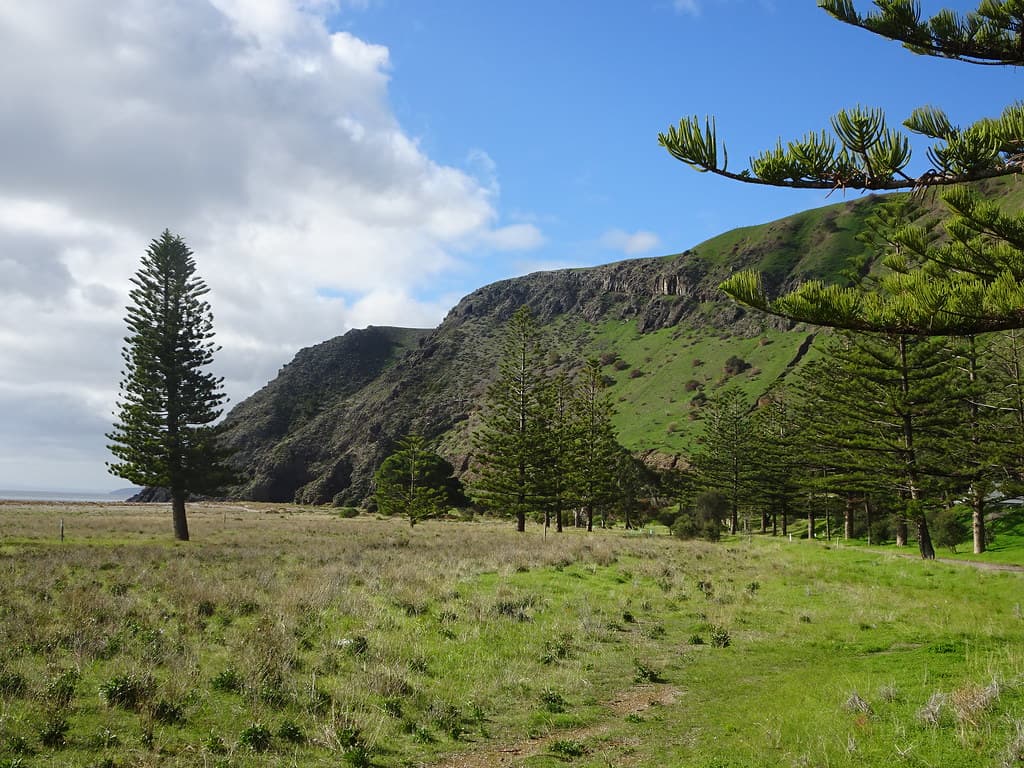 Credit: Flickr
Rapid Bay on Fleurieu Peninsula. Norfolk Island pines.
The dunes behind you aren't the gentle, grassy kind. They're architectural, their ridges knife-sharp, carved by relentless westerlies that howl across the Bight. Walk barefoot and the sand shifts from cool and damp near the waterline to furnace-hot where it's been baking all afternoon. Shells—tiny spirals, fragments of abalone, smooth moon snails—collect in the troughs between swells of sand.
You won't find facilities here, no kiosk selling ice cream or lifeguard tower. What you will find is the kind of quiet that recalibrates your internal volume, the rhythmic percussion of waves on sand, the occasional white-bellied sea eagle tracing lazy circles overhead. Bring everything you need. Leave with nothing but the fine grit of the Eyre Peninsula between your toes and the memory of a beach that doesn't perform for anyone.


