
The formations loom twenty feet tall in places, their surfaces pockmarked and smooth as if thumbed by a sculptor over the 1,500 million years they've stood here. You can walk among them, pressing your palm against sun-warmed stone that feels almost animate in its curves. The grassland around them whispers in the constant coastal wind, and the horizon stretches unbroken toward Antarctica.
“Ancient granite monoliths create a surreal sculpture garden where farmland abruptly meets one of Earth's most remote coastlines.”
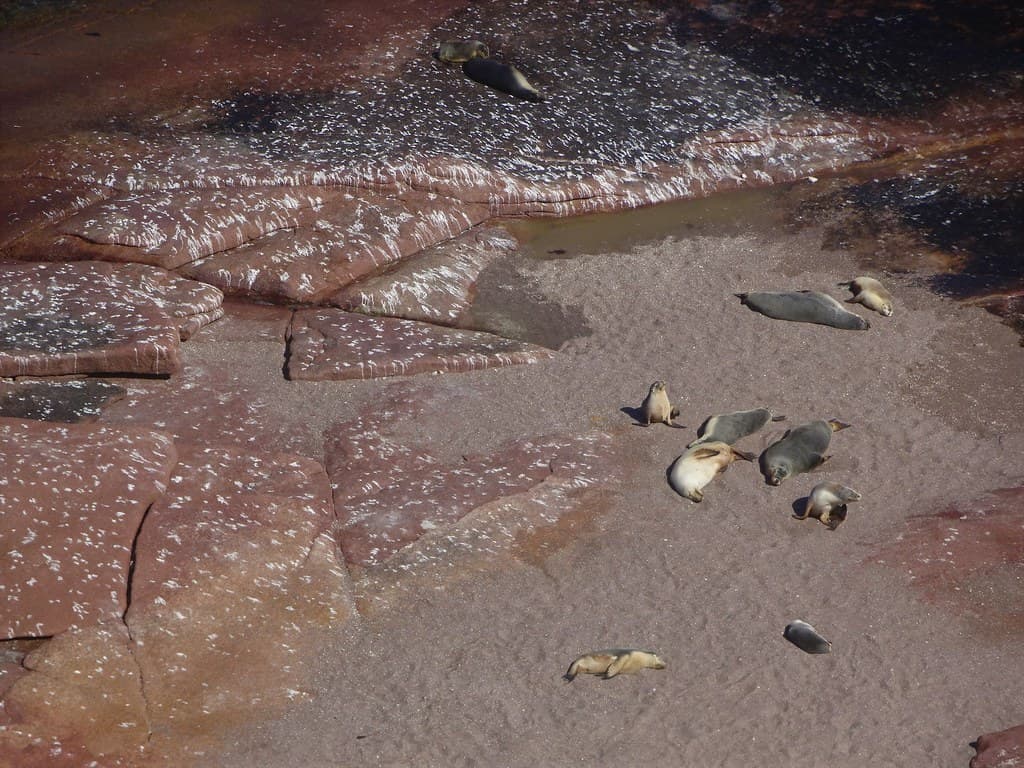 Credit: Flickr
Point Labatt on Eyre Peninsula. Home to an Australia Sea Lion colony.
The beach itself lies a short drive beyond, where the Eyre Peninsula meets the Bight in a collision of limestone cliffs and bone-white sand. The water churns turquoise and navy in bands, and the wind rarely stops. You'll likely have long stretches to yourself, walking the tideline where kelp tangles with driftwood and the only footprints are your own and those of the occasional fisherman.
Most visitors time their arrival for late afternoon, when the low sun ignites the granite in shades of burnt orange and the shadows between the boulders deepen to indigo. The hamlet of Elliston, fifteen minutes north, offers pub meals and fuel; out here, you're alone with stone, sky, and the relentless breath of the Southern Ocean.


