
You descend a gentle slope through coastal banksias and she-oaks, their silvery needles catching the midday light, until the path opens onto a sweep of fine, honey-colored sand. Baudin Beach curves protectively around Penneshaw's eastern flank, its waters so calm you can see your toes wiggling in the shallows twenty feet out. The fetch is short here—sheltered by the curve of Backstairs Passage—so waves arrive as gentle ripples rather than breakers, perfect for toddlers testing their sea legs and parents who'd rather read than rescue.
“Little penguins commute through the shallows at dusk, transforming a family swim spot into an intimate wildlife encounter without velvet ropes.”
 Credit: Flickr
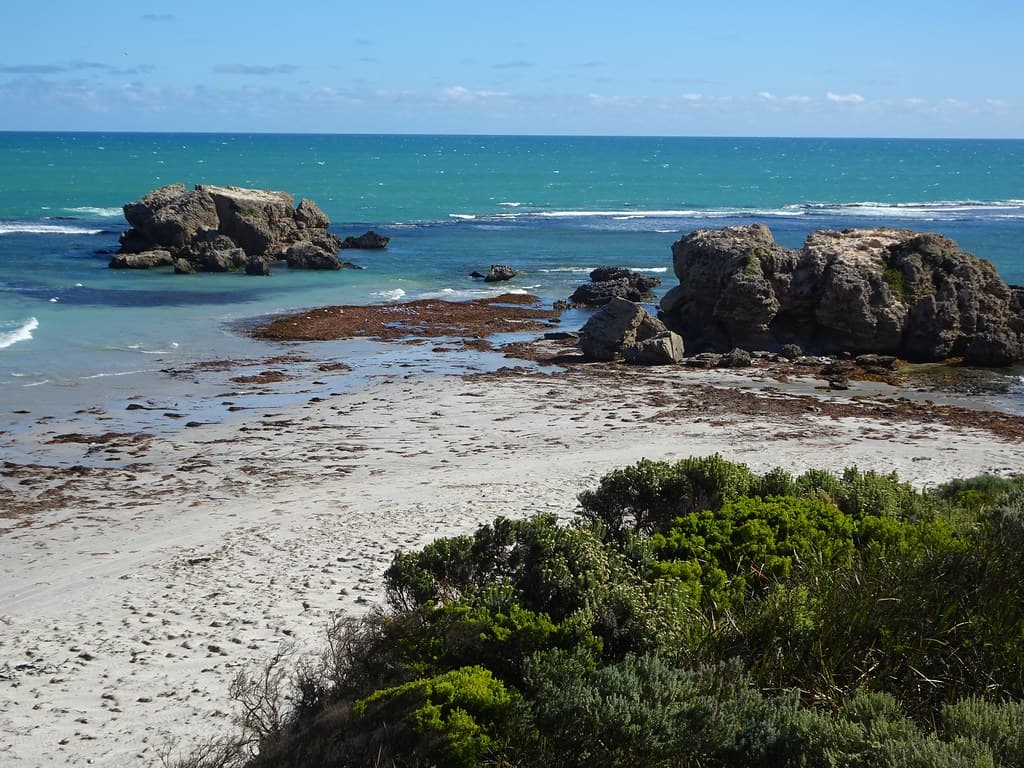
Cape Banks near Carpenter Rocks. Behind these rocky limestones cliffs is Cape Banks lighthouse. Named by Flinders. French Captain Baudin in 1802 named it Charpentier.
Families claim their territory early: eskies anchored in the shade of Norfolk pines, folding chairs positioned just beyond the tide line, cricket stumps driven into the firm sand near the water's edge. The beach angles northwest, so afternoon sun warms the sand without scorching it, and the shallow gradient means you can wade out thirty meters before the water reaches your waist. Seagrass meadows fringe the edges, attracting garfish that flash silver in the shallows.
As the light softens toward evening and day-trippers pack their towels, the beach reveals its singular charm. Little penguins—Kangaroo Island's famous residents—begin their nightly procession from feeding grounds to shoreline burrows. You'll spot their small silhouettes bobbing in the gentle swell, then watch them waddle determinedly up the beach, salt water glistening on their slate-blue backs. It's an unhurried spectacle, free of grandstands or ticket booths, just you and the birds in the fading copper light.


